Bangkok Travel Recommendations — Things to Do, Eat and Avoid
A community-sourced guide to Bangkok — the temples, the markets, the Thai cooking class everyone recommends, and the streets the old-Asia-hand crowd actually love.
📍 Bangkok, Thailand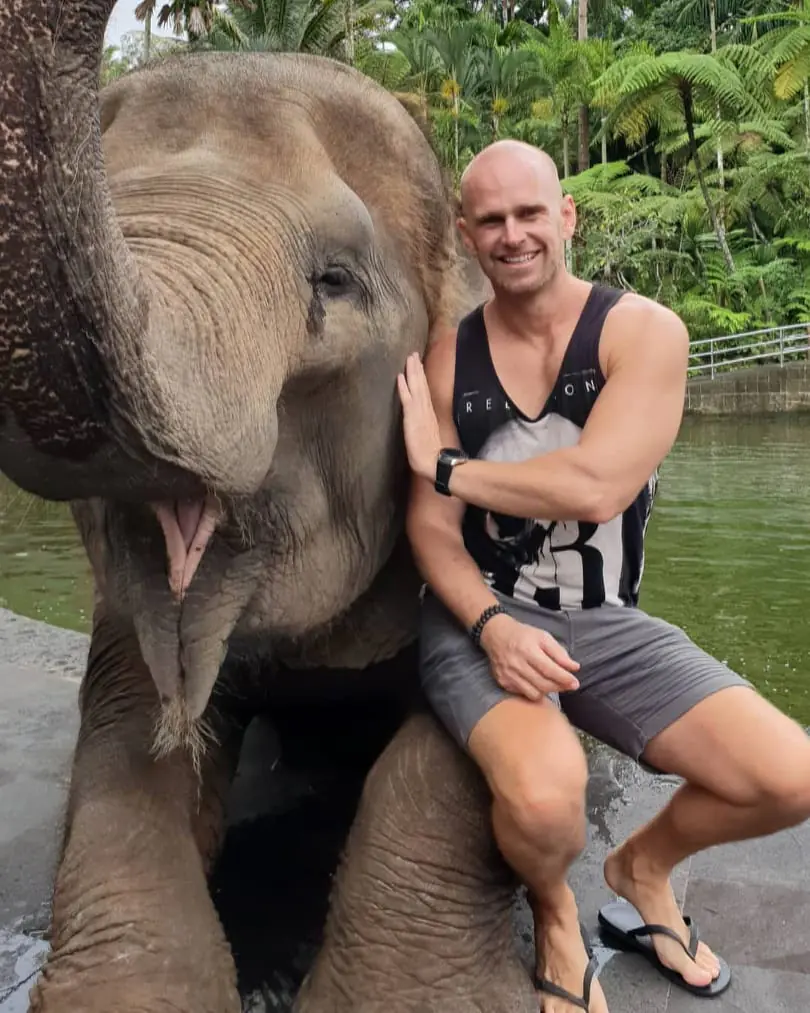
Bangkok rewards repeat visits the way few cities do. The first time, you do the Grand Palace, you ride a tuk-tuk, you eat pad thai on Khao San Road and you leave thinking the city is loud and hot and a bit much. The second time, you skip the touristy bits, take the river ferry to Wat Pho, eat boat noodles at Victory Monument, get a Thai massage that nearly kills you for $5, and start to fall for the place. The third time, you have a favourite coffee shop in Ari, you can navigate the BTS without thinking, and you tell people Bangkok is one of the great cities of the world. They are right.
What follows is a community-sourced practical guide — not a guidebook list, but the recommendations that come up over and over again from travellers who have been before, written by other travellers, organised by what people actually want to know.
The temples — and how to do them in a sensible order
There are over 400 Buddhist temples in Bangkok and you do not need to see them all. Three earn their headliner status, and three more are worth a half-day each.
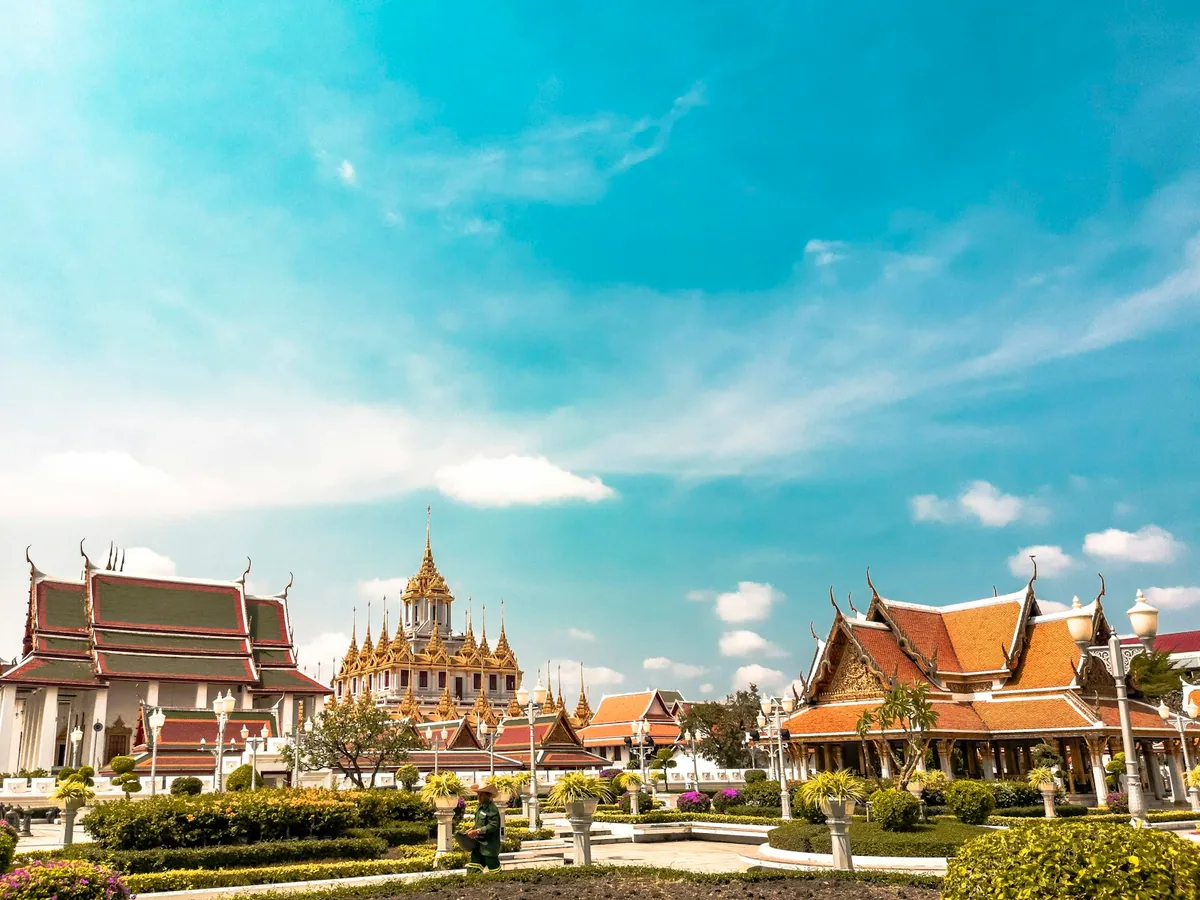
- **Wat Pho.** The reclining Buddha — 46 metres long, gold leaf, mother-of-pearl on the soles of the feet. Open early, go early. The same compound also runs Bangkok's most famous traditional Thai massage school. Ninety minutes of tek-bopilation for around 500 baht. Worth every coin. - **The Grand Palace and Wat Phra Kaew.** The Emerald Buddha and the seat of the monarchy. Strict dress code (covered shoulders and knees, no flip-flops). Crowded — go at 8.30 a.m. when it opens. Allow two hours. - **Wat Arun.** The Temple of Dawn, on the Thonburi side of the river. Sunset is the cliché photograph; sunrise is the better experience. You can climb the central spire for a sweeping view of the river bend.
For a less touristed afternoon: **Wat Saket** (the Golden Mount, climbable, panoramic), **Wat Suthat** (the giant red swing in the square outside), and **Wat Mahathat** (active meditation centre — drop in to a free Vipassana session).
A note on the scams: if anyone outside the Grand Palace tells you the palace is closed for a Buddhist holiday and that they know a "better" temple, they are lying. Walk away. The palace is open. The "better" temple ends with a gem-store sales pitch.
Eating in Bangkok
The single best thing you can do in Bangkok is eat where Thai people eat. The food at a street stall outside a market is usually better, fresher and a quarter of the price of the same dish in a hotel restaurant. A few rules:
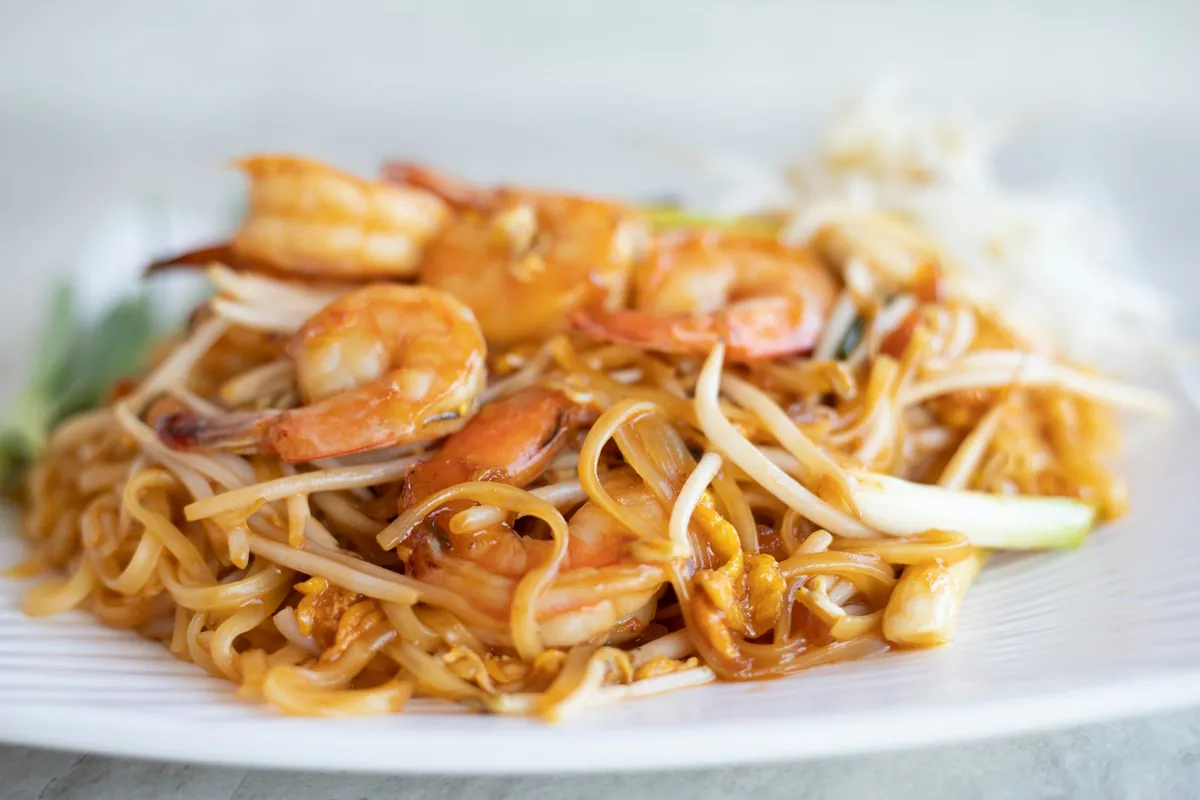
- **Look for the queue of office workers at lunchtime.** That stall is good. - **Look for clean plastic stools, busy turnover, and food cooked to order in front of you.** Avoid food sitting in metal trays under heat lamps. - **Boat noodles** at Victory Monument or Pratu Phi are the cheapest serious meal in Bangkok — small bowls, $1 each, designed to let you eat four flavours in one sitting. - **Pad krapao moo (basil pork over rice with a fried egg)** is the Thai national lunch. You can order it almost anywhere and it will be good. - **Pad thai** is real but it is not what most Thai people eat. Save it for one specific stall: Thip Samai near Phra Athit pier, the most famous pad thai in Thailand, worth one queue.
For sit-down restaurants that are still cheap and excellent:
- **Krua Apsorn** (multiple locations) — old-school royal-style Thai. - **Polo Fried Chicken**, near Lumpini Park — Issan-style fried chicken with sticky rice. - **Som Tam Nua** in Siam Square — papaya salad, fried chicken, sticky rice. Casual, busy, terrific.
A cooking class
Multiple bugbitten travellers over the years have recommended **[Thai Home Cooking](https://thaihomecooking.com/)** — a small private cooking class run from a Thai family home in Bangkok. It runs longer than the tourist-mill classes, you cook five to six dishes from scratch, and you eat what you cook. Bookings via the website.
There are dozens of cooking schools in Bangkok at every price point. The market-tour-plus-cooking-class format is now standard; expect to spend three hours at the market plus three hours cooking, four to six dishes, lunch included, around 1,500–2,500 baht.
Getting around
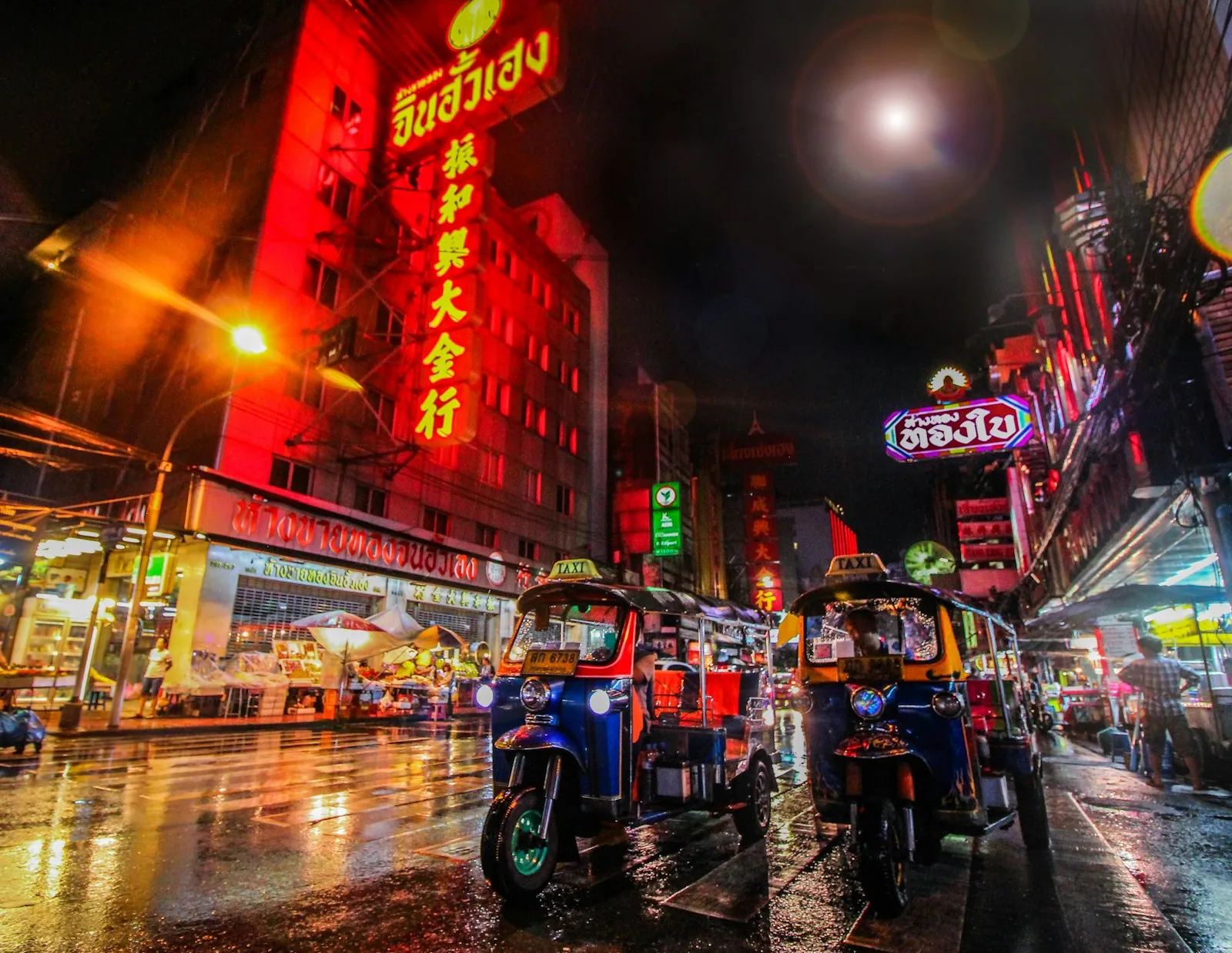
- **The BTS Skytrain and MRT subway** are the fastest way to cross the city. Buy a Rabbit Card at any BTS station and load it. - **The Chao Phraya Express boat** is one of the great cheap urban experiences in Asia — orange, blue, yellow and tourist-flagged boats run up and down the river. The orange-flag is the local commuter line; locals pay 16 baht for any stop. - **Tuk-tuks** are a tourist experience now. Fun once. Negotiate the fare before you get in. They are usually slower and more expensive than a metered taxi. - **Metered taxis** are cheap (start meter, "meter please") but stuck in traffic. The Grab app works.
Markets
- **Chatuchak Weekend Market** — the great. 15,000 stalls, every Saturday and Sunday. Allow a full morning. Wear comfortable shoes. Eat there. - **Or Tor Kor** — directly across from Chatuchak — is the country's best fresh produce market. The Thai food stalls here are the best in Bangkok by a margin. - **Khlong Lat Mayom floating market** — small, local, weekends only. Less touristed than Damnoen Saduak. - **Pak Khlong Talat (the flower market)** — open 24 hours, but most beautiful at 3 a.m., when the next day's flowers arrive from the provinces.
Where to stay
The two main backpacker-and-flashpacker areas are **Khao San / Phra Athit / Banglamphu** (old Bangkok, near the river and the Grand Palace, full of bars and budget guesthouses) and **Sukhumvit** (newer, more upmarket, BTS-connected, full of business hotels and condo rentals). Old hands often skip both and stay in **Ari** (BTS Ari) for cafes and quiet, **Phra Khanong** (BTS Phra Khanong) for cheap rents and food, or **Talad Noi / Charoen Krung** for the gritty old Sino-Portuguese riverside.
What to skip
- The bridge over the River Kwai day trip. Hot, hyped, two hours each way. Skip it unless you have a particular interest in the WWII Death Railway. - "Floating market" tours that start at 7 a.m. and bus you to Damnoen Saduak. The market is now mostly tourist tat. - Tiger temples, elephant rides, monkey shows. Avoid on welfare grounds.
For more travel writing on the region, browse our [Bangkok category](/category/bangkok) or our broader [Asia stories](/category/asia). And if you're combining Bangkok with the islands, our island-hopping guide on [the blog](/blog) maps out the standard routes from Bangkok to Krabi, Koh Lanta and Koh Lipe.
Bangkok rewards everyone who shows up willing to walk a side street, eat at a plastic stool, and ride the river at dusk. Three days is enough for the headlines. A week is when it starts to feel like a city you might live in. Go.