Güiria Travel Guide — The Quiet Caribbean Corner of Eastern Venezuela
A small fishing port at the tip of the Paria Peninsula — the staging post for Trinidad ferries, Macuro pilgrimages, and the most overlooked stretch of coast in Venezuela
📍 Güiria, Sucre, Venezuela
Güiria sits where Venezuela narrows to a finger and points across the Gulf of Paria toward Trinidad. It is the easternmost mainland port in the country, the staging post for the Trinidad ferry, the supply town for the Paria Peninsula's small fishing villages, and one of the most chronically overlooked corners of the South American Caribbean.
If you have come this far east — past Cumaná, past Carúpano, past the coffee-and-cacao hills above Río Caribe — you are in a part of Venezuela almost no foreign traveller reaches. The Paria Peninsula is dramatic green coastal country, with the Caribbean on one side and a wall of rainforest mountains on the other, dropping into hidden coves you have to walk forty minutes through cocoa plantations to reach. Güiria is the practical base for all of it.
This guide is a frank update on what Güiria is for, what is realistic to do from there, and the bigger context of travelling in eastern Venezuela in 2026.
Where you are
Güiria is in Sucre State, on the south coast of the Paria Peninsula, about 700 km east of Caracas. Picture a tongue of land sticking out into the Caribbean, with Trinidad lying 20 km off its tip — geologically the same range as Trinidad's Northern Range, the islands sliced off by sea level after the last ice age.
The town itself is small — perhaps 40,000 people — built around a working fishing port, a Plaza Bolívar, two small hotels, a covered market, the ferry terminal, and the old colonial street grid. It is hot and humid year-round (28–32°C), gets a rainy season May–November, and shares the Paria coast's strong easterly trade-wind.
Why travellers come
Three reasons, in order of importance:
1. The Trinidad ferry. Until ferry services were repeatedly suspended through the late 2010s and early 2020s, Güiria was the cheapest legal entry to Trinidad from South America. The route still operates intermittently — when it runs, the catamaran takes about three hours to Chaguaramas. Check the current status before you go; through 2024–25 the service was unreliable, and most travellers now fly Caracas → Port of Spain instead.
2. Day-trips into the Paria Peninsula. The peninsula is a national-park-rich, jungle-meets-sea region with cocoa farms, small fishing villages, and beaches you reach by boat or 4WD. The standard out-and-backs from Güiria:
- Macuro — a fishing village 40 km east by boat, the only place on the South American mainland where Christopher Columbus is documented to have set foot (3 August 1498). Tiny, end-of-the-road feel, no cars. - Playa Pui-Puy and Playa Medina — wide palm-fringed beaches on the north (Caribbean) side of the peninsula, accessible by 4WD across the cordillera or by boat around the headland. - The cocoa farms above Río Caribe — Hacienda Bukare and Hacienda Aguasana are the standard visitor farms, both open for tasting tours.
3. Onward travel into the Orinoco Delta. Güiria is sometimes used as the eastern jumping-off point for travellers heading toward Tucupita and the Warao communities of the Orinoco Delta, although Maturín or Ciudad Bolívar are the more standard bases.

How to get there
By road. Long-distance buses run from Caracas to Carúpano (overnight, 12–14 hours) and from Carúpano on to Güiria (3–4 hours, frequent shared minibuses). The road quality is mixed past Cumaná. Expect checkpoints. A through-bus from Caracas direct to Güiria runs once a day, in theory.
By air. No commercial flights serve Güiria itself. The closest airport is Carúpano (CUP) with a sporadic Caracas connection. Most travellers fly Caracas–Maturín (MUN) and continue overland.
By private 4WD. Many travellers arrange a 4WD with driver from Caracas or Margarita Island via a peninsula-specialist operator. Costs more (US$120–US$200/day with driver) but skips the road quality and security questions of the bus.
Where to stay
Güiria's hotel market is small and not particularly tourist-oriented. The standards as of 2026:
- Posada Las Garzas — long-running guesthouse near the malecón, run by a German-Venezuelan couple, with good information about the peninsula. Air-conditioned rooms, breakfast included. US$30–45/night. - Hotel Plaza — older central hotel on the Plaza Bolívar. Adequate, occasionally tired, cheaper. Cash only.
For the actual peninsula beaches (Pui-Puy, Medina) the standard accommodation is Posada Pui-Puy or Hacienda Bukare's eco-lodge — small, family-run, sometimes booked out months ahead in dry season (December–April).
Food and drink
Güiria is a Caribbean port town, and the food reflects that — fish, plantain, rice, coconut, and the local Sucre State specialities like pescado en coco (snapper or grouper braised in coconut milk) and empanadas de cazón (small dogfish empanadas). The morning market by the malecón has fresh fish, fruit and arepas.
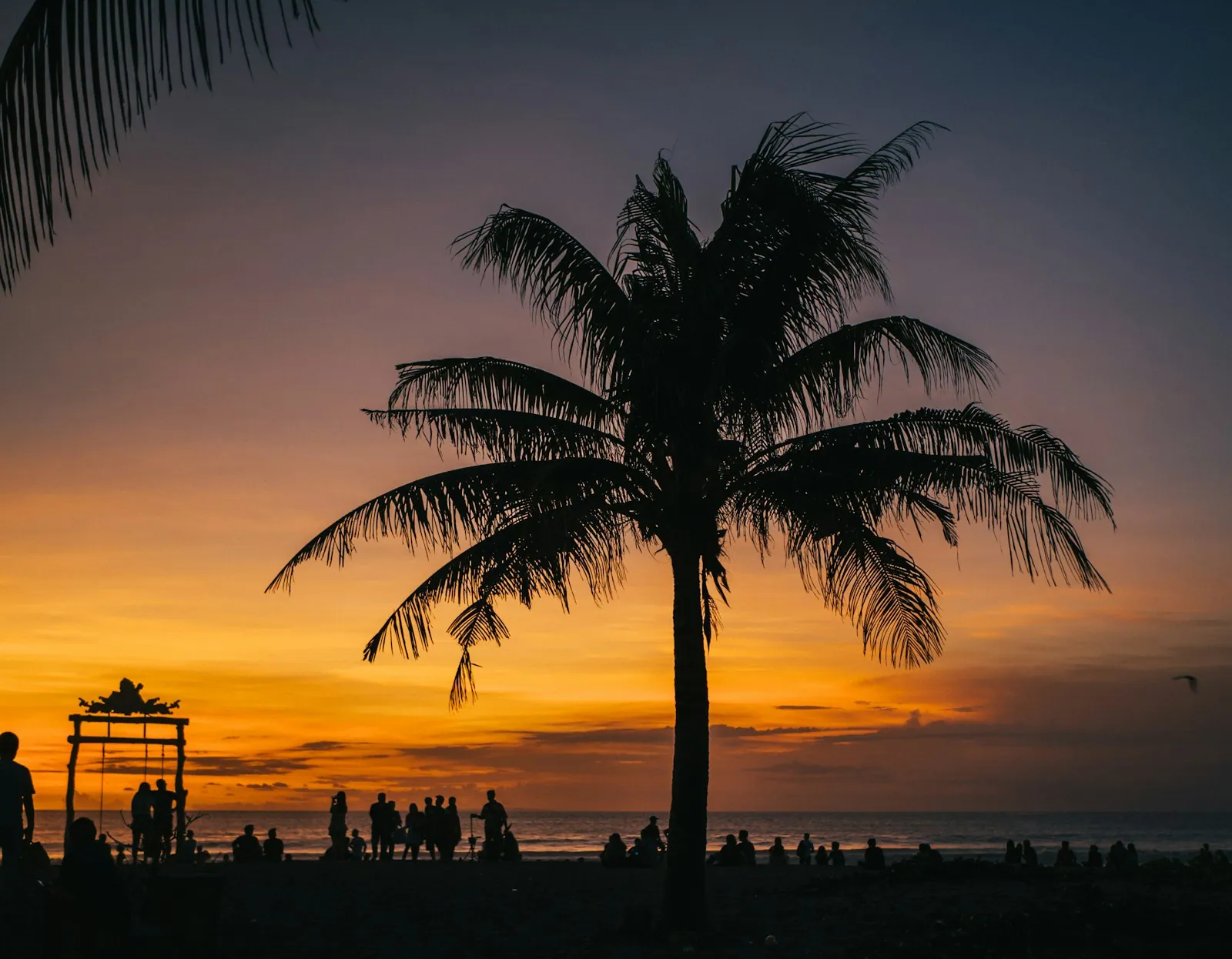
Bars and nightlife are minimal. A handful of beach-front rancho-style places serve cold beer and grilled fish at sunset. This is not a city to come to for clubs.

Safety, frankly
Travelling in Venezuela in 2026 carries real risks that have to be weighed up front. Most major Western governments — UK, US, Australia, Canada — have Level 4 / Do Not Travel advisories on Venezuela for arbitrary detention, kidnapping, violent crime, lack of medical infrastructure, and the political situation. Standard travel insurance does not cover the country.
Güiria itself is, by Venezuelan standards, low-key — small, far from Caracas, more fishermen than gangs. But it is not isolated from the bigger picture: fuel shortages, occasional power outages, political checkpoints, and a long-running humanitarian outflow toward Trinidad that has militarised some of the coast. Travelling by night is not advised. Carry a copy of your passport, keep the original in the hotel safe. Don't photograph military or police installations. Don't talk politics with strangers.
Travellers who go to the peninsula in 2026 mostly do so with a local fixer — an experienced Venezuelan guide or driver who knows the checkpoints, the current ferry status, the unwritten rules. Going on your own with no Spanish and no contact list is significantly harder than it was a decade ago.
What to bring and know
Cash. US dollars are widely accepted and often preferred — the bolívar inflates fast, and many businesses quote in dollars. Bring crisp bills in small denominations. ATMs work intermittently and tend not to accept foreign cards.
Spanish. Almost no English is spoken once you leave the few tourist-facing posadas. Decent Spanish makes everything from buses to checkpoints easier and safer.
Connectivity. Mobile data is patchy on the peninsula. WhatsApp works. Buy a Movistar or Digitel SIM in Caracas (passport required) before heading east.
Insurance. As above — standard policies will not cover Venezuela. Specialty Level 4 insurance is available but expensive and limited.
Should you actually come?
The honest answer for most independent travellers in 2026 is: only if you have a specific reason and a plan. Visiting family. Working with an NGO. Travelling with a Venezuelan guide who knows the peninsula intimately. The Paria coast is genuinely beautiful — green, dramatic, almost empty of foreign tourism — and Güiria is a sleepy port town with real character. It is also a hard place to travel in independently right now, and the country it sits in is going through a hard chapter.
If the political situation eases and the Trinidad ferry stabilises, Güiria is exactly the kind of small Caribbean port that becomes a discovery. For now, this guide is a placeholder for that better moment, with enough context to let you decide for yourself.