Cycling Rottnest Island: How a Smiling Quokka Stole My Heart in Western Australia
A short ferry, a bike, twenty kilometres of coast, and the world’s happiest marsupial.
📍 Rottnest Island, Western Australia, Australia
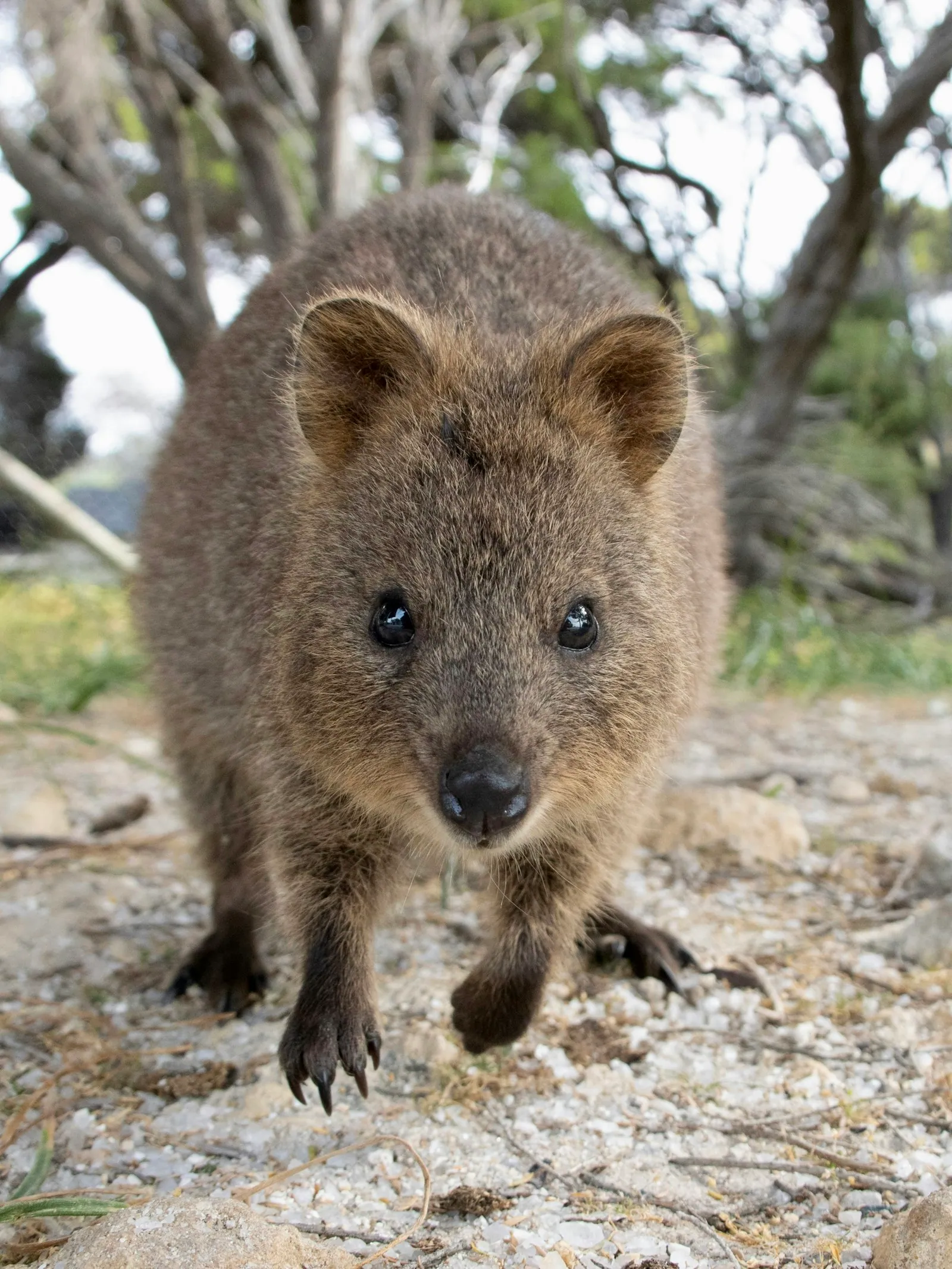
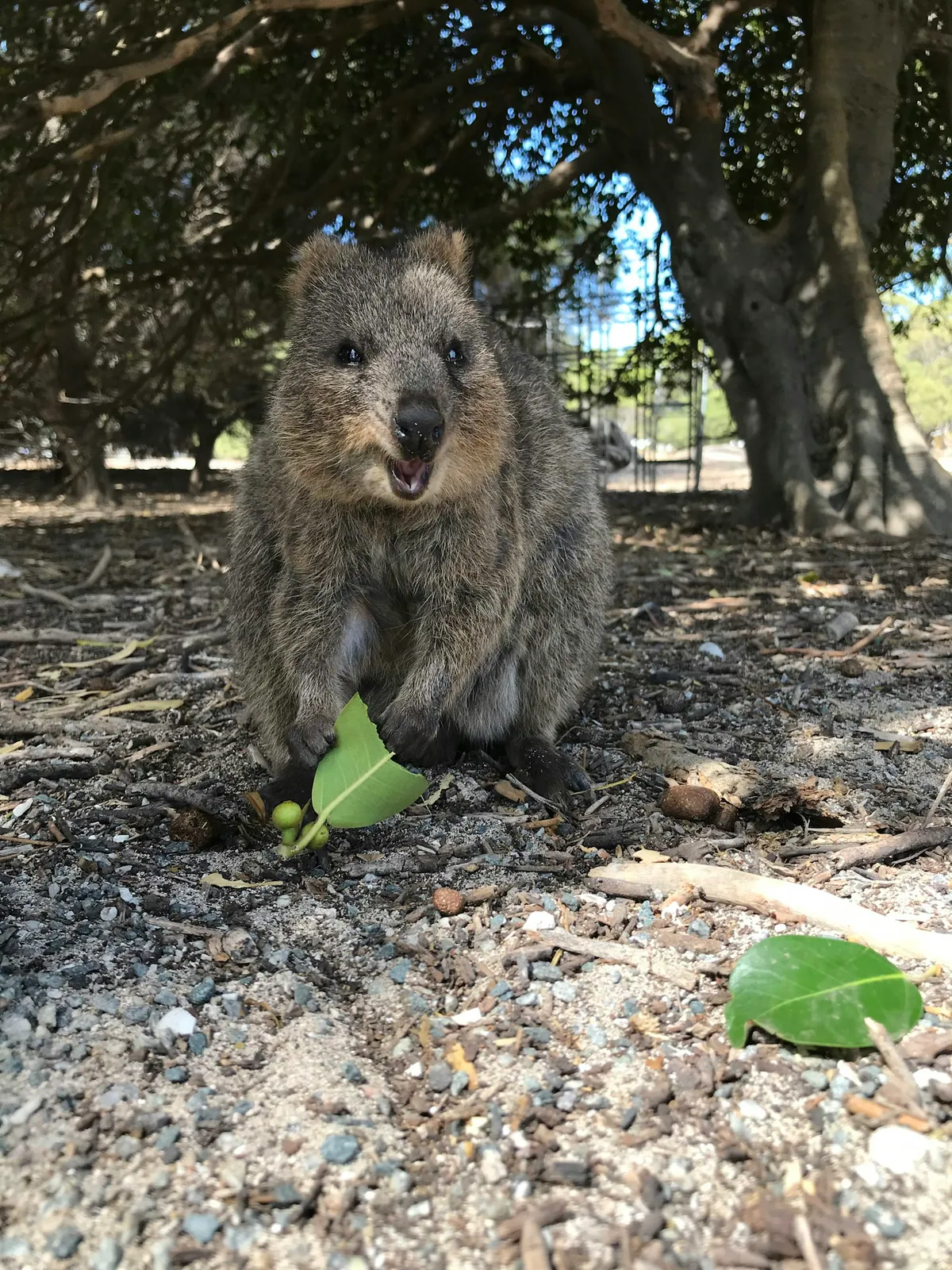
Quokkas are small, brown, marsupial cousins of the kangaroo, weigh about three kilos, eat leaves, look perpetually like they’re grinning at you, and live almost entirely on a single small island off the coast of Perth. That island is Rottnest. The quokkas are, by general agreement, the cutest animals on Earth. They are also entirely unbothered by humans, which is partly because the island has had no native predators for ten thousand years and partly because they have correctly worked out that the upright two-legged things that come off the ferry every morning have all the snacks. Touching a quokka is illegal. Photographing a quokka is, frankly, mandatory. Letting a quokka steal your sandwich is a rite of passage you should not resist.
I was in Perth for three days. I had been told, repeatedly and emphatically, that I would not be allowed to leave the country if I did not visit Rottnest. The locals are very serious about this. So I went.
The ferry
The ferry to Rottnest leaves from three places — Perth’s Barrack Street Jetty, Hillarys Boat Harbour in the northern suburbs, and Fremantle’s B Shed. Fremantle is the closest, the cheapest, and the most enjoyable point of departure (Fremantle itself is worth a half-day before or after, an old port town with sandstone pubs, a market the size of a small village, and proper coffee).
The crossing takes about twenty-five minutes. The water is the kind of blue that you immediately suspect is been processed in some way, except it isn’t — it’s really that colour. The boat thumps over the chop, the dolphins occasionally show up alongside, and you arrive at Thomson Bay on the eastern end of the island.
Step off the ferry. Look down. There is, quite likely, a quokka by the bench.
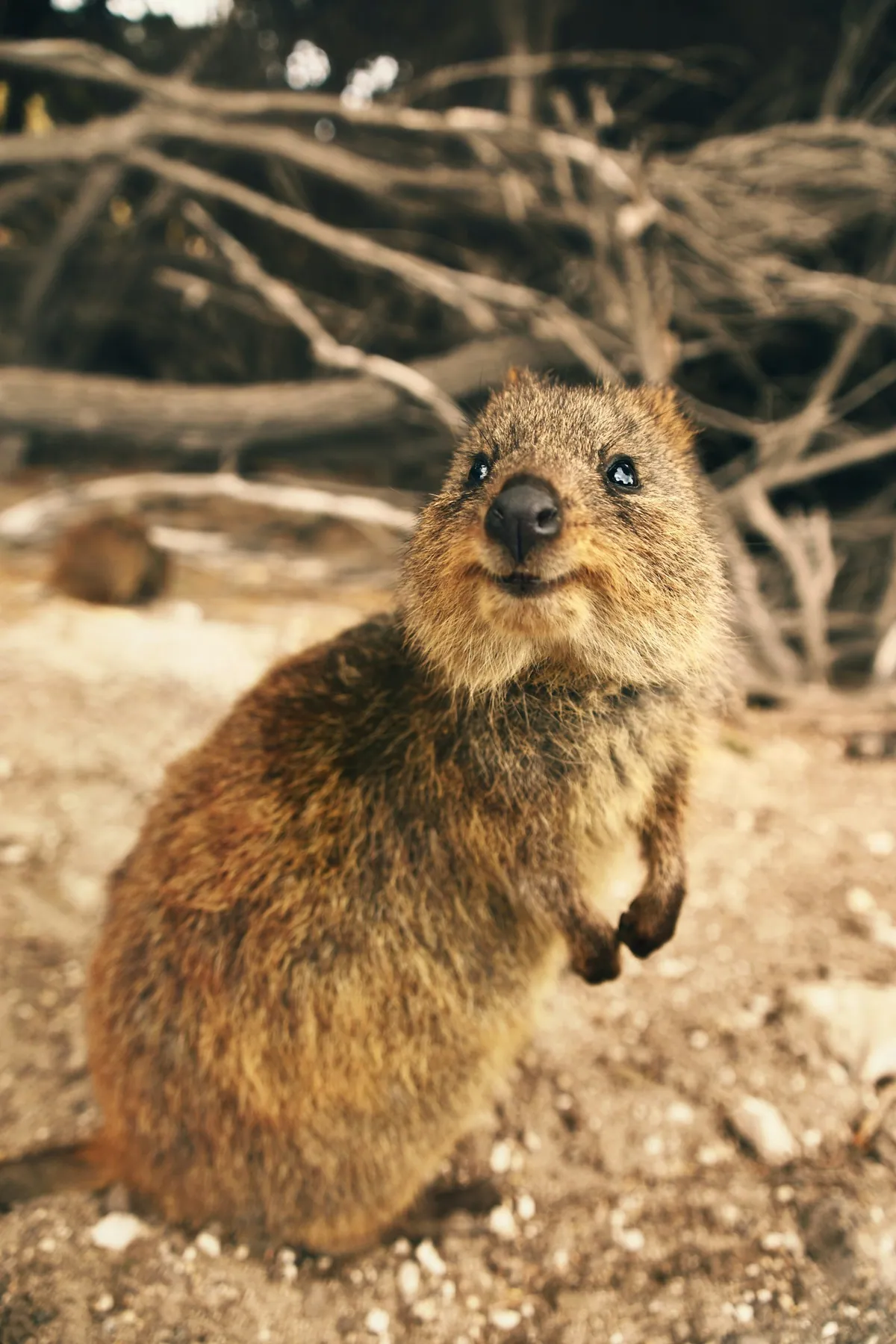
I want to set the scene properly. I had braced myself for a sort of zoo-like experience — quokkas behind a low fence somewhere, the line of selfie-takers managed by staff with hi-vis vests. It is not like that. The island is twelve square kilometres, the quokkas number around twelve thousand, and they are everywhere. They live in the dunes, in the scrub, around the campground, on the beaches, and in the small village around Thomson Bay where the bakery is. They are not pets. They are not even really wildlife in the way you’re used to wildlife being in Australia, where almost everything will kill you if you give it half a chance. They are simply small, busy, slightly squashed creatures going about their business, who occasionally tilt their heads up to look at you in a way that you can only describe as “greeting.”
The bike
There are no private cars on Rottnest. There’s a small shuttle bus, you can hire an electric scooter, but the proper way to do the island is to hire a bike. Pedal Power, near the ferry dock, will set you up with a helmet, a hire bike, and a small map for around $40. There is a perimeter ring road of about twenty-two kilometres, sealed and gentle, with a single sharp climb on the western end. You can do the loop in two and a half to four hours depending on how often you stop, and you should plan to stop a lot.
I stopped, by approximate count, every five minutes. Sometimes for a quokka. Sometimes for a bay so beautiful I had to lean over the bike and stare. Sometimes because a quenda — a small bandicoot, also unbothered — had crossed the path. Sometimes because I had reached one of the lookouts and the entire Indian Ocean was sitting there, glowing, and the appropriate response to a glowing Indian Ocean is to shut up and stare.
The bays you must stop at, if you take the loop clockwise from Thomson Bay: The Basin (a calm swimming pool of clear water tucked behind a reef, perfect for kids and weak swimmers), Pinky Beach (a bright crescent of white sand below an old lighthouse), Geordie Bay (where the moored yachts sit on water so clear they look like they’re floating in air), Little Salmon Bay (a small snorkelling reef with marker buoys laid out as an underwater trail), and Salmon Bay itself, which has a long stretch of white sand and almost no one on it.
I had a snorkel mask in my pannier. I used it at Little Salmon Bay. The reef is a small, shallow garden of corals and sea grasses sitting in maybe two metres of water, and within five minutes I was face-down watching a school of striped trumpeter the colour of yellow highlighter slide past, and a small octopus changing its colour in slow motion to match a piece of pale rock. The water was about twenty-two degrees, warm enough to swim without thinking.
The actual quokka encounter
You will have your own quokka encounter. Mine happened at the picnic table by Mary Cove, where I had stopped for lunch. I had a baguette. I had taken one bite. A quokka the size of a melon emerged from a low bush about two metres away, tilted his head in my direction, took an apologetic two-step hop, and sat down at my feet to wait.
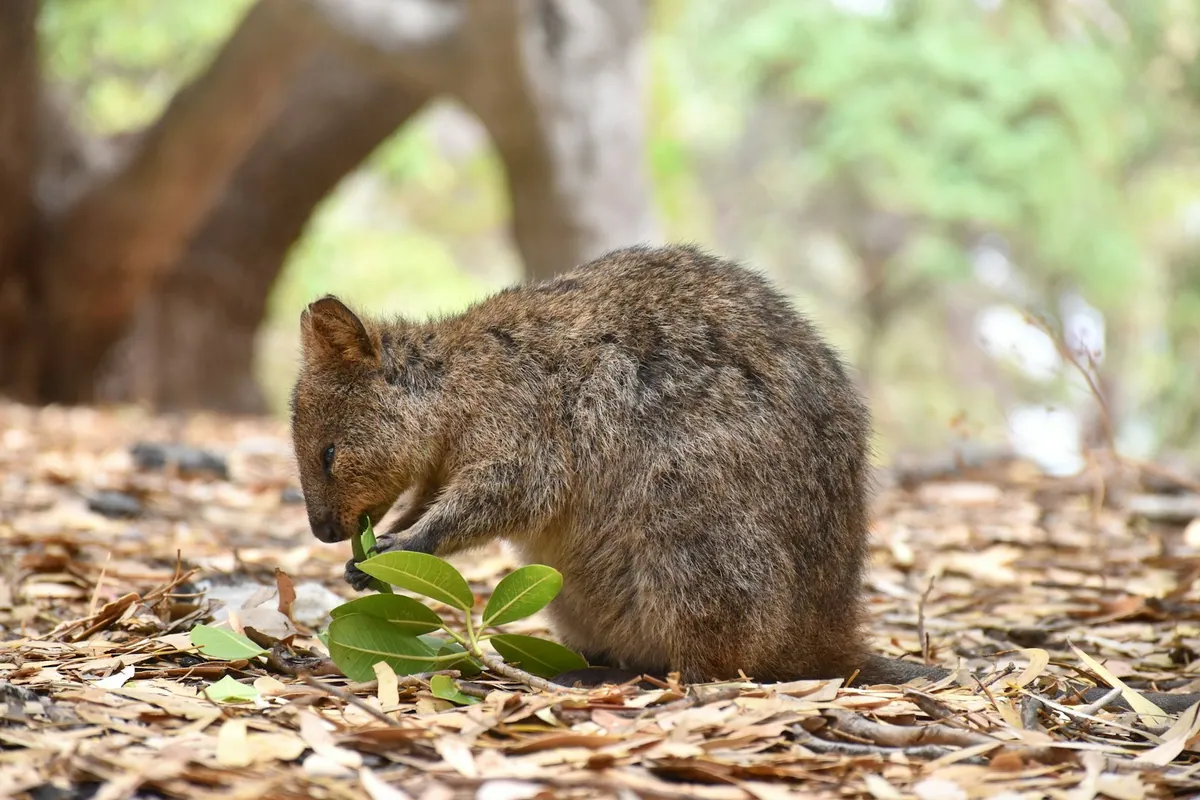
I knew the rules. You don’t feed quokkas — they get sick from human food, and there are signs everywhere, and the rangers are serious. I broke off a piece of the baguette’s crust, kept it for myself, did not give him any, and apologised. He was unbothered. He moved closer. He sniffed my shoe. He stood up on his back legs and looked at me with an expression that I want, deeply, to call patient.
I crouched down to his level, kept the bread in my pocket, and held the camera out. The quokka turned his head. Not because I asked. Because that’s what they do. The selfie that resulted is the best photograph I have ever taken, and it cost me nothing but a piece of crust I refused to give him. He gave up after a few minutes, hopped back into the bush, and a kookaburra in a nearby tree laughed at me. Welcome to Western Australia.
What surprised me about the place
The first thing that surprises you is how big the island feels for how small it is. The ring road is short on a map but the variety inside it is not — you go from low scrub to dune system to lighthouse hill to inland salt lakes (don’t skip the salt lakes, by the way; they’re a kind of pink in late afternoon that doesn’t look real) to old colonial buildings near the village. The island is small enough to circle in an afternoon and big enough that it never feels crowded.
The second is how decent the staff are. The visitor centre staff, the bike-hire crew, the bakery staff, the bus drivers, the rangers — all of them are warm in a way that you might mistake for a corporate training programme except that you’ve been in Australia long enough by now to recognise it as the genuine article. A ranger I asked for directions at the lighthouse end of the island ended up sitting with me for ten minutes, drawing a route on my map that took in three lookouts I would never have found on my own. He asked where I was from, told me his cousin lived there, and then said “you’re alright, take care, mate” in a way that made me feel like I had been adopted.
The third is how much heritage is layered into a small island. Rottnest was a prison for Aboriginal men in the late 19th century, a fact that is not soft-pedalled on the island today; there’s a memorial site, a museum exhibit, and the names of those who died and were buried there are listed publicly. It is heavy and important, and the island holds it openly. You should walk the small path past the Wadjemup Bidi memorial. You should read the signs. You should sit for a while.
How to actually do the day
• Catch the first ferry of the day from Fremantle (around 7:30 a.m. weekdays). You’ll have an hour of golden light on the bays before the day-trip crowds arrive. • Hire the bike. Get the snorkel set if you can. The bike-hire kiosk sells reef-safe sunscreen at sane prices. • Pack a packed lunch from a Fremantle bakery. The bakery on the island is fine but the queue at noon is brutal. • Do the loop clockwise. The big climb on the western end is easier going up that way and the descent into Geordie Bay is one of the great freewheel moments of your life. • Get the late-afternoon ferry back. The salt lakes glow at the end of the day and the quokkas come out of the heat at sunset. • Bring sunglasses, a hat, sunscreen, and a quiet sense that you’re going to like an animal more than you ever expected to.
I caught the 5 p.m. ferry back to Fremantle with a slight cycling-shorts limp, a sunburnt nose, and a phone full of photographs that I will be showing to my grandchildren. The quokka selfie is, of course, the best one. Print it out. Frame it. Put it next to your degree on the wall. It deserves the same respect.