The Amalfi Coast in Three Days: Positano, Amalfi and the Coastal Drive
Three days on Italy’s most famous coast — the cliff villages, the lemon groves, and the road that hangs over the Tyrrhenian Sea.
📍 Amalfi Coast, Italy
The Amalfi Coast is the 50-kilometre stretch of cliffs and small villages on the south side of the Sorrentine Peninsula, between Positano in the west and Vietri sul Mare in the east. The cliffs drop straight from 400-metre limestone peaks into the Tyrrhenian Sea, the villages cling to them in implausible defiance of gravity, the lemon trees grow in terraces between the villages (the Amalfi sfusato lemon, twice the size of a normal lemon, is the regional symbol), and the famous SS163 road — the Strada Statale Amalfitana — winds for 50 kilometres along the cliffs at a height that makes the journey itself one of the great drives in Europe. The coast has been a destination for the wealthy and the celebrated since at least the time of Roman emperors (Tiberius had a villa on Capri offshore; many of the Roman aristocracy summered along this coast), and the modern luxury industry that has built up around towns like Positano and Ravello in the 20th and 21st centuries is exactly what you imagine.
Three days will give you the headlines. You will leave wanting more.
The setup
Fly into Naples (the closest international airport — about 90 minutes by car or bus to Positano), then either drive (the SS163 is famous and slow — allow time), take the SITA bus from Sorrento or Salerno, or take the year-round ferry from Naples or Salerno. The car gives you flexibility but parking is genuinely terrible in the cliff villages; many travellers prefer to park in Sorrento and take buses or boats from there.
Stay in Positano (the most photogenic but most expensive — €300+ per night in season), Amalfi (more central, slightly more accessible), or Ravello (up on the cliff above Amalfi, quieter, with the famous Villa Cimbrone gardens). Cheaper budgets work better in Praiano (the small village between Positano and Amalfi, much less developed).
Day one: Positano
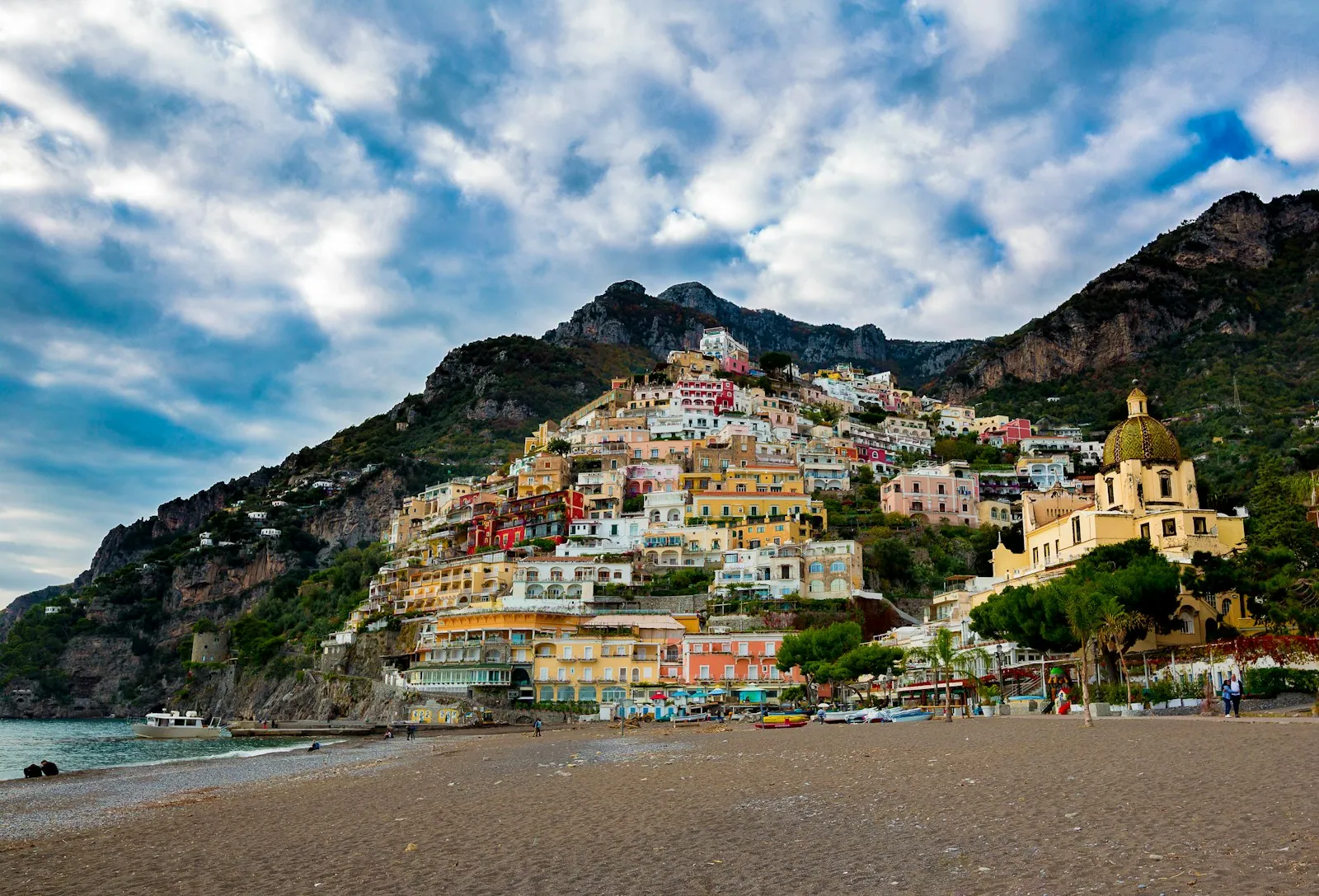
Positano is the iconic village — pastel houses cascading down a near-vertical cliff to a small harbour, with a single steep road climbing through the centre and small staircases connecting the levels. The village is tiny (population about 4,000) and entirely tourist-focused; almost nothing here is for locals any more. But the photograph is real and the experience is the experience.
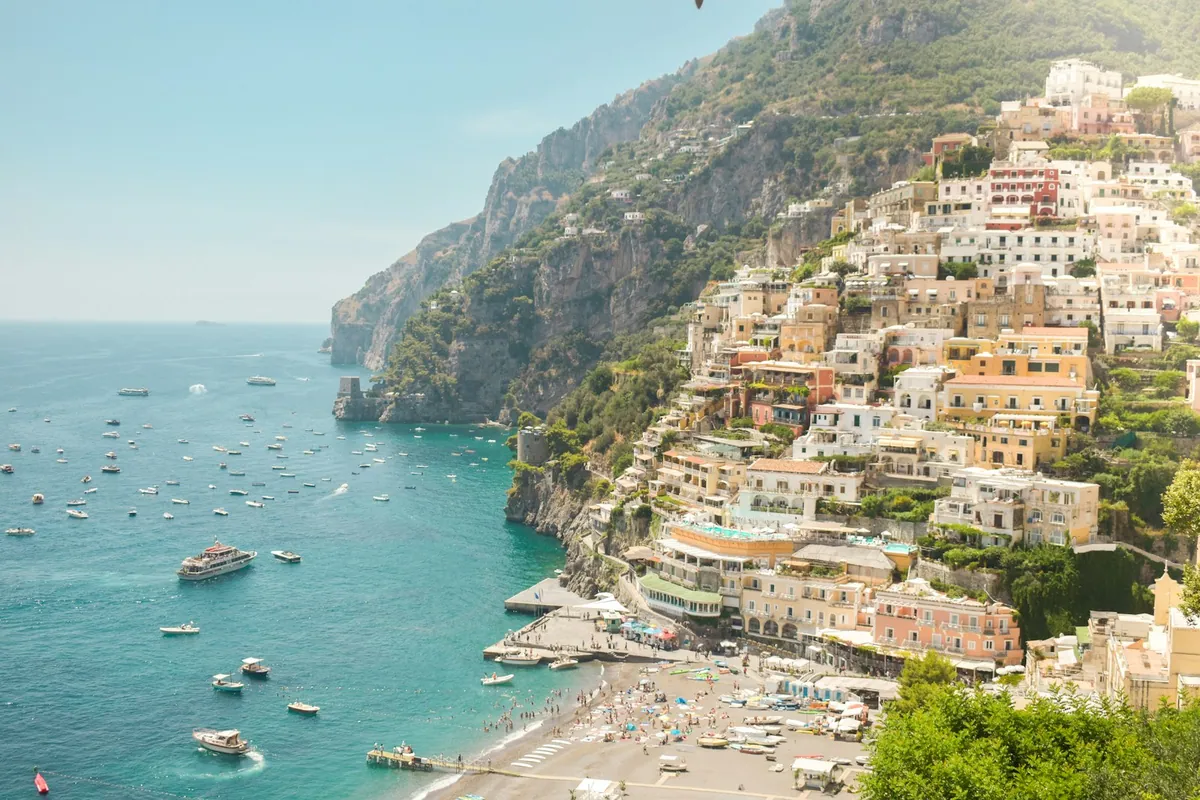
Walk down through the village to the Spiaggia Grande — the small main beach at the foot of the cliff. The beach is dark grey volcanic sand, the water is the clearest deep blue, the small sun-loungers cost €25–40 a day, and the harbour fills with small boats coming in and out all day. Swim. Read. Eat a long lunch at one of the beachfront restaurants — Chez Black (the famous one), Da Vincenzo, La Cambusa.
In the afternoon, walk up through the small streets above the beach. The Church of Santa Maria Assunta (with its famous green-and-yellow tiled dome) is the architectural anchor. The small boutiques selling linen clothes (Positano is famous for its linen — beautifully made, beautifully priced) are everywhere. Stop at one of the cliff-edge cafes for a coffee and the view back across the bay.
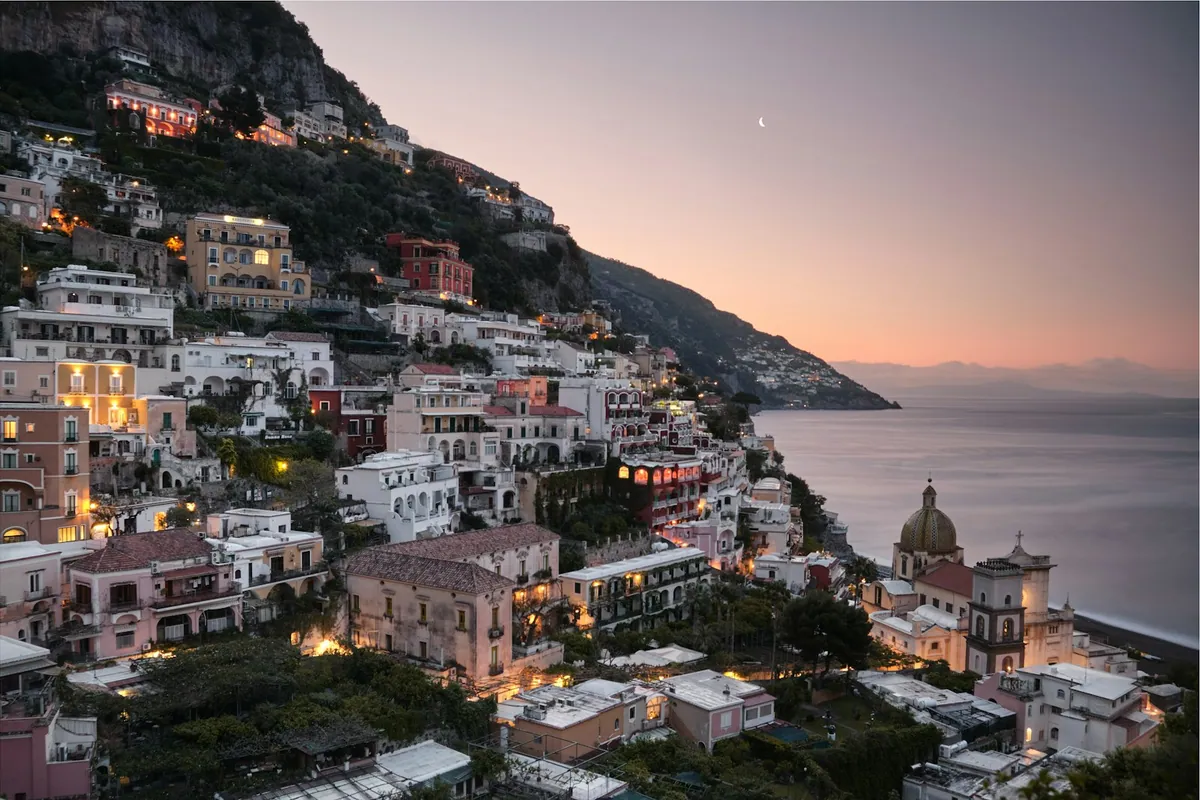
For dinner, eat at one of the cliff-side restaurants — La Sponda (in Le Sirenuse hotel, with hundreds of candles, one of the most romantic dining rooms anywhere) or any of the smaller restaurants in the upper village. Order the local Amalfi sfusato pasta with lemon, or the seafood pasta. Drink the local Greco di Tufo or Fiano di Avellino white.
Day two: the coastal drive — Praiano, Amalfi, Ravello
Day two is the drive. Either rent a car (warning: the road is narrow, winding, with constant bus traffic, and parking at any village is a nightmare) or take the SITA bus from Positano east along the coast. The bus is, frankly, the better option — it’s cheap, it stops at every village, and you can stare at the view rather than watching the road.
Stop at Praiano — a smaller and quieter cliff village halfway between Positano and Amalfi. The Marina di Praia at the bottom of the cliff is a tiny cove with a single beach restaurant and the famous Africana cave/disco (yes, a 1960s nightclub built inside a sea cave — open in summer, surreal in concept). Worth a coffee stop and a swim.
Continue to Amalfi. Amalfi the town is the historic centre of the entire coast (the coast is named for it), and it has the great medieval anchor — the Cathedral of Sant’Andrea, with a striking gold-and-black tiled facade at the top of a long flight of steps from the central piazza. The Cloister of Paradise next to the cathedral is a beautiful 13th-century covered cloister with white columns and Saracen-influenced arches. Allow ninety minutes for the cathedral and cloister.
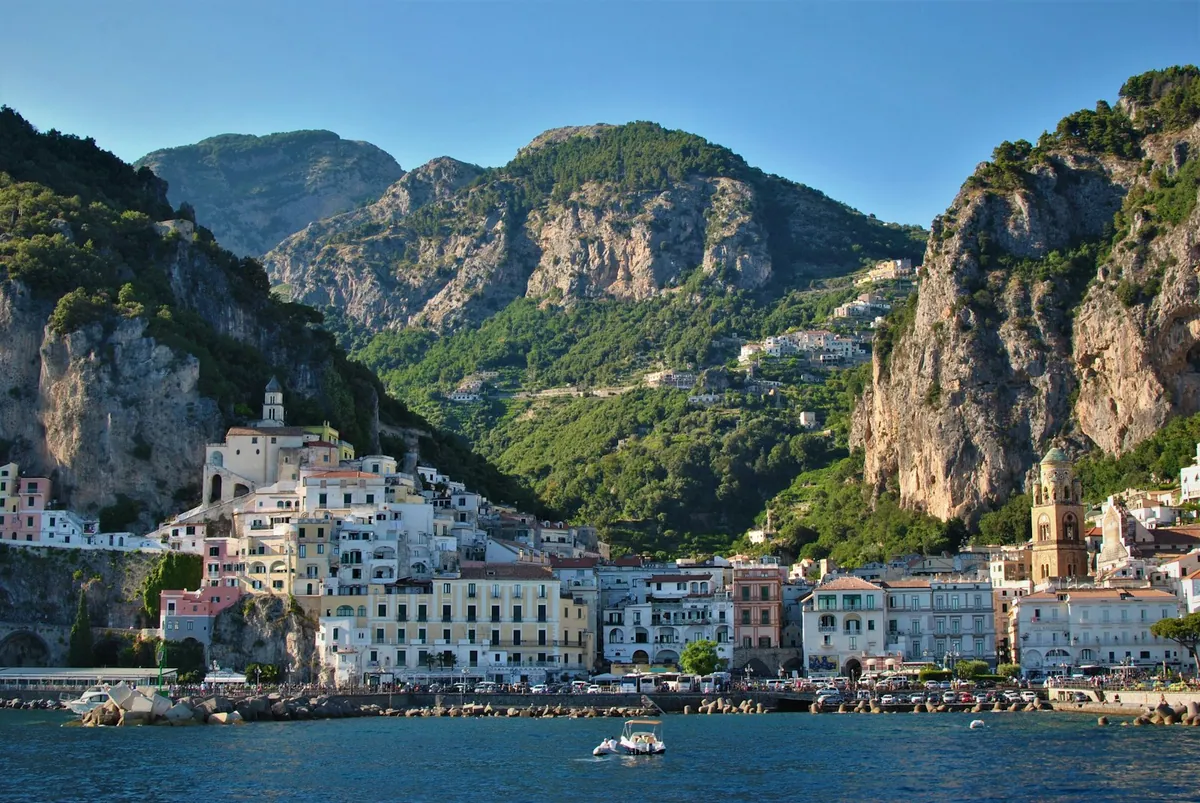
Have lunch on the harbour at Amalfi. Marina Grande, Da Gemma, or any of the small bistros in the side streets behind the cathedral. Order the spaghetti alle vongole.
In the afternoon, drive (or bus, or taxi) up the steep switchback road to Ravello — the small clifftop town 350 metres above Amalfi. The drive is dramatic, the destination is exquisite. Ravello has two famous villa-gardens: Villa Rufolo (a 13th-century villa with terraced Italianate gardens that drop towards the sea, with the iconic “Belvedere of Infinity” — a small balcony at the cliff edge with the most photographed view on the entire coast) and Villa Cimbrone (a 19th-century villa-garden with the equally famous “Terrace of Infinity,” a longer balustraded terrace with marble busts and the same Mediterranean view). Both are essential. Allow two hours for the two.
Day three: a boat trip — Capri or the Grotta dello Smeraldo
Day three is for the water. Two main options:
A boat trip to Capri. The famous island sits 15 kilometres offshore from the western tip of the Amalfi Peninsula, and is reachable by daily ferries from Sorrento, Positano, or Amalfi. The headline experience is the Blue Grotto (Grotta Azzurra) — a sea cave on the north-west of the island where the sunlight enters through an underwater opening and refracts up through the water, lighting the entire cave with an otherworldly blue glow. Small rowing boats take 4 visitors at a time into the cave (you have to lie flat to fit through the small entrance). The cave is closed in any swell so check conditions before booking. The rest of Capri — the Piazzetta (the small main square in Capri town, full of boutique shops and cafes), the Anacapri high town, the Belvedere lookouts, the small beaches — is also lovely. A long day trip.
A boat trip along the Amalfi Coast to the Grotta dello Smeraldo (the Emerald Grotto, a smaller and less famous sister to the Blue Grotto, between Praiano and Amalfi, with green light effects rather than blue) plus a full coastal cruise — sailing past the cliffs, swimming in remote coves, having lunch on board. Several operators run small-group sailing day trips out of Positano and Amalfi for €100–200 a person. This is, by far, the better day if you can afford it.
End the trip with a final dinner on the Amalfi Coast — wherever you’re staying.
How nice are Amalfi Coast locals?
Polished. The hospitality industry on the coast is highly developed and the local welcome is professional, warm, and consistently excellent — the staff at the destination hotels and restaurants are some of the best-trained in Italy. The local Amalfitani themselves, away from the resort hotels, are warm and unhurried in the southern Italian way. Within three days I had: a Positano hotel concierge personally walk me through the village to point out the small church I’d asked about; an Amalfi cafe owner refuse the bill for my second coffee “because you stayed long, you treated the place as your own”; and a Ravello villa caretaker show me a small private corner of the gardens that the standard visitor route doesn’t cover. The Amalfi welcome is real even at the most touristy spots.
If you go
• Visit in May, June, September, or October. July and August are crowded and the cliff road becomes a slow snake of tourist buses. • Don’t rent a car unless you’re experienced with mountain driving. The buses and ferries are the better option. • Book hotels months ahead in season. • Eat the local lemon and seafood specialities. Drink the local whites. • Allow time on the coastal road. Even short drives take twice as long as you’d expect.
The Amalfi Coast is the bit of Italy that lives up to its reputation. Three days here will give you Positano, Amalfi, Ravello, and a boat trip. The cliffs are the photograph. The lemon groves are the smell. You leave with a list of return dates.