Blue Mountains in 48 Hours: The Three Sisters and Beyond
Two days of cliffs, eucalyptus mist, cable cars and a pie I am still thinking about.
📍 Blue Mountains, New South Wales, Australia
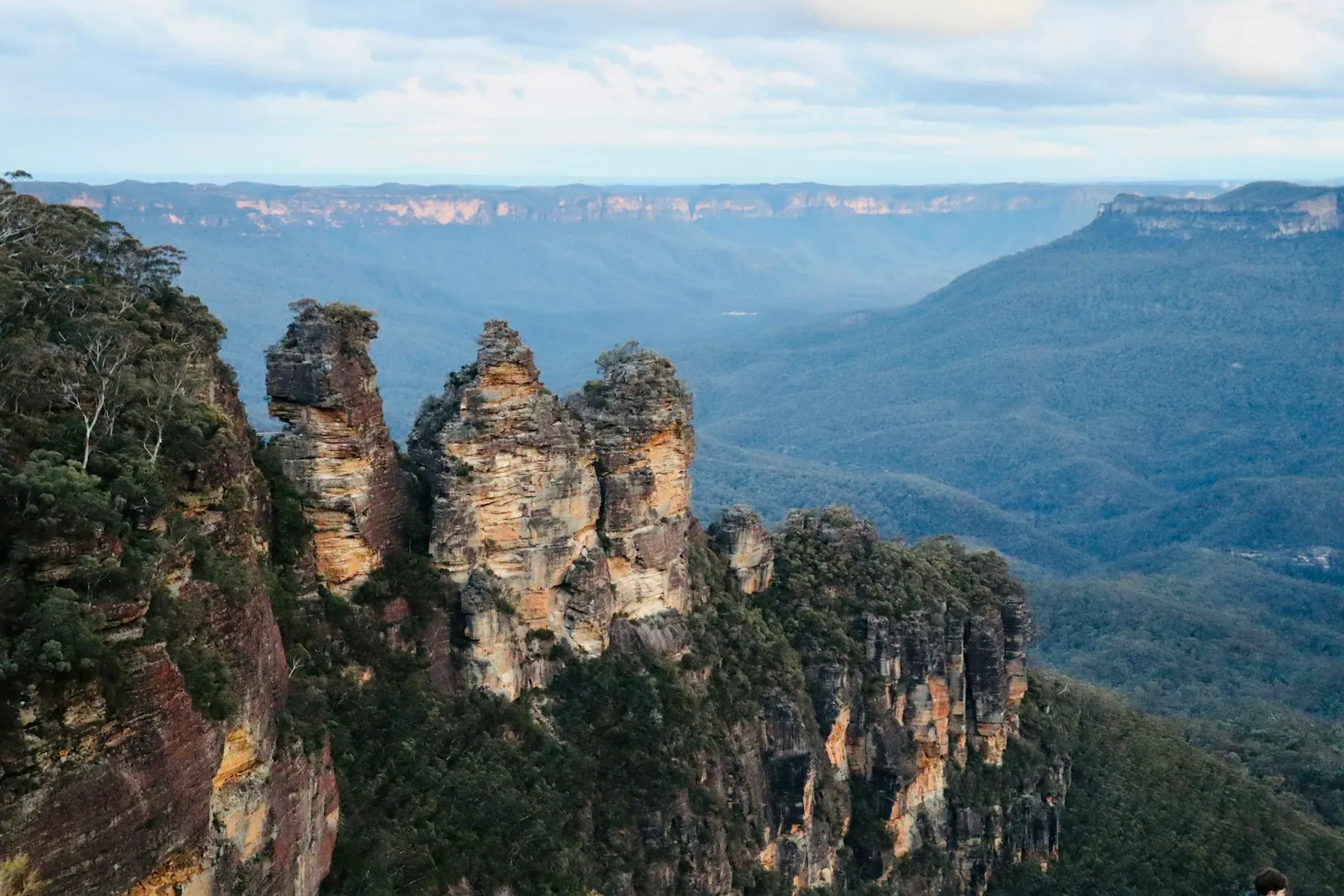
The Blue Mountains are not, by international standards, mountains. They are a sandstone plateau west of Sydney, sliced through by deep valleys, and their highest point tops out at just over a kilometre above sea level. By Himalayan or Alpine standards, that’s a hill. The thing is — and this is what I did not understand until I stood at Echo Point at 6:30 a.m. on a still autumn morning — the “mountain” feeling here doesn’t come from altitude. It comes from cliffs. Sheer, vertical, two-hundred-metre sandstone walls dropping into valleys so wide and so densely forested that you cannot see the bottom from the lookout. The blue of the name is real and it’s a haze: aerosol oils evaporating from the eucalyptus forests in the valleys, scattering the light into a soft cobalt mist that drifts above the trees and turns every distant ridge a different shade of grey-blue. You see it on the postcards and you assume it’s the photographer being clever. It is not. The mountains are actually that colour.
Two days is enough for the headline experiences. Three is better if you’ve got a long weekend.
Getting there
Katoomba, the main town, is two hours west of Sydney by car or train. The train is genuinely good — direct service from Sydney Central, scenic from Penrith onwards, runs roughly hourly, fits perfectly with a no-car weekend. The car gives you flexibility for the smaller villages and trailheads off the main highway. I took the train both ways and used the Blue Mountains Explorer Bus once I arrived; that worked.
Day one: Echo Point at sunrise, then the Three Sisters Walk
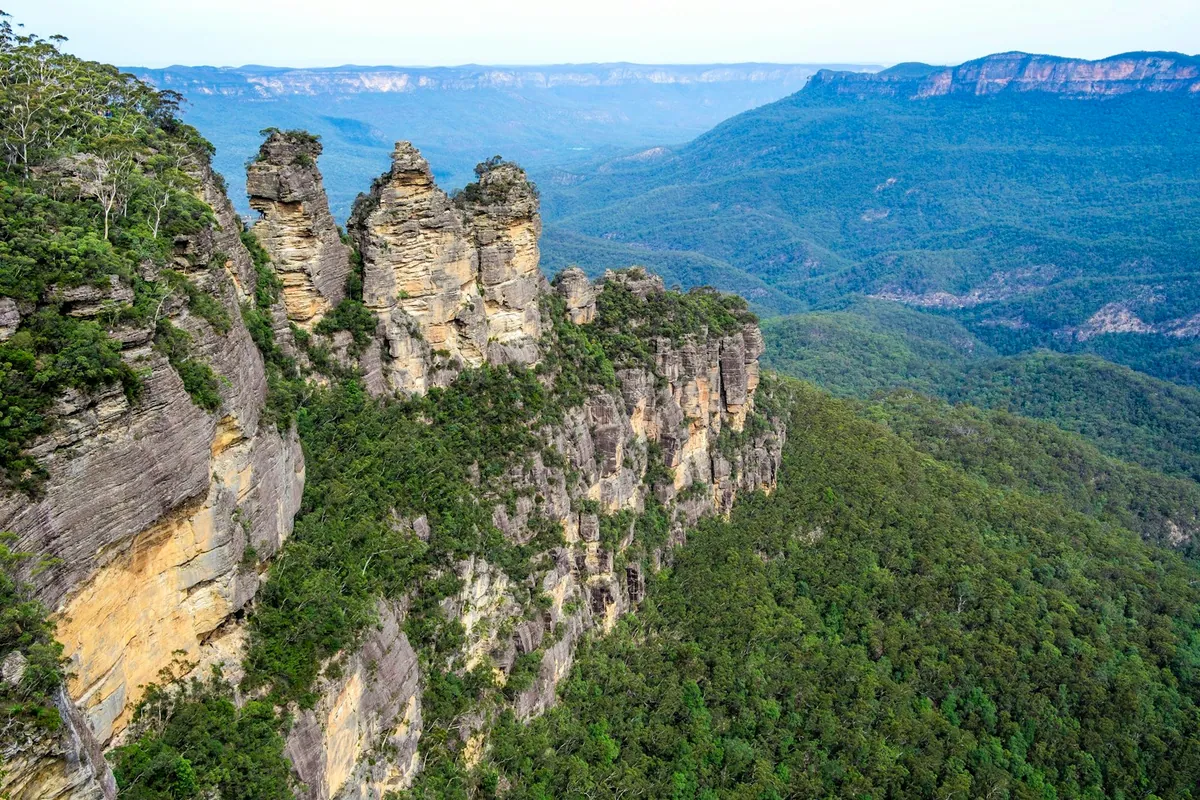
Set an alarm. Get to Echo Point lookout for fifteen minutes before sunrise. In autumn, that means you’re standing at the rail with a coffee in a paper cup at 6:25 a.m. while the valley is still grey and full of mist. Then the eastern sky turns peach. The mist starts to thin. The Three Sisters — three weathered sandstone towers at the edge of the cliff in front of you — turn from grey to pale gold to the warm amber that they hold for ten minutes before the day overtakes them. Below the Sisters, the Jamison Valley opens out for sixty kilometres into the haze. The first kookaburra calls from somewhere in the trees. A handful of other early people are also at the rail, and we all do that thing where you smile sideways at the strangers next to you because nobody wants to break the moment by speaking.
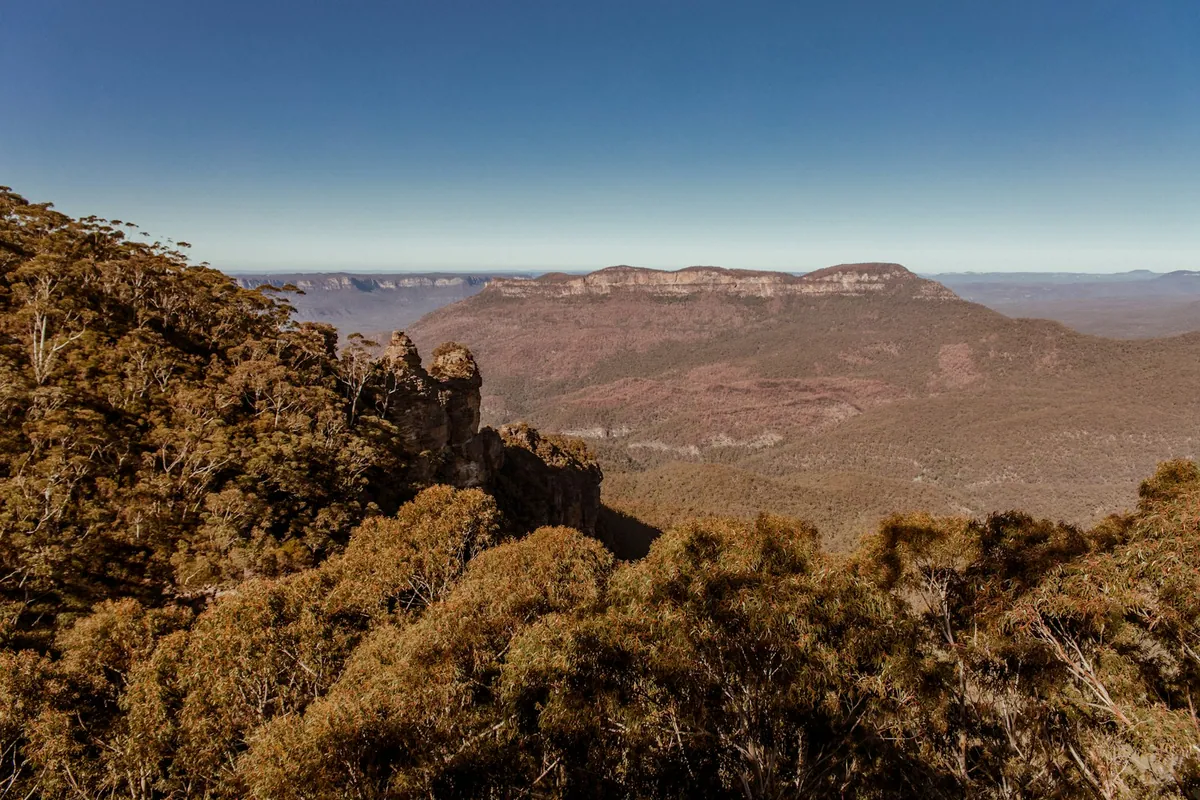
After sunrise, walk. From Echo Point, the Three Sisters Walk is a short, paved cliff-edge path of about a kilometre that takes you to the Honeymoon Bridge — a tiny footbridge across to the first Sister — and a viewing platform where you can stand on the spire itself. Then the Giant Stairway descends in 800 sandstone-and-steel steps down into the valley. It is steep. Your knees will know about it. At the bottom you can either turn right and walk through the rainforest valley to the Scenic World cable car (which carries you back up to the cliff for about $30 and is half the fun of the day), or turn left and do the longer Federal Pass walk to Leura Cascades. I did the cable car. I have no regrets.
Day one afternoon: Leura, lunch, and the Cliff Drive
Leura is a small Edwardian village a three-minute drive from Katoomba, full of antique shops, gardens, a couple of legitimately excellent cafes, and a high street that looks like a movie set for a film about a quiet town in 1920. Have lunch at one of the cafes on the Mall — Leura Garage and Café Madeleine are both reliable. Walk the gardens at Everglades or the Toy and Railway Museum if it’s wet.
In the afternoon, drive the Cliff Drive. This is a six-kilometre clifftop road that loops between Katoomba and Leura, with about a dozen lookouts strung along it. Eagle Hawk Lookout, Reid’s Plateau, Cahill’s Lookout, Lincoln’s Rock (the one where everyone takes the photograph hanging their feet over the edge — please be sensible, the rock has no fence and the drop is real). A car helps. The Explorer Bus also stops at most of them.
End the afternoon with a pint at the Carrington Hotel in Katoomba — a 1880s grand-dame hotel that still has a public bar, a billiard room, and a lounge with leather chairs and a fireplace going from late autumn through to early spring. There is no nicer place to be after a sunrise hike.
Day two: Wentworth Falls and the National Pass
If day one is the headline experiences, day two is the proper hike. Drive (or take the train) to Wentworth Falls, a small village a fifteen-minute drive east of Katoomba. From the car park, the Wentworth Falls track drops in to the top of the falls — a 187-metre, three-tier waterfall — and from there, the National Pass carves a narrow ledge along the cliff face down into the valley. Built by hand by stonemasons in 1907, the path is one of the great walks in eastern Australia: cliff overhead, valley below, waterfall pouring down past you, occasional sandstone seats hewn into the rock by the original builders.
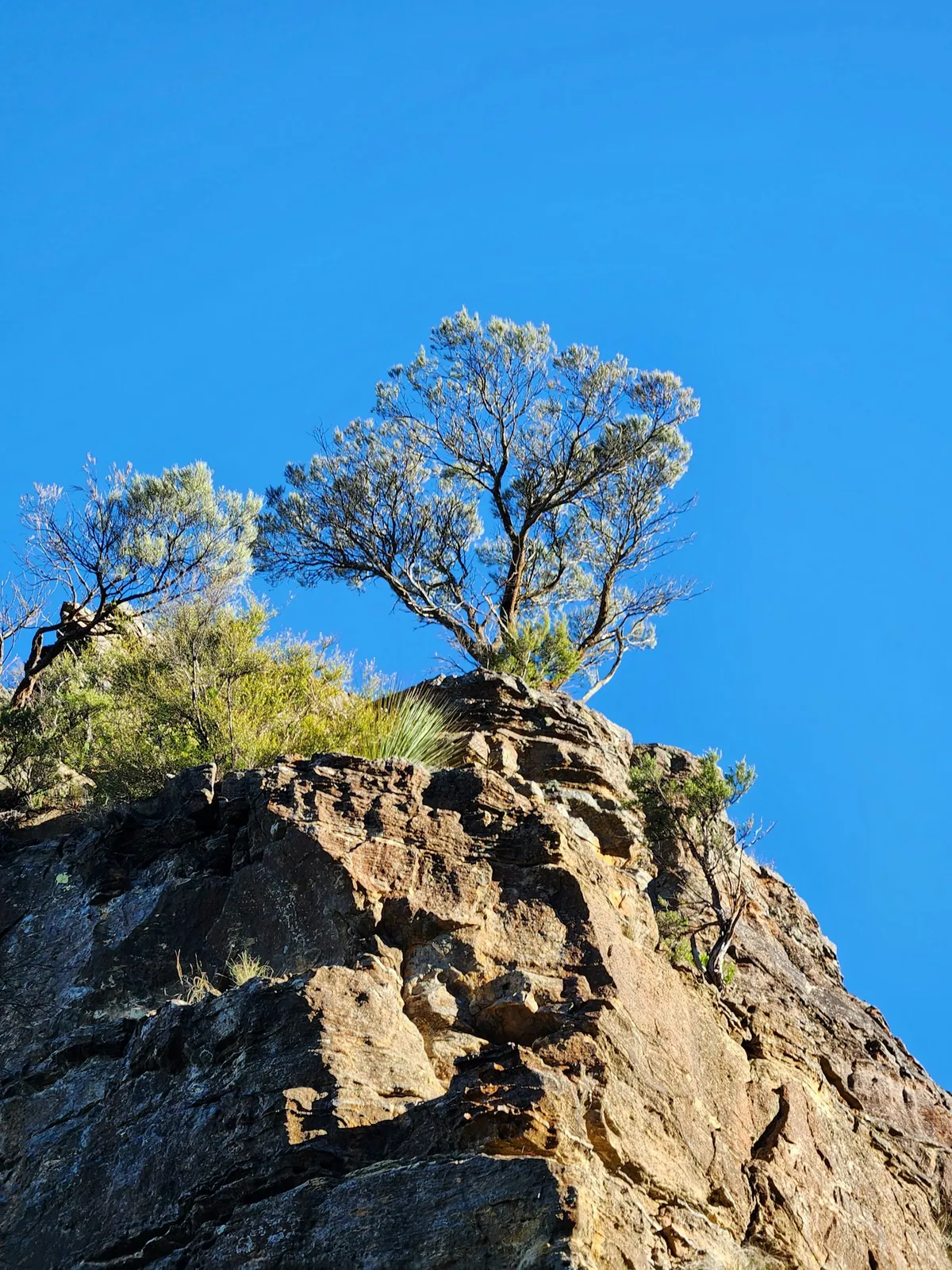
The full National Pass loop is about 4.5 kilometres and takes around three hours with a leisurely pace and decent lookouts. It is moderate difficulty — you’re ascending and descending steel-and-stone staircases, but nothing technical — and it is, with respect to every other walk in the area, the must-do. Take water. Take a hat. Take a sandwich and eat it at the Princes Rock lookout.
Day two afternoon: the bakery and the slow drive home
The single best thing I ate all weekend was a beef-and-Guinness pie from the Hominy Bakery in Katoomba. There was a queue. Of course there was a queue. The queue was a third locals, a third walkers in muddy boots, and a third tourists who’d been told by the cafe lady at Leura that the queue was worth it. The queue was worth it. The pie crust was crisp, the filling stewed for what tasted like four hours, and the woman behind the counter packed it for me in a paper bag and said: “you’ve done a walk today, mate, eat it now while it’s warm.” I obeyed.
If you’ve got time, drive (or train) further west to Mount Wilson, an Edwardian-era mountain village famous for its autumn gardens. Or south to Wollemi National Park, where the prehistoric Wollemi pine — a tree species thought extinct for two million years until it was rediscovered in 1994 — still grows in a small canyon. You can’t visit the actual canyon (the pines are protected from foot traffic), but the visitor centre at the Mount Tomah Botanic Garden has a grove of cultivated Wollemis that you can walk among.
What surprised me
• The mist. Even on clear-blue-sky days, the eucalyptus haze rolls into the valleys at sunset and turns everything blue. • The drop. Photos do not prepare you for the verticality of the Echo Point cliffs. Stand at the rail and look straight down. Your stomach will know. • The friendliness. Katoomba is a small town that has been welcoming hikers for over a century, and the Carrington Hotel staff, the bakery queue, the Explorer Bus driver — all the same warm, slightly weathered, deeply patient hospitality that the Australian country town does so well. The bus driver waited for me at one stop because he could see me running down a side street with a coffee. • The cold. In winter, the Blue Mountains see snow most years. Pack a proper jacket even in October.
If you go
• Stay in Katoomba or Leura — the rest of the towns are charming but make access fiddlier. • Train + Explorer Bus = the sustainable, easy option. Car = more flexibility for outlying gardens and quieter trails. • Sunrise at Echo Point > sunset at Echo Point. The morning haze is more dramatic and the crowds are nonexistent. • Always carry water and a phone. The valleys have patchy signal but lookouts are well-served. • Don’t skip the National Pass. It’s the walk that earns the “mountain” in the name.
The Blue Mountains are forty-eight hours from Sydney that completely reset your sense of scale. You walk back into Katoomba railway station on Sunday afternoon a slightly different person from the one who got off the train on Saturday morning. The blue stays in your head for weeks.