Brittany: Saint-Malo, Belle-Île and the Standing Stones at Carnac
Five days on France’s wild Atlantic coast — granite ramparts, a perfect island, and a megalithic field older than the pyramids.
📍 Brittany, France
Brittany is the windswept Celtic peninsula that juts out of north-west France into the Atlantic, one of the country’s most distinct regions, with its own flag, its own language (Breton, still spoken by perhaps 200,000 people), its own food, and a coastline of granite cliffs, half-tide islands, and small ports that has been pulling French and English visitors back for the better part of two centuries. The weather is moody, the tides are some of the highest in Europe, and the food (crêpes, galettes, fresh oysters, salted butter, cider) is dependable, generous, and mostly affordable. It is, by general agreement among the people who go often, one of the most under-rated holiday regions in France.
Five days is the right length for a first trip. You can do four. Six is better.
The setup
Fly into Rennes or Nantes, or take the TGV from Paris (1.5 hours from Gare Montparnasse to Rennes, 2 hours to Saint-Malo). Hire a car at the station — Brittany’s coast is dispersed and the small roads to the headland villages don’t do public transport well.
Stay two nights in Saint-Malo, then move south for two nights on or near Belle-Île-en-Mer (or in the small town of Quiberon on the mainland, with a quick ferry to the island), and finish with a night near Carnac.
Day one and two: Saint-Malo
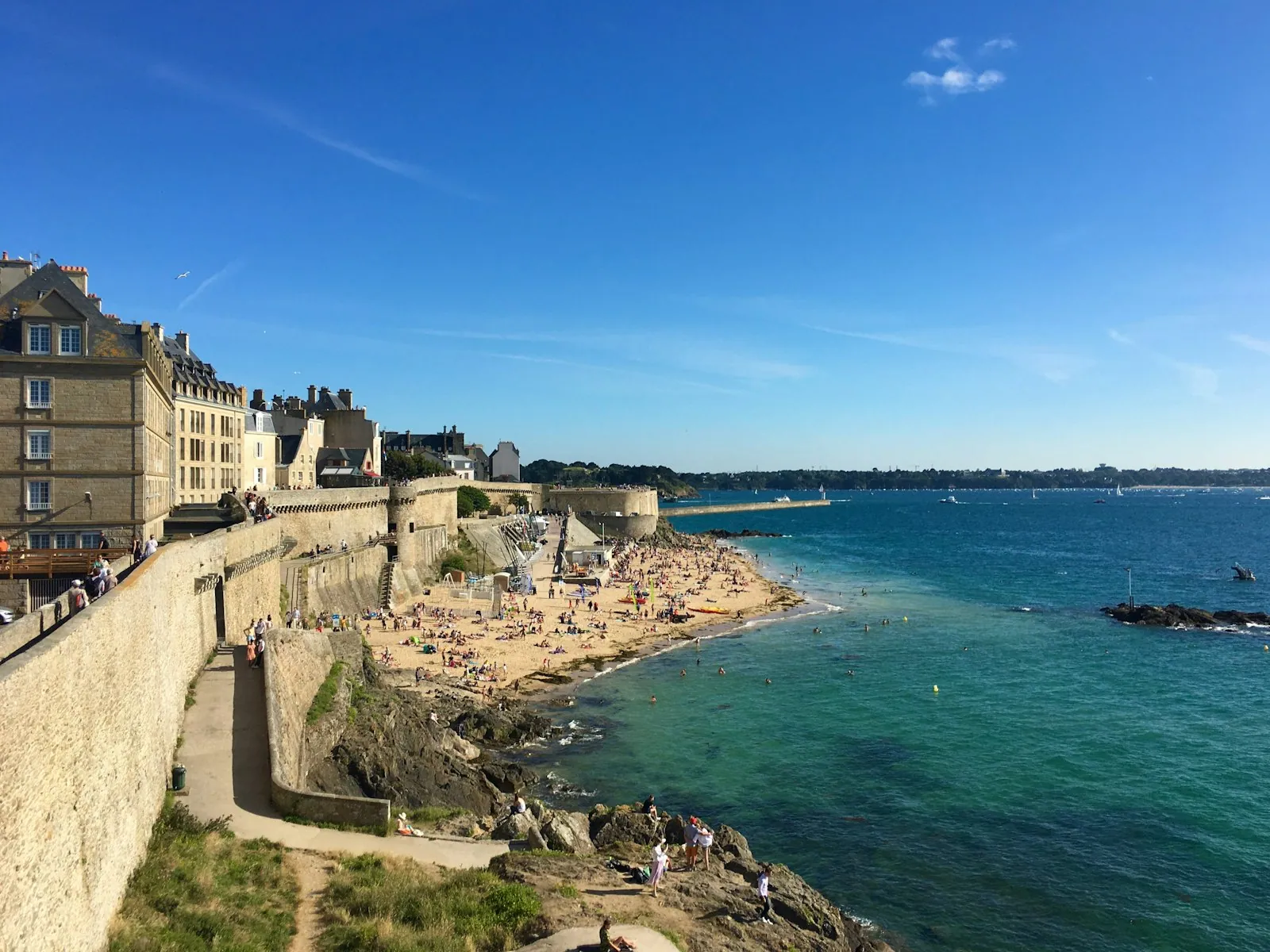
Saint-Malo is the famous walled port city on the north coast of Brittany — a tight rectangle of granite ramparts and tall stone houses (rebuilt after WWII bombing destroyed 80 per cent of the old town in August 1944, but rebuilt to look exactly as it had before). The walls are 1.7 kilometres around, you can walk the entire circuit on top of them in 45 minutes, and the views from the rampart walk across to the harbour, the islands offshore, and the tidal beach at Bon Secours are some of the best in any walled city anywhere.
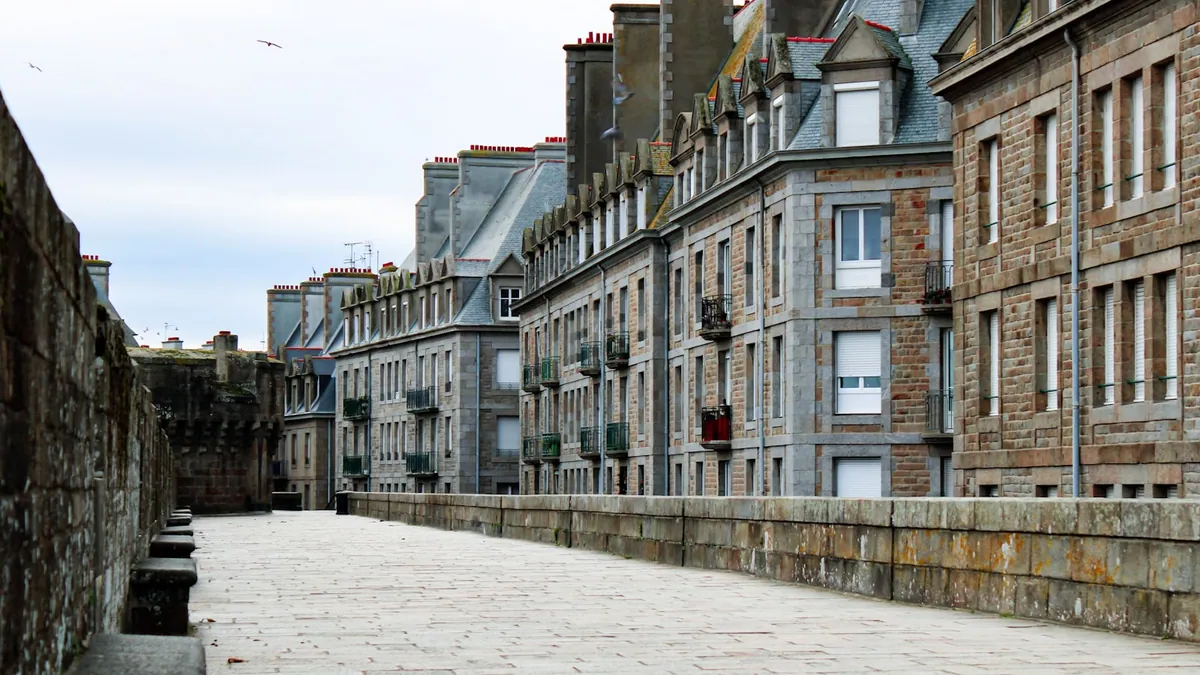
Walk the walls first thing on day one. Then drop into the small streets of the intra-muros old town for a coffee and a Breton pastry (kouign-amann, the famously buttery, sugared, crisp pastry of Brittany). Stop at one of the créperies for lunch — the standard is a galette (savoury buckwheat crêpe) and a sweet crêpe to follow, with a bolée of cider to drink. Le Corps de Garde or any of the small créperies on Rue de la Vieille Boucherie will do you fine for €15.
In the afternoon, walk out to one of the offshore islands. At low tide, you can walk across the wet sand from the Plage de Bon Secours to Le Grand Bé and Le Petit Bé — two small fortified islands a few hundred metres offshore. (The writer Chateaubriand is buried on Grand Bé, with his back to France, looking out to the open sea.) Watch the tide schedule carefully: the tides here move a kilometre of sand in two hours and people get cut off every year.
Day two, drive 20 minutes east to Cancale — a small fishing port famous for its oyster beds, which you can see at low tide stretching out into the bay. Eat oysters at the Marché aux Huîtres on the Pointe du Hoc — half-shell oysters straight off the boat, served with a wedge of lemon, eaten on the seawall. About €5 for a dozen. Then drive on to Mont Saint-Michel for a half-day visit (it’s technically in Normandy but it’s close enough to base from Saint-Malo).
Day three: drive south to Belle-Île
Drive south through Brittany — the inland route through Rennes and Vannes is fast (3 hours); the coastal route via the Côte de Granit Rose, Lannion, and the Bay of Morlaix is slower (6 hours) but spectacular if you have the time. Either ends at Quiberon, a long thin peninsula on the southern Brittany coast, from where you take the 45-minute ferry to Belle-Île-en-Mer.
Belle-Île is the largest of the Atlantic islands off Brittany — about 17 kilometres long, with a single main town (Le Palais), a few small fishing villages, and a coastline of cliffs, rocks, and small sandy coves. Famous as the holiday island of Sarah Bernhardt and Claude Monet, it has a slightly sleepy, end-of-summer feeling even in July. Stay in Le Palais, Sauzon (the prettiest village), or Bangor (inland, quietest).
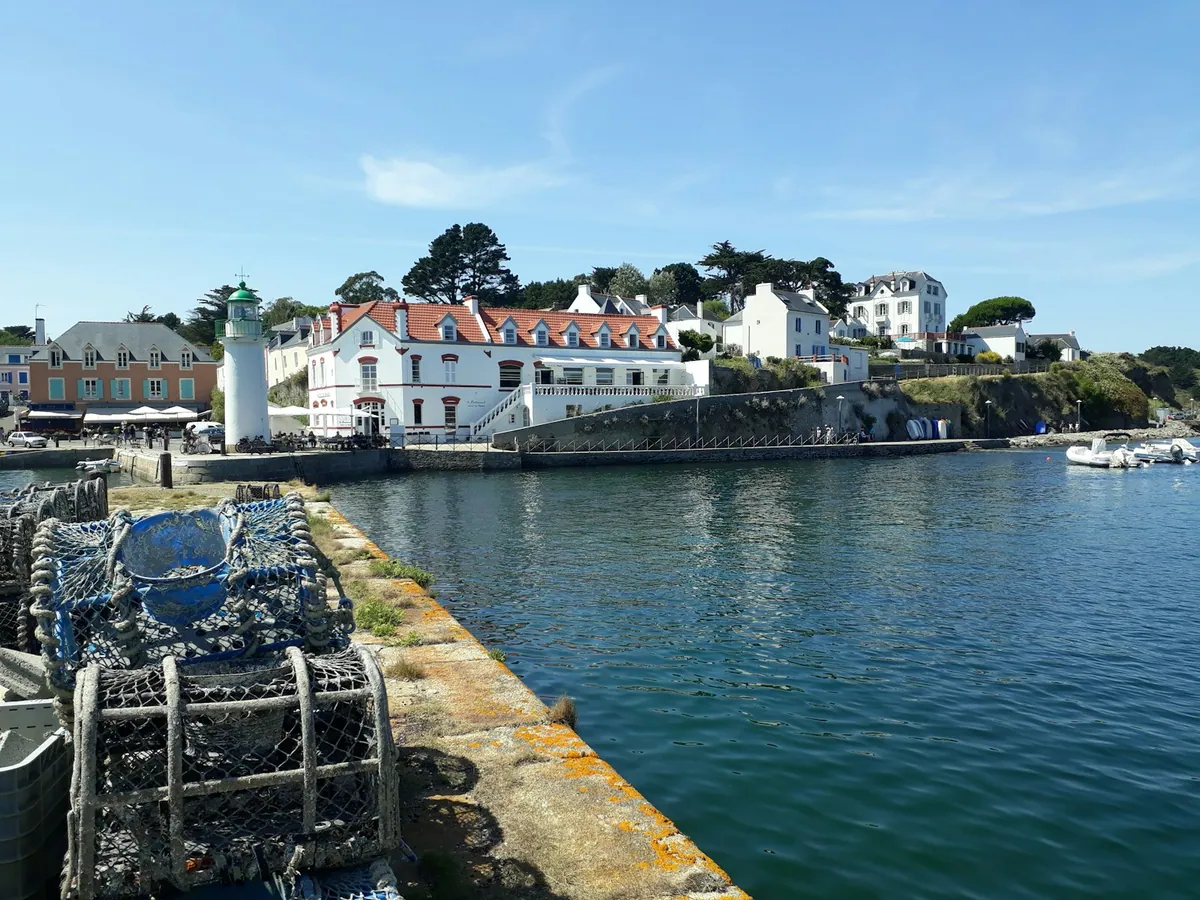
Day four, hire a bicycle or a small car and circle the island. The standout sights: the Aiguilles de Port-Coton (Monet’s famous “needles” — granite spires standing out of the surf at the western end of the island, painted by Monet repeatedly in 1886), the Plage de Donnant (a wide Atlantic surf beach), the lighthouse at the western tip (Phare des Poulains), and the small village of Sauzon with its colour-painted harbour houses.
Have lunch on the harbour at Sauzon. The seafood here is fresh and unfussy. The cider is local and excellent. The pace is exactly what you came for.
Day five: the Carnac stones
Take the morning ferry back to Quiberon. Drive north 30 minutes to Carnac.
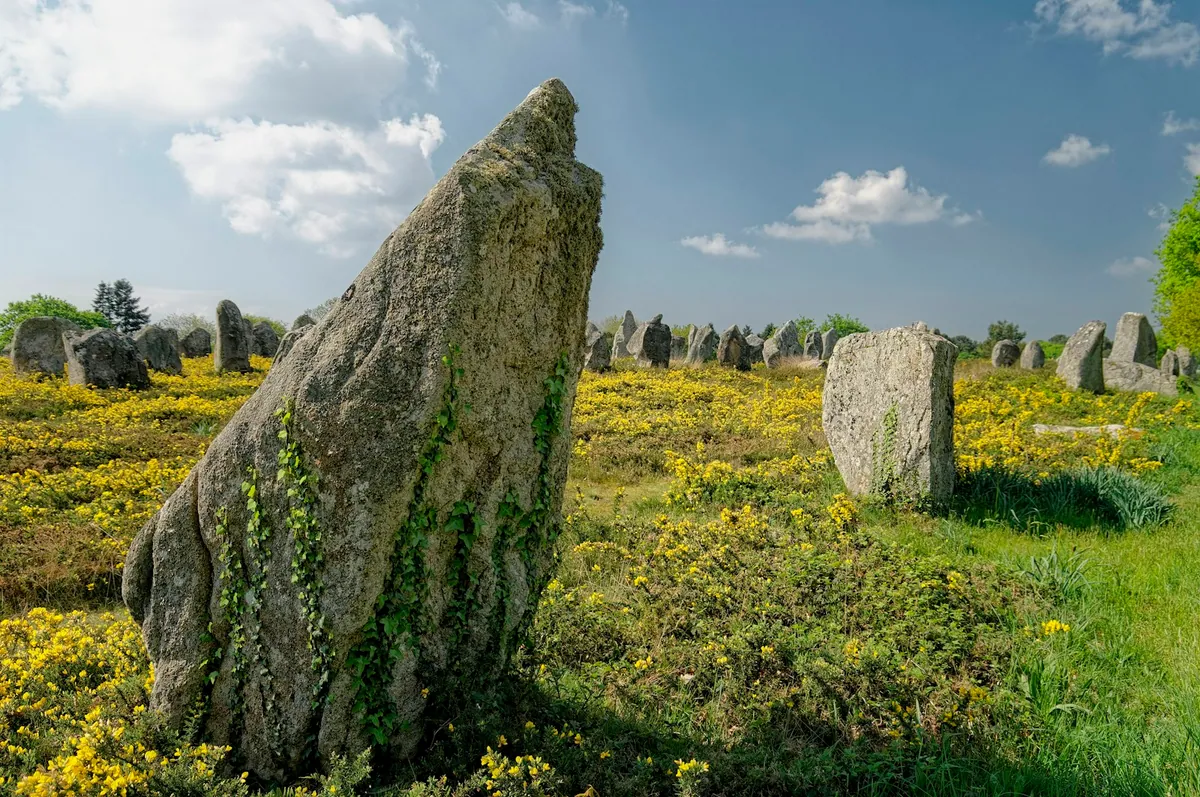
The Carnac alignments are one of the great prehistoric monuments of Europe — over 3,000 standing stones in three main fields (Le Ménec, Kermario, and Kerlescan), some standing in straight rows up to a kilometre long, others arranged in horseshoe shapes. The stones were placed here between roughly 4500 and 3300 BC, making them older than Stonehenge, older than the Egyptian pyramids, older than virtually anything else humans have built that’s still standing. We don’t know what they were for. The favourite theory involves astronomical alignments and ancestor veneration, but no one is sure.
Walk a guided tour from the visitor centre (free walks in summer; longer paid tours include access to the inner zones that are roped off for conservation). The total stones extend across about four kilometres of countryside; the Kermario alignment is the most spectacular, with some of the largest individual stones standing about 4 metres high. Allow two and a half hours.
In the afternoon, finish the trip with one last meal in Auray or Vannes (both small, beautiful Breton towns within 30 minutes of Carnac, both with excellent crêperies and seafood restaurants). Then back to the airport or the TGV.
How nice are Bretons?
Maritime-warm. The Bretons are famously stubborn, strongly identified with their region (you’ll see Breton flags everywhere, and the Triskele symbol), and once you’ve shown an interest in the region they will go out of their way to help. My five days included: a Saint-Malo crêperie owner give me a free bolée of cider because I’d “done good and ordered properly”; an oyster vendor in Cancale show me how to shuck an oyster myself, with a small linen-wrapped pad and a knife she lent me; and a small B&B owner on Belle-Île wake up at 5:45 a.m. to put me on the early ferry “because you said your train back to Paris is in the afternoon, and the next ferry is too late.” Brittany takes care of you.
If you go
• Hire a car. Brittany’s coast is dispersed. • Watch the tides. Brittany has some of the highest tides in Europe and crossings to islands at low tide must be timed carefully. • Eat the crêpes and galettes. Drink the cider. Both are local specialities, both are excellent, both are cheap. • Pack a windproof jacket even in summer. The Atlantic breeze is real. • Allow a day for Belle-Île. A half-day is too short; a full day on the bike is right.
Brittany is the part of France that is most itself — strongly Celtic, slightly weather-beaten, generously fed, and warmly welcoming once you’ve been there a day. Five days will give you the walls of Saint-Malo, the cliffs of Belle-Île, the standing stones at Carnac, and a serious affection for a region you may have walked past on your way to other parts of France for years.