Corsica in Five Days: Bonifacio’s Cliffs, Beaches and the Calanques de Piana
Five days on France’s wild Mediterranean island — limestone cliffs, white-sand coves, and the red rocks of the Gulf of Porto.
📍 Corsica, France
Corsica is the wild French Mediterranean island sitting between mainland France and the Italian island of Sardinia, closer geographically to Italy than to France, but politically a French region since 1768. It is the fourth-largest island in the Mediterranean, mountainous (the highest peak, Monte Cinto, is 2,706 metres), sparsely populated (about 350,000 people on a landmass slightly larger than Cyprus), and it has, in five days, more dramatic coastal scenery than most countries manage in their entire territory: limestone sea cliffs at Bonifacio, white-sand bays in the south, the red cliffs and pinnacles of the Calanques de Piana on the west coast, and a mountainous interior of granite peaks and Laricio pine forests that almost no visitor sees.
Five days is the right length for a first trip — three nights in the south around Bonifacio, two nights at Porto on the west coast.
The setup
Fly into Figari (south Corsica) or Ajaccio (west). Hire a car at the airport — Corsica is an island made for driving and there is essentially no public transport between regions. Rent a small car (the roads are narrow and winding); a 4WD is overkill on the main routes.
Stay in or near Bonifacio for the first three nights, then drive north up the west coast to Porto for the next two.
Day one and two: Bonifacio
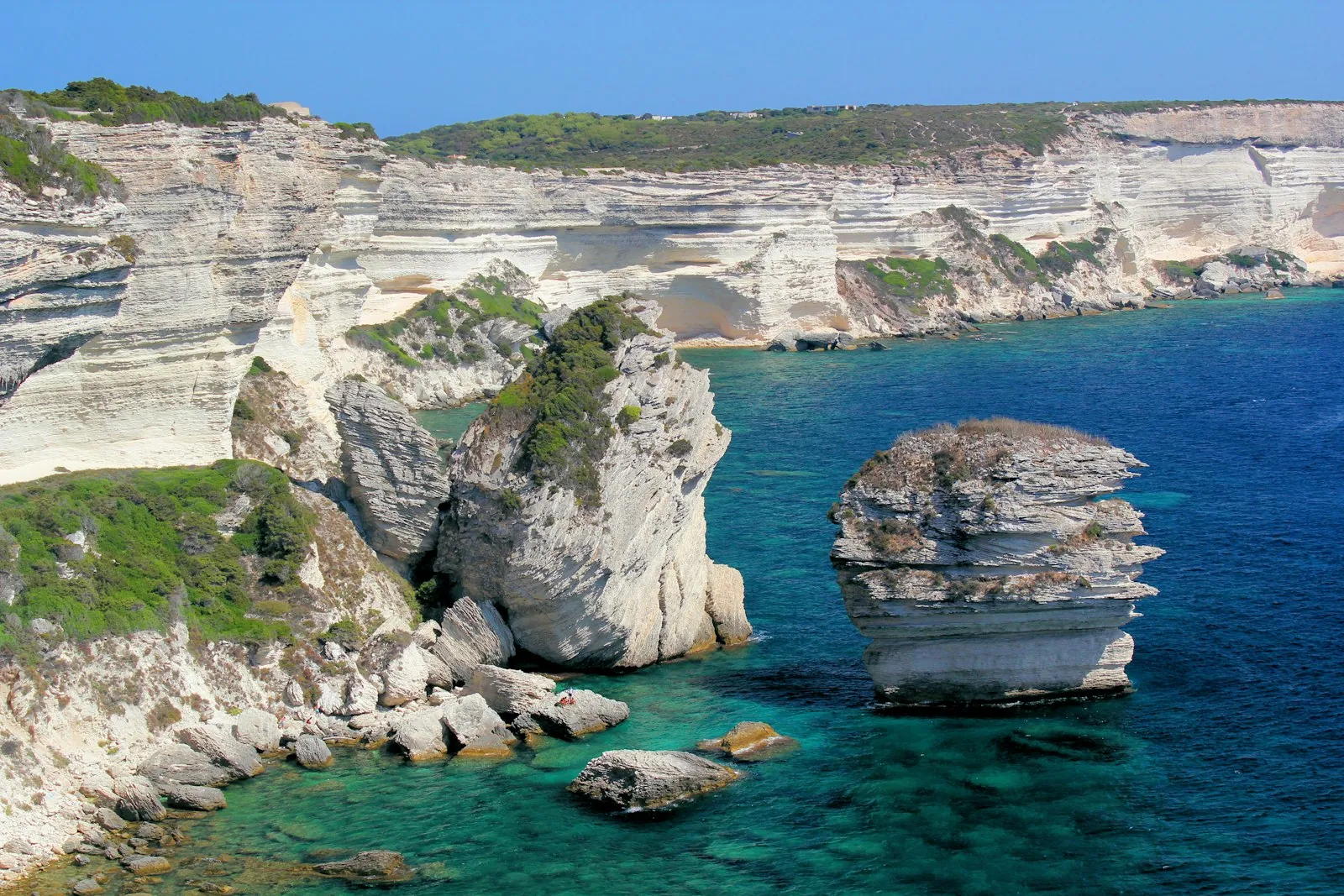
Bonifacio is the most spectacular town in Corsica. It sits at the very southern tip of the island, on the Strait of Bonifacio (which separates Corsica from Sardinia, only 11 kilometres across), and the Old Town is built on top of a 70-metre limestone cliff that drops straight down into the sea on three sides. The white limestone, the deep blue water, the medieval buildings clinging to the cliff edge, and the small fortified harbour at the foot of the cliffs are the iconic Bonifacio postcard.
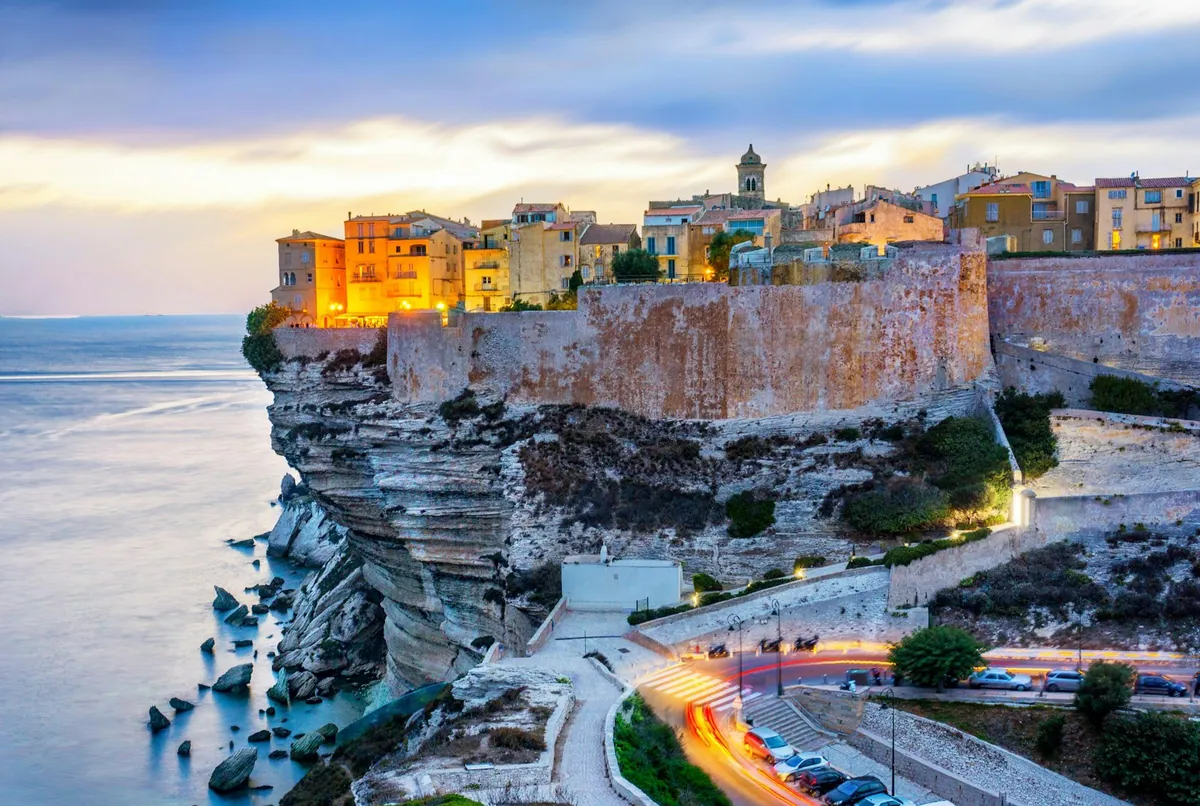
Walk the Haute Ville (the upper town, on top of the cliff) on day one. The town inside the citadel walls is small — a tight grid of narrow streets, a small cathedral, a few good restaurants — but the views from the Bastion de l’Étendard and the King of Aragon’s Staircase (a 187-step staircase carved into the cliff face down to the sea) are the experience. The Bouches de Bonifacio (the strait between Corsica and Sardinia) is a marine sanctuary and one of the most ecologically rich pieces of the Mediterranean; you can see Sardinia clearly on a good day.
The Marina at the foot of the cliffs is the lower part of town. Restaurants on the quay. Boats running out into the strait. Eat dinner on the quay one evening at one of the seafood restaurants (Stella d’Oro, Restaurant La Marine, Cantina Doria) and watch the fishing boats come in.
Day two is for boats. The standard half-day trip from the marina runs out around the bottom of the cliffs (you see Bonifacio from the water — even more spectacular than from above), into the sea caves at the foot of the cliffs (the Sdragonatu cave is the most famous, with a hole in the cathedral-vault ceiling that lets in a beam of sunlight at noon), and across to the Lavezzi Islands — a small archipelago of granite islets between Corsica and Sardinia, with white-sand coves you can swim in. Cost: about €40 per person for a half-day, longer for the full day.
Day three: the southern beaches
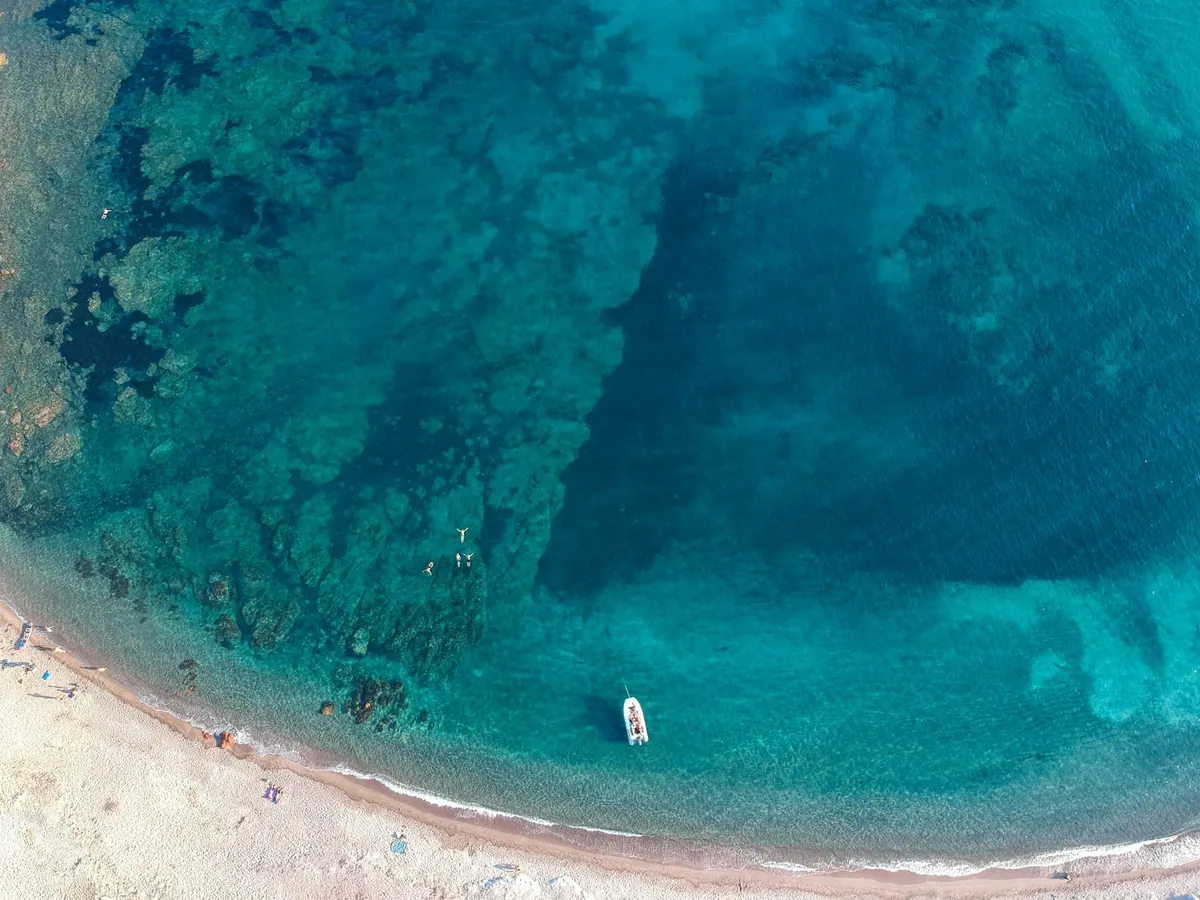
The south coast of Corsica around Porto-Vecchio is famous for some of the most beautiful beaches in the Mediterranean. The two great names are Plage de Palombaggia (a long curving strip of white sand backed by red rocks and Aleppo pines, with crystal-clear shallow water — yes, the water really is that turquoise) and Plage de Santa Giulia (a similar but smaller cove just to the south, with a calmer, more sheltered feel).
Drive 40 minutes north of Bonifacio to Palombaggia in the morning. Park, walk through the pines down to the beach, and find a spot. You can rent sun loungers and umbrellas from one of the beach restaurants (Tamaricciu and U Santa Marina are reliable). Eat lunch at the beach restaurant — the seafood is fresh and the lunch menus are reasonable for the location. Swim a lot. Move slowly.
In the afternoon, drive a few minutes to Santa Giulia for the contrast — calmer water, slightly more child-friendly — and spend the rest of the day there.
For dinner, drive back into Porto-Vecchio (the small port town at the centre of this stretch of coast) for one of the bistros in the Old Town. La Fôret de l’Ospédale, an inland restaurant in the cool of the mountain pines, is the destination spot for a long drive and a slower pace.
Day four: drive north to Porto
Day four is the long drive — about 5 hours from Bonifacio to Porto if you go straight up the west coast (the Côte des Nacres and the Gulf of Valinco). Stop at Sartène (a stern stone-built mountain town with a remarkable Easter procession tradition), Propriano (a quiet seaside town), and the village of Olmeto for lunch. The west coast road is winding and the views are constant.
End at Porto — a small village at the head of the Gulf of Porto on the wild north-west coast. The setting is one of the most dramatic on the island: a deep blue gulf surrounded by red granite cliffs and mountain ridges, with a small Genoese tower (one of dozens around the Corsican coast, built in the 16th century to defend against pirates) standing on a promontory above the harbour.
Day five: the Calanques de Piana
The Calanques de Piana are the headline reason to come to the west coast of Corsica. They’re a set of red granite pinnacles, towers, and natural arches rising from the sea on either side of the Gulf of Porto, formed by erosion over millions of years and listed by UNESCO since 1983. The colour is the thing — a deep terracotta red that turns gold at sunset — and the shapes are extraordinary: the Tête de Chien, the Cœur (a heart-shaped natural arch), and a dozen others that local guides have named over the centuries.
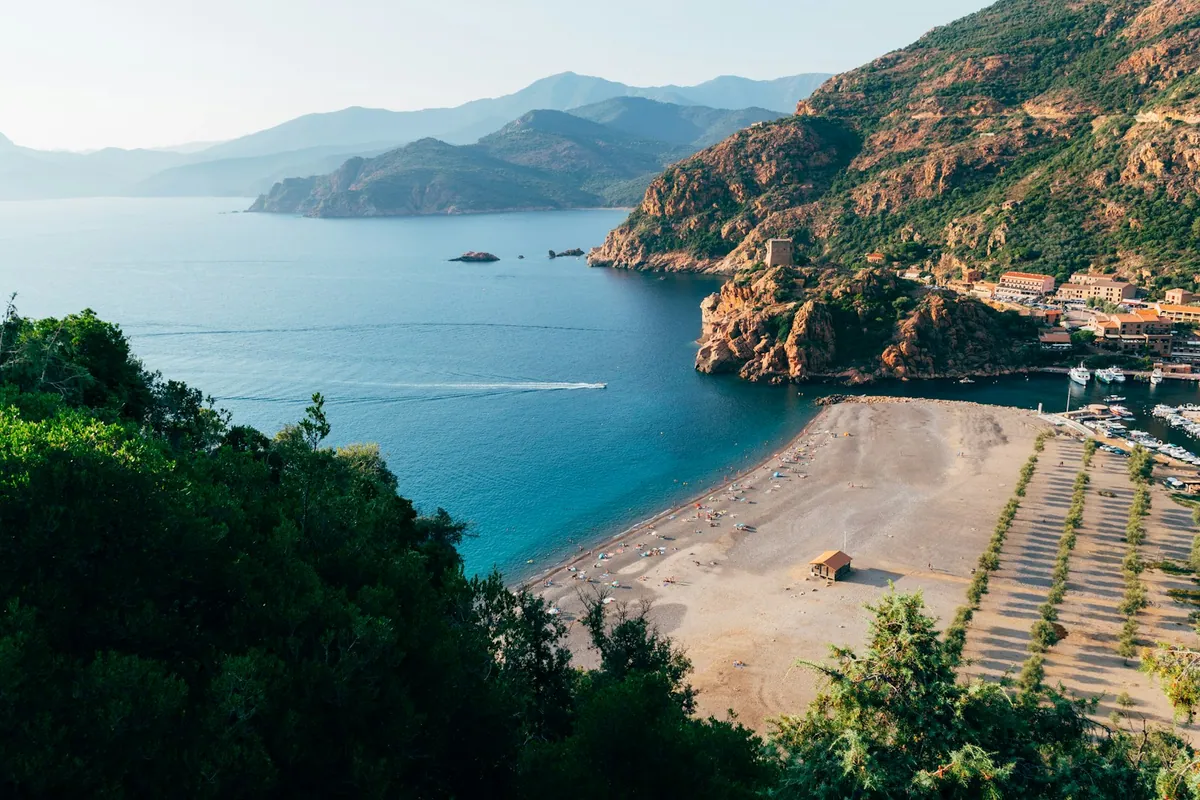
You can experience them in two ways. Drive the D81 — the small road that climbs from Porto up through the calanques to the village of Piana — and stop at any of the laybys for the views. The road itself is the experience: narrow, winding, with the red rocks rising on one side and the sea dropping away on the other. Several short walking trails leave from laybys (Le Château Fort is a 30-minute return walk to a viewpoint that gives you the iconic Calanques panorama).
Or, take a boat trip from Porto harbour out into the gulf. The boats run morning and afternoon trips around the Scandola Nature Reserve (the next gulf north of Porto, accessible only by sea, and arguably even more spectacular than Piana — a UNESCO marine reserve with red cliffs that fall straight into the sea, sea caves, and a population of nesting ospreys). Cost: about €60 for a half-day. The combination of red cliffs and turquoise sea is the great Corsican image.
End the trip in Porto with a final dinner on the harbour. Drive back to Ajaccio or fly out from Calvi (1.5 hours north along the coast — also extraordinary, full of long sandy beaches if you have an extra day).
How nice are Corsicans?
Independent-island nice. Corsicans are famously proud of their identity (you’ll see the moor’s head Corsican flag everywhere), and their first language for many is Corsican (a Romance language closely related to Italian). They are slightly cooler with strangers than mainland French, warmer once you’ve shown a polite interest in the island. Within five days I had: a Bonifacio restaurant owner walk me to a small church in the citadel and unlock it for me because I’d asked a question about its history; a beach kiosk owner press an extra bottle of water into my bag because the day was hot; and a hotel owner in Porto sit with me on the deck for an hour with a small glass of myrte (the local liqueur made from myrtle berries) and tell me about the history of the gulf. Corsican hospitality is real once you’ve been there a day.
If you go
• Hire a car. Corsica without a car is not really Corsica. • Drive slowly. The roads are winding and the views are constant; budget about half the speed your sat-nav predicts. • Eat the local food. Charcuterie (figatellu, coppa, lonzu), brocciu cheese, civet of wild boar, fiadone (the chestnut-flour cheesecake). • Drink the local wines. The Patrimonio reds and the Ajaccio whites are excellent and underrated. • Don’t skip the inland mountains. If you have a sixth day, the GR20 trail (the great 180-km mountain traverse) has a number of one-day sections that are worth the effort.
Corsica is the bit of France that doesn’t feel quite like France — closer in food, language, and feel to its Mediterranean island cousins. Five days here will give you the cliffs of Bonifacio, the white beaches of the south, and the red cliffs of the west. You leave with the firm intention to come back for two weeks, with a tent, and walk a section of the GR20.