The Daintree Rainforest: Where the Oldest Forest on Earth Meets the Reef
Three days in Far North Queensland, a river full of crocs, and a beach nobody is allowed to swim at.
📍 Daintree Rainforest, Queensland, Australia
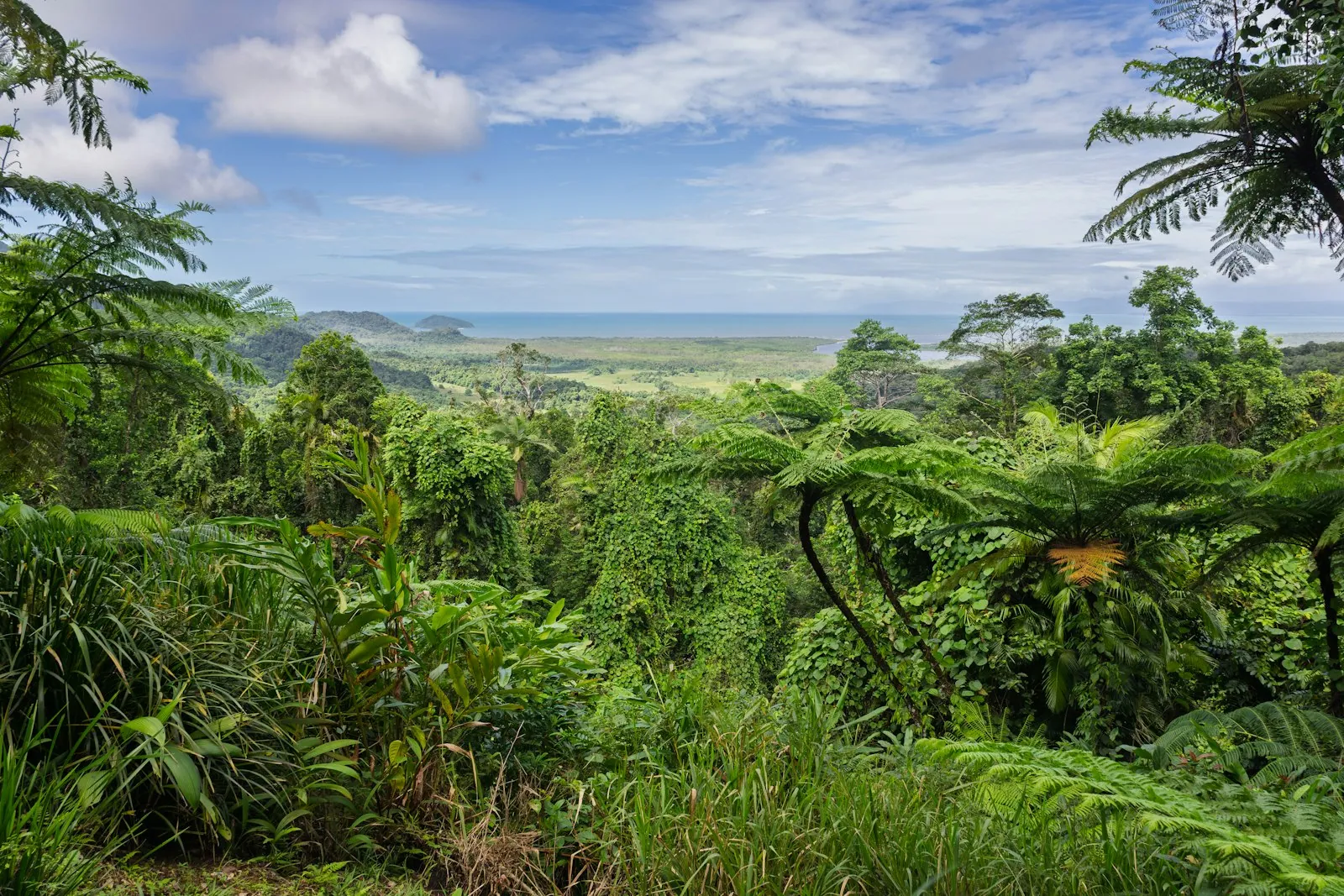
There is a sign just north of the Daintree River ferry crossing that says, in quiet green letters: “Welcome to the Daintree Rainforest. The oldest continuously-surviving lowland tropical rainforest on the planet.” The sign is unremarkable. The fact it’s telling you is the single most extraordinary thing about any forest I have ever stood in. One hundred and eighty million years old. The dinosaurs walked through an earlier version of this forest; the Cretaceous–Paleogene extinction event took ninety per cent of them out and the forest kept going; the last Ice Age happened and the forest kept going; and today the same broad lineage of ferns, conifers, climbing vines and cassowary-food trees is still here, sitting above the shallow Coral Sea in Far North Queensland, and you can drive through it in a hatchback.
I had three days. Not enough. Book four if you can.
The setup
Cairns is the jump-off. You rent a car (any small SUV will do), you drive north for about ninety minutes through sugarcane fields and dense tropical green, and you arrive at Mossman. From Mossman, you either visit the spectacular Mossman Gorge for the day and go back, or you push on to the Daintree ferry — which is a small, six-car cable ferry across the Daintree River, running from 6 a.m. to midnight, about $30 return — and continue north. Everything past the ferry is the Daintree proper. Cape Tribulation, where the road ends, is another forty-five minutes up a tight, dark, winding rainforest single-lane road. This is the bit that gets you.
Day one: Mossman Gorge
If you want to understand the Daintree as a *living* ecosystem instead of a view, start here. Mossman Gorge is owned and managed by the Kuku Yalanji people — the traditional custodians — and the visitor experience begins with a short Dreamtime walk led by an Indigenous guide. Our guide, a woman called Willow, showed us how to collect drinking water from a vine the size of a coil of rope, painted my hand with white ochre at a sacred site, and explained why the cassowary — a huge, blue-necked, flightless bird that still lives in the forest here — is essential to the whole ecosystem. (It eats fruit that no other animal can digest, and spreads the seeds through the forest in its droppings. Without the cassowary, the forest slowly starves.) The walk is forty minutes, costs about $80, and is the foundation you want before you do anything else in the Daintree.
After the walk, hike the Rainforest Circuit — 2.4 kilometres, suspended boardwalks, jungle you could hide an elephant in, the kind of deep-green air that feels like you’re breathing through a wet towel. A crystal-clear stream runs through it. There are signed swimming holes (very cold, very clear, very welcome), and the whole walk finishes at a viewing platform over the gorge itself. Do not skip.
Day two: the Daintree proper
Cross the ferry. On the other side, the road narrows, the canopy closes over, and the temperature drops a degree or two under the shade. Everything gets slower. Speed limit is 60 km/h, but you’ll do 30 because every second kilometre has a sign: “Cassowary Crossing.” The cassowaries are real, the signs are serious, and hitting one in a rental car is a very expensive mistake for everyone involved.
Stop at the Daintree Discovery Centre for the elevated Canopy Tower — you walk up twenty-odd metres into the treetops on an engineering marvel that feels like standing on a crane — and at the Jindalba Boardwalk for a short, accessible loop through a dense patch of lowland forest. Then drive to Cape Tribulation itself.
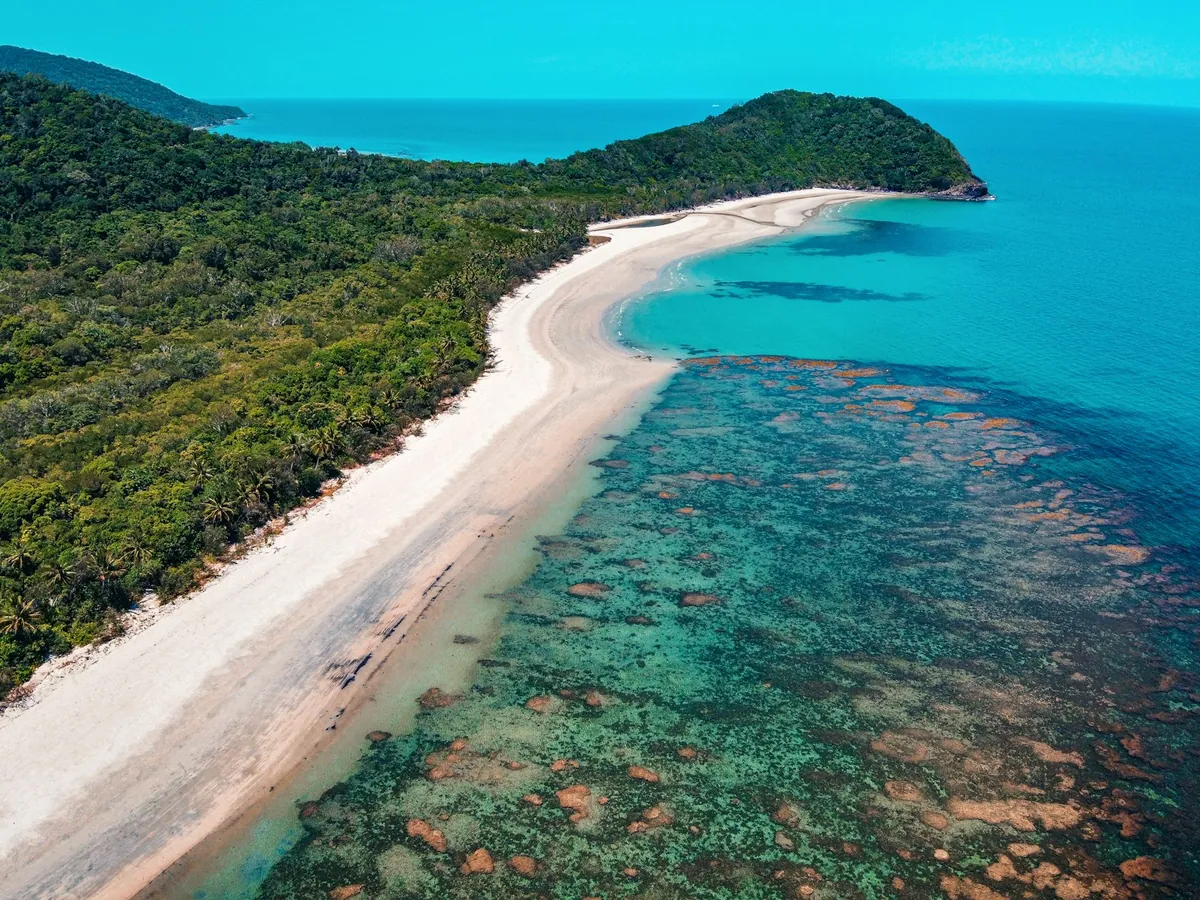
Cape Tribulation is the northern end of the sealed road. It’s where James Cook went aground in 1770 — “the tribulation began here,” he wrote in his log — and the cape is a short headland walk with one of the most singular views in Australia: at your feet, a long, pale, empty beach; off the beach, the Coral Sea and, just offshore, the outer reefs of the Great Barrier Reef. Behind you, the Daintree climbing up into green mountain. Two World Heritage areas — the oldest rainforest and the biggest reef — touching each other in one place. You can stand on the lookout and see both at once. It takes a minute to sink in.
You can’t swim at Cape Trib in summer — stingers make the water lethal, and saltwater crocodiles live in the estuaries year-round. You can walk the beach. You can poke around the rock pools at low tide. You can photograph. But you do not enter the water, no matter how tempting. The signs are emphatic. Obey them.
Day two evening: the night walk
The absolute best thing I did in the Daintree was a guided night walk through the rainforest. There are several operators; I went with Mason’s, a small family outfit that runs a two-hour torch-lit walk through the jungle behind their property. With a good guide, a warm night in the Daintree is not quiet — it is LOUD. Cicadas, frogs, crickets, the occasional crash of a fruit falling through the canopy, something large moving in a creek off the path, a single clicking noise that turns out to be a tree frog the size of a ten-cent coin.
Our guide found us: three species of tree frog (one brilliant green, one marbled red-and-white, one tiny enough to sit on a thumbnail); a striped possum hanging off a branch four metres up; a pair of glowing red eyes in the undergrowth (a nocturnal white-tailed rat, unimpressed); and a four-metre scrub python curled against a tree trunk, sleeping. He showed us the python with a soft torchlight, quietly, and we all stood completely still for two full minutes. The python never moved. Our guide eventually turned off the torch and whispered: “thanks, mate.” To the python. We tiptoed away.
Do the night walk. It rewires your sense of what a forest is.
Day three: the river and the slow drive back
On the way back south, do a Daintree River cruise. Every operator advertises “crocodile spotting” and it is, astonishingly, not hype. The Daintree is full of saltwater crocodiles — the big ones, Crocodylus porosus, up to five metres, the species that occasionally eats unlucky tourists in northern Queensland or the Top End. From the safety of a small flat-bottomed riverboat, you will see them. Sliding off mud banks, sunning on fallen logs, floating motionless in the water with just eye-ridges breaking the surface. Our guide spotted a female, Lizzie, who had been in the same 200-metre stretch of bank for years. He pointed out the chalky white patch on a log where she’d been lying earlier. The boat kept ten metres away. Lizzie’s snout tracked us the whole way.
Stop at the Daintree Village bakery for a coffee on the way out. There is exactly one cafe. The owner remembers everyone. She knows whether you’re coming up or going down.
What surprised me
• Cassowary Sightings. I saw one, crossing the road near Thornton Beach, on day two. It was as tall as the bonnet of my car and walked across the bitumen as if it owned the place. It did. • The age. It is impossible to stand under a Daintree fig tree and not feel the 180 million years in the ground under you. It rearranges what you think “old” means. • The friendliness. The lodges, the bakery, the cafe owners, the cruise guide, the Kuku Yalanji guides — every single person I met took time. I had a ten-minute conversation with a bakery owner about the best backroad for waterfalls. Her husband came out of the back kitchen to draw it on my napkin. You know how this story goes by now.
If you go
• Fly into Cairns, rent a car, drive at least two days north. One day is a tease. • Stay one night past the ferry if you can — there are excellent small eco-lodges at Cape Tribulation (Heritage Lodge, Daintree Eco Lodge, Ferntree). • Bring reef-safe sunscreen, serious insect repellent, and a rain jacket. It rains here even in the dry season. • Do NOT swim in any river, estuary or beach in the wet season without checking locally. Stingers and crocodiles are not a story. • Do ONE Indigenous-led cultural walk. The forest without it is a view; with it, it becomes a conversation.
You leave the Daintree sun-pinked, mildly bug-bitten, and quieter than when you arrived. I drove back to Cairns with the windows down listening to nothing in particular, and the first thing I did back at the hotel was book a second trip, for two years later, for ten days. The oldest forest on Earth will wait. But not for you to wait forever.