Gold Coast in Five Days: Surfers Paradise to Snapper Rocks
High-rise beaches, hinterland rainforest, and the warmest water on the east coast.
📍 Gold Coast, Queensland, Australia
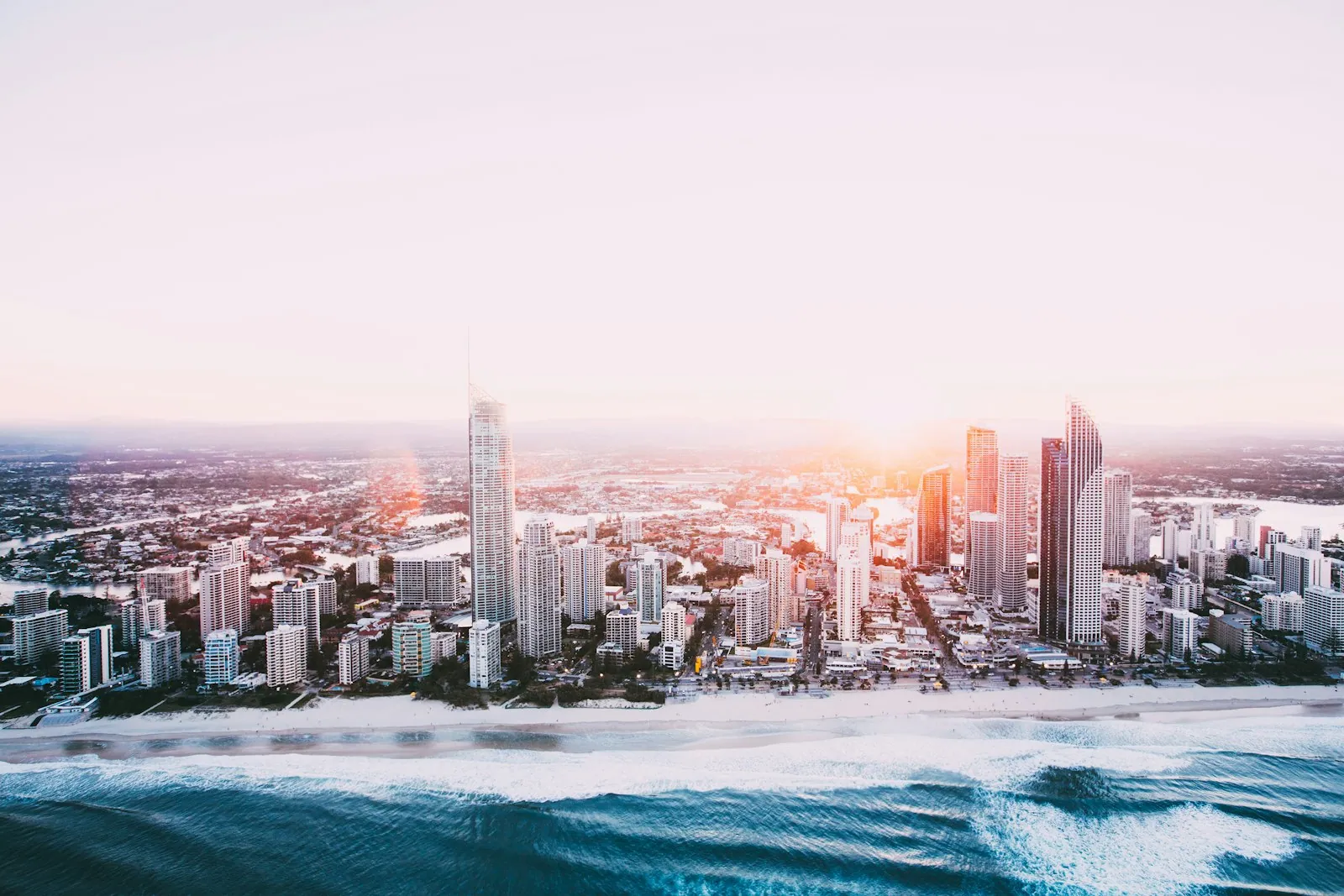
The Gold Coast has an image problem. Say it to most travellers who haven’t been and they’ll picture the skyline of Surfers Paradise: a wall of high-rises elbowing each other out of the way at the beach, neon pink signage, a bachelor party with a karaoke machine. Which, to be fair, exists. You can find all of that within a two-block radius of Cavill Avenue on any Saturday night.
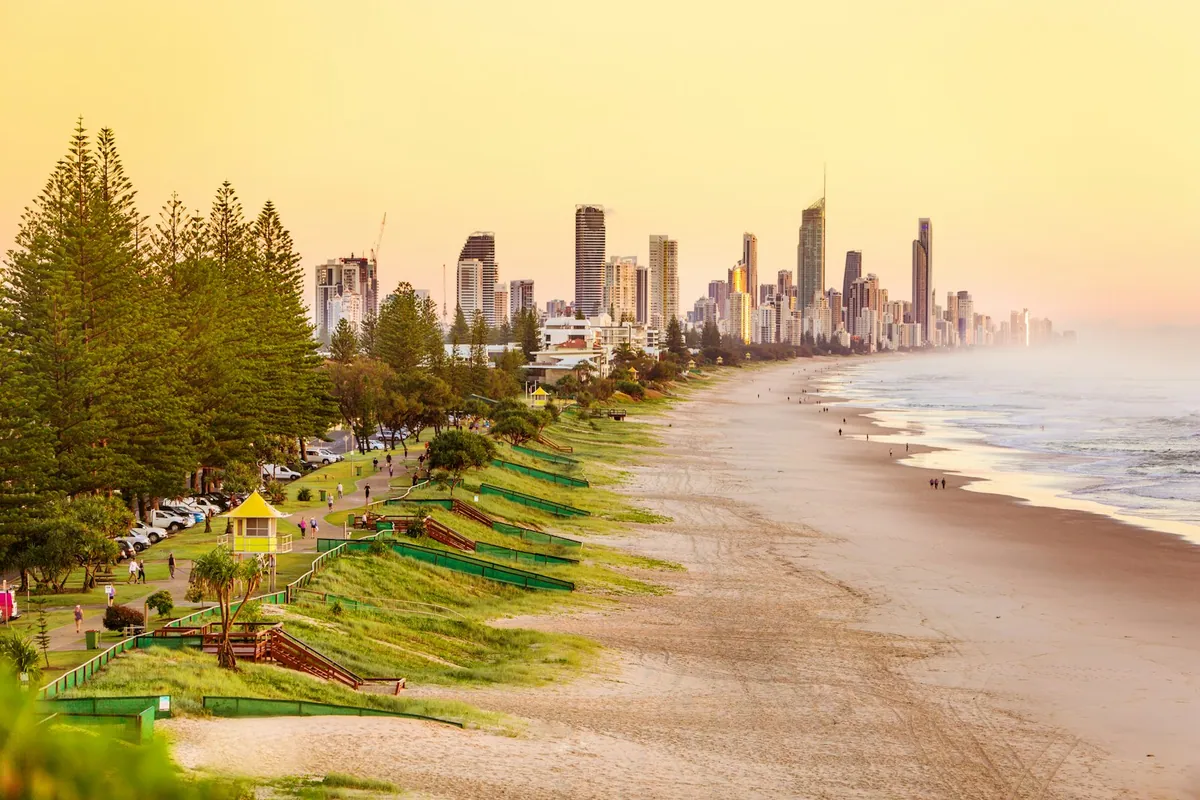
But the Gold Coast that Australians actually come back to, year after year, isn’t that. It’s the forty-two kilometres of broad, warm, golden beach that run from The Spit in the north to Point Danger at the border with New South Wales. It’s the small surf town of Coolangatta at the southern end where the water’s clear and the coffee’s better than it has any right to be. It’s the hinterland rainforest thirty minutes inland at Springbrook and Lamington, which nobody tells you about on the postcards. It is, in short, a beach holiday with an extraordinary amount of depth hiding behind a loud entrance.
I had five days. I stayed in Burleigh Heads, which was the right call. Here’s exactly how I’d do it again.
Day one: the iconic strip
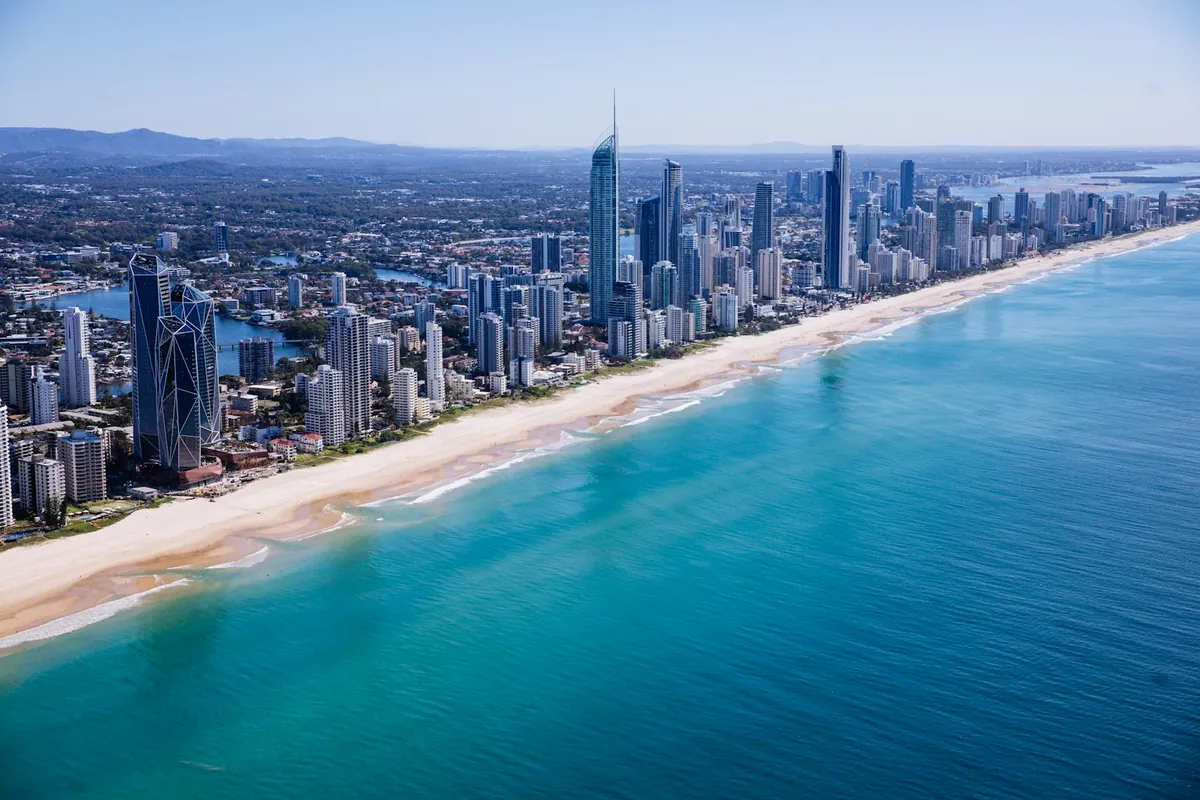
You have to do Surfers Paradise once. Say what you like about the crowds, the skyline from the beach is one of the great urban-beach juxtapositions in the world: thirty storeys of glass and steel on one side, an endless horizon of pale sand and blue-green Pacific on the other. Walk the beach early — I mean 6 a.m. early, when the runners and the dog-walkers and the grandparents doing tai chi have it to themselves — and you will understand why people pay a million dollars for a studio up there.
Then, genuinely, move south.
Burleigh Heads, twenty minutes down the coast, is where locals live. It has a headland with a koala-spotted national-park walk looping around it, a long, flat beach with clean surf, a point break at the northern end that has been getting the same group of old-guard surfers out at first light for forty years, and a main street — James Street, plus the Esplanade — of independent cafes, bakeries, ice-cream shops and bookstores that makes you want to give up your job and open a sandwich business. I had a flat white at Canteen Kitchen and watched a group of teenage boys sprint past me with surfboards at 7 a.m. on a Tuesday. It was deeply wholesome.
Day two: the southern beaches
South of Burleigh you keep finding beaches. Palm Beach, Currumbin, Kirra, and finally Coolangatta and Snapper Rocks right at the NSW border. Each is a slightly different slice of the same idea: clear water, good sand, a headland at one end, a creek or a rock pool at the other.
Snapper Rocks is the one to plan around. It’s one of the most famous right-hand point breaks in the world. The Quiksilver Pro, one of the biggest events on the professional surfing calendar, runs here every March. Even on a quiet weekday, the line-up in the water looks like a movie scene: twenty surfers arranged in a ragged arc off the rocks, taking turns standing up on waves that peel all the way back to the beach. You don’t need to surf to enjoy this. Sit on the grass at Rainbow Bay, drink a coffee, watch the wave-by-wave theatre. Locals will cheerfully explain who’s who if you ask.
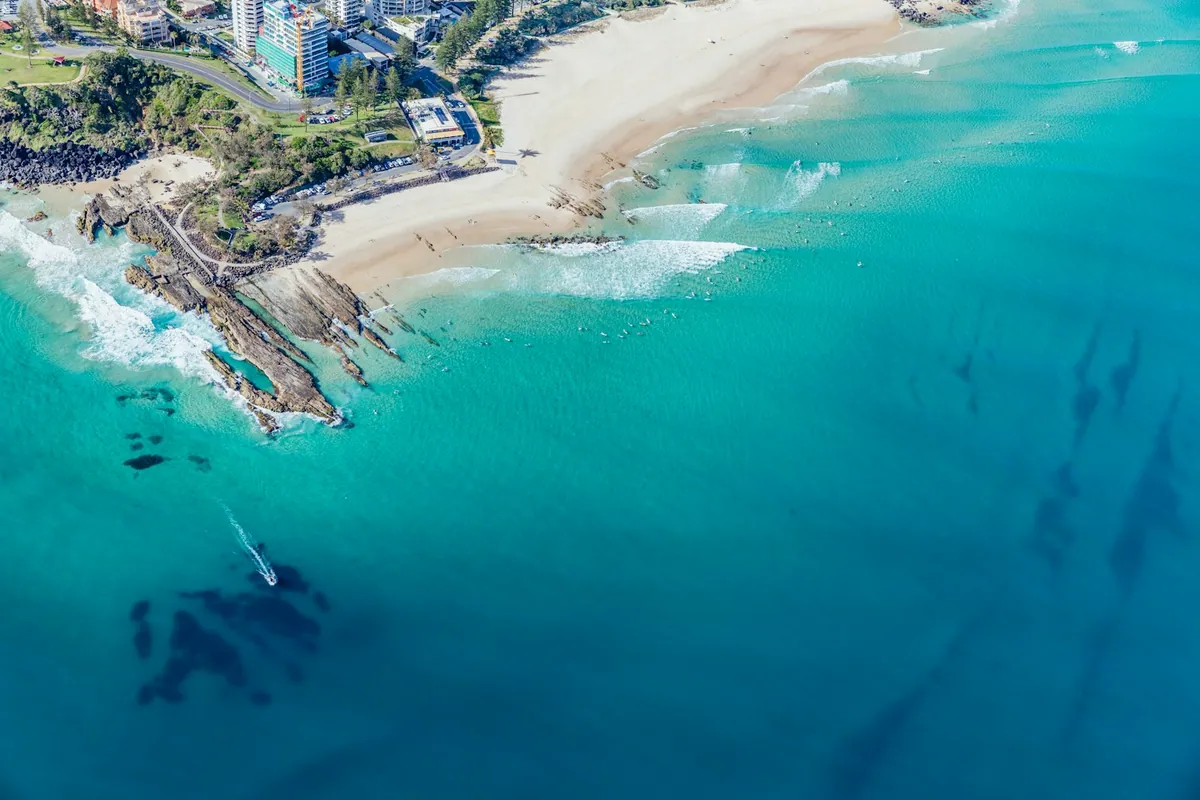
The Snapper Rocks–Rainbow Bay–Coolangatta corner is also where the water finally goes turquoise. North of Burleigh the colour’s great; here it’s proper tropical. The bay at Rainbow is protected and gentle, the sand is bright, the bakeries in Coolangatta are legendary, and there’s a free public swimming pool at Kirra that nobody seems to visit. Spend a whole day. Swim three times. Buy your second ice cream before lunch.
Day three: the hinterland
Thirty minutes inland from the coast, the land rises into the Gold Coast hinterland — a range of volcanic hills covered in temperate rainforest, threaded with waterfalls, parrots, whip-birds, and signposted walking trails. This is the part nobody talks about until you do it once and it becomes a non-negotiable on every future visit.
Springbrook National Park is the closest and easiest. There’s a walk called Twin Falls Circuit, 4 kilometres, that takes you past two waterfalls, under a sandstone ledge you can walk behind, and through a fern gully that feels like a film set. The Natural Bridge, ten minutes drive away, is a cave that a waterfall has drilled through the roof of — and on summer evenings, the cave roof glitters with thousands of glow-worms. You need to book a dusk tour through the park rangers’ site. Do it.
Lamington National Park, slightly further south, has more and longer walks — the Box Forest Circuit, the Moran Falls track, the Border Track ridge walk. O’Reilly’s Retreat up at the top will feed you sandwiches and let you hand-feed the king parrots on the deck. The birds are loud, unbothered, and deeply photogenic. My hand is still scarred from where one landed on a knuckle and missed its target. Worth it.
Day four: theme parks, if that’s your thing
The Gold Coast has the highest concentration of theme parks in the country — Movie World, Sea World, Dreamworld, Wet’n’Wild — and if you’ve got kids, this is a travel expense you are not going to escape. Get the multi-park pass if you’re doing more than one. Pack swim stuff even for the non-water parks. Bring a hat. Bring cash for chips.
I did one, Movie World, alone, for research. I went on a roller-coaster called the DC Rivals HyperCoaster that goes backward at 115 km/h. I made noises I have not made since I was six. A staff member at the exit said “welcome back, mate” in a way that suggested I was not the first visibly shaken adult he had seen that morning. The kids around me were unbothered. I had a corn dog to recover. The country is unserious in the exact ways I needed that afternoon.
Day five: Currumbin Wildlife Sanctuary and a slow last day
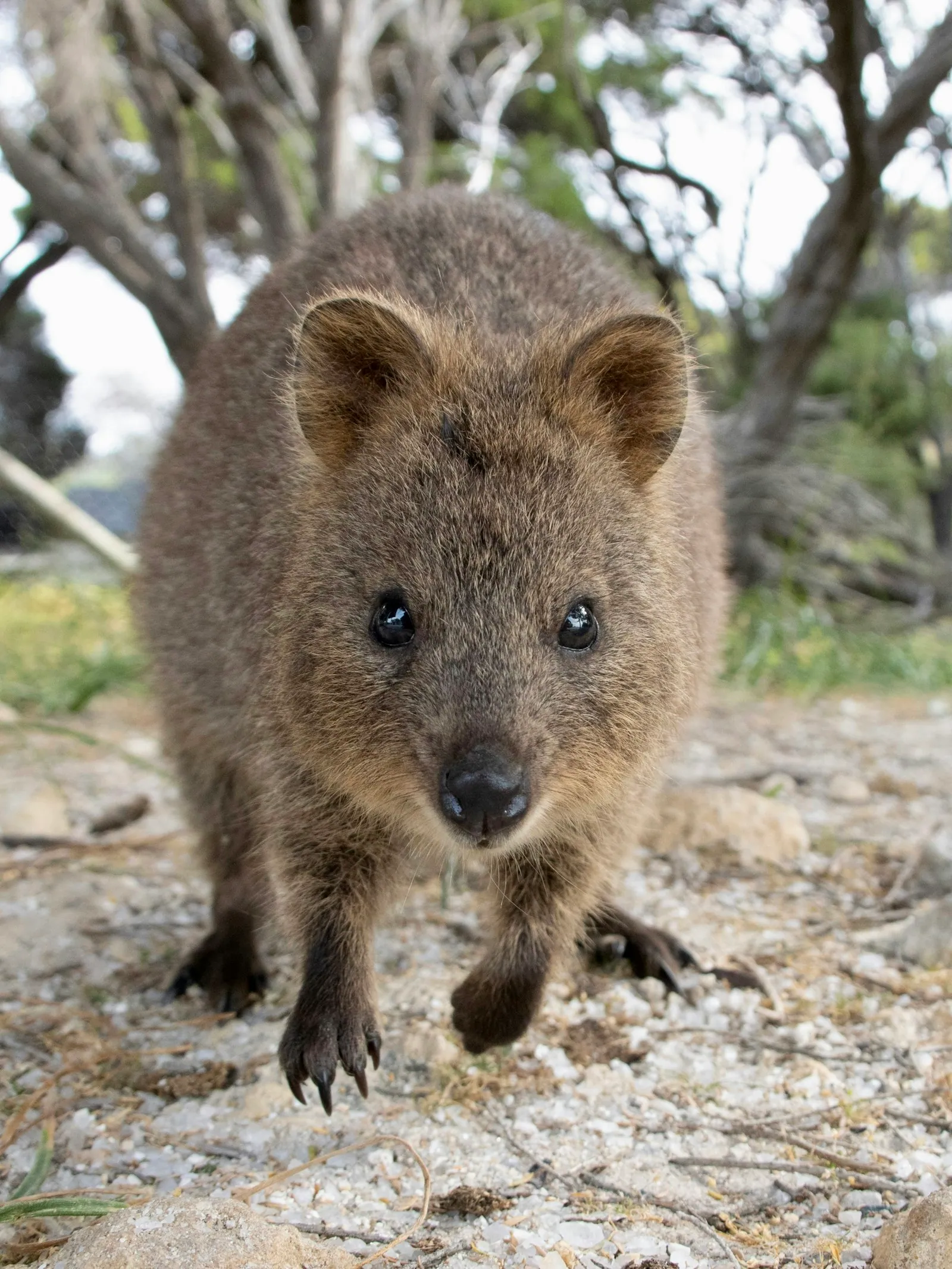
If you have any affection at all for Australian wildlife, go to Currumbin Wildlife Sanctuary. Unlike some of the tourist zoos, this one is set on twenty-seven hectares of native bushland, partly open-range, and is serious about conservation. You can hand-feed a kangaroo the way you’d feed a slightly pushy Labrador. You can watch koalas actually awake (rare, they’re asleep twenty hours a day). The lorikeet feeding happens twice a day: the staff set out plates of watered-down jam, and a squadron of brilliantly coloured rainbow lorikeets descends on the visitors. You will, I guarantee, laugh out loud.
Spend the rest of the day at Palm Beach. Swim in the salt-water rock pool at the northern end. Have fish and chips at the kiosk, eat them on a picnic table, watch two kids on boogie boards out-surfing everyone over twenty. Drive to the border in the late afternoon, stand with one foot in Queensland and one in New South Wales at Point Danger, feel very silly for doing so, and then drive to dinner in Burleigh.
How nice are Queenslanders?
Loud-nice. Gold Coasters are the kind of Australians who’ll shout a compliment at you across a car park, chat to you at a bus stop for ten minutes about the weather, recommend a cafe, drive three blocks out of their way to show you the turn-off. Within five days I had: a bus driver in Burleigh call out “don’t miss the turn-off mate, it sneaks up” to a tourist he’d never met; a surfer at Snapper hand me the exact shape of wax I needed to re-wax my hire board; a woman at the Currumbin pie shop add an extra sausage roll to my bag “because you’ve come a long way, love.” That last one broke me a little bit.
If you go
• Stay south of Surfers Paradise. Burleigh, Palm Beach, Coolangatta — all better bases for most travellers. • Hire a car. The coast is walkable neighbourhood-by-neighbourhood but the hinterland and the theme parks need wheels. • Swim between the flags. The beaches here are big and the rips are real; the volunteer surf lifesavers set red-and-yellow flags in safe zones every morning. • Don’t skip Tamborine Mountain or Springbrook. The hinterland is half the reason to come. • Book Snapper Rocks sunset on day one. It’s the view you’ll keep in your head for years.
The Gold Coast is more interesting than its reputation and more relaxing than its skyline. Go in ready to be surprised. You will be.