Snorkelling the Great Barrier Reef: A Cairns Day Trip That Stopped Me in My Tracks
Twenty-four hours, one boat, two reefs, and a moment with a turtle I won’t shut up about.
📍 Cairns, Queensland, Australia
If you have ever wondered what it sounds like when forty hung-over backpackers, two retired American couples and a Belgian honeymoon party are simultaneously pulling fins onto their feet on a rocking boat at 8:15 a.m., I can tell you: it sounds like rubber arguing with itself. I was one of the forty hung-over backpackers. I had spent the previous evening in a Cairns brewery being told by a bloke called Stevo that the Great Barrier Reef “wasn’t what it used to be, mate, but it’s still better than anything you’ll see anywhere else.” Stevo, as it turned out, was almost right and almost wrong.
I had grown up watching nature documentaries that treated the reef like a cathedral. I knew the bleaching numbers. I knew the cyclone damage. I had braced myself, frankly, for grief — for muted greys, for that disappointed travelling-influencer voice that says, “it was beautiful, but you should have seen it before.” I was bracing for the wrong thing.
The boat
Our boat was called something cheerful — they all are — and our skipper was a sun-leathered woman named Belle who introduced herself by telling us she had been driving boats out to the reef for nineteen years and had seen “more turtles than birthdays.” She also told us, in a tone that brooked no argument, that we were not allowed to touch the coral, not allowed to feed the fish, and not allowed to wee in our wetsuits because she had to get back into them later. Everyone laughed. Two people stopped laughing very abruptly.
The trip out from Cairns was about ninety minutes. The water near shore was the colour of milky tea, then jade, then a turquoise so saturated it looked like someone had cranked the contrast slider too far. There were flying fish. There was, briefly, a whale. The American couple cried. I started to soften.
The first reef
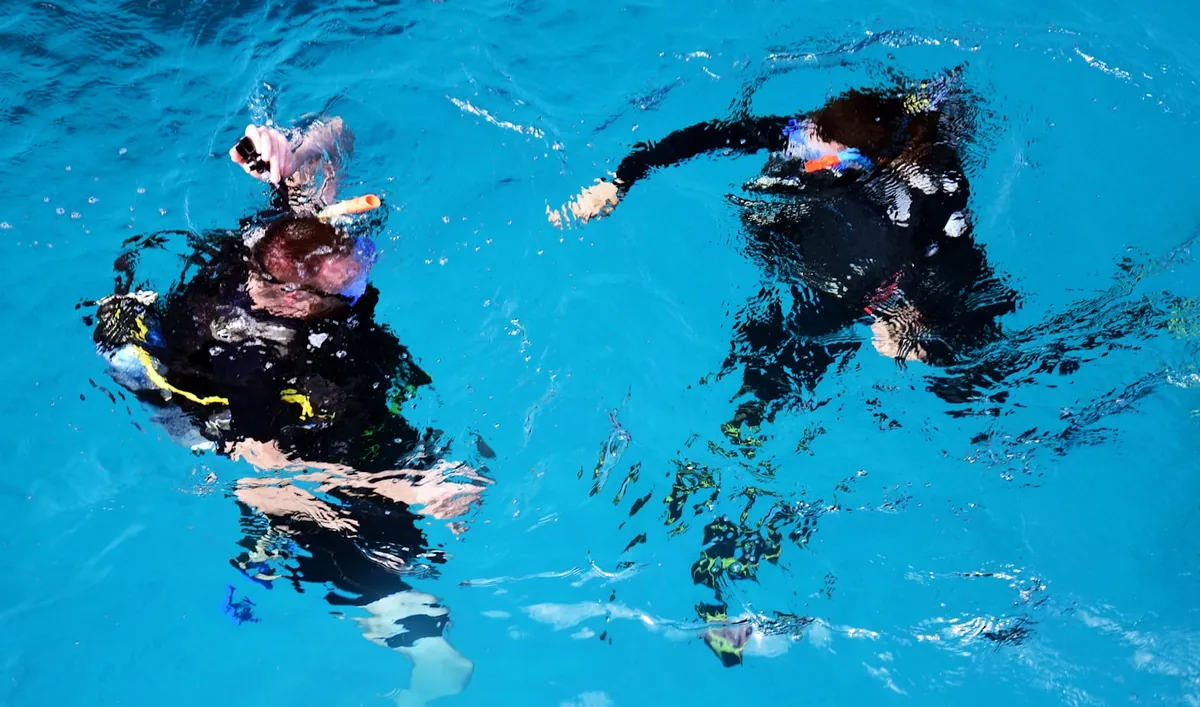
Our first stop was an outer-reef site called Norman, a flat plateau of coral with a sandy lagoon in the middle that’s perfect for nervous swimmers. Belle’s briefing was clear: pool noodle if you wanted one, lifejacket if you needed one, no shame in asking for either. “This is your reef too,” she said. “We’re going to look after it together. Now go and have a cry into your snorkel.”
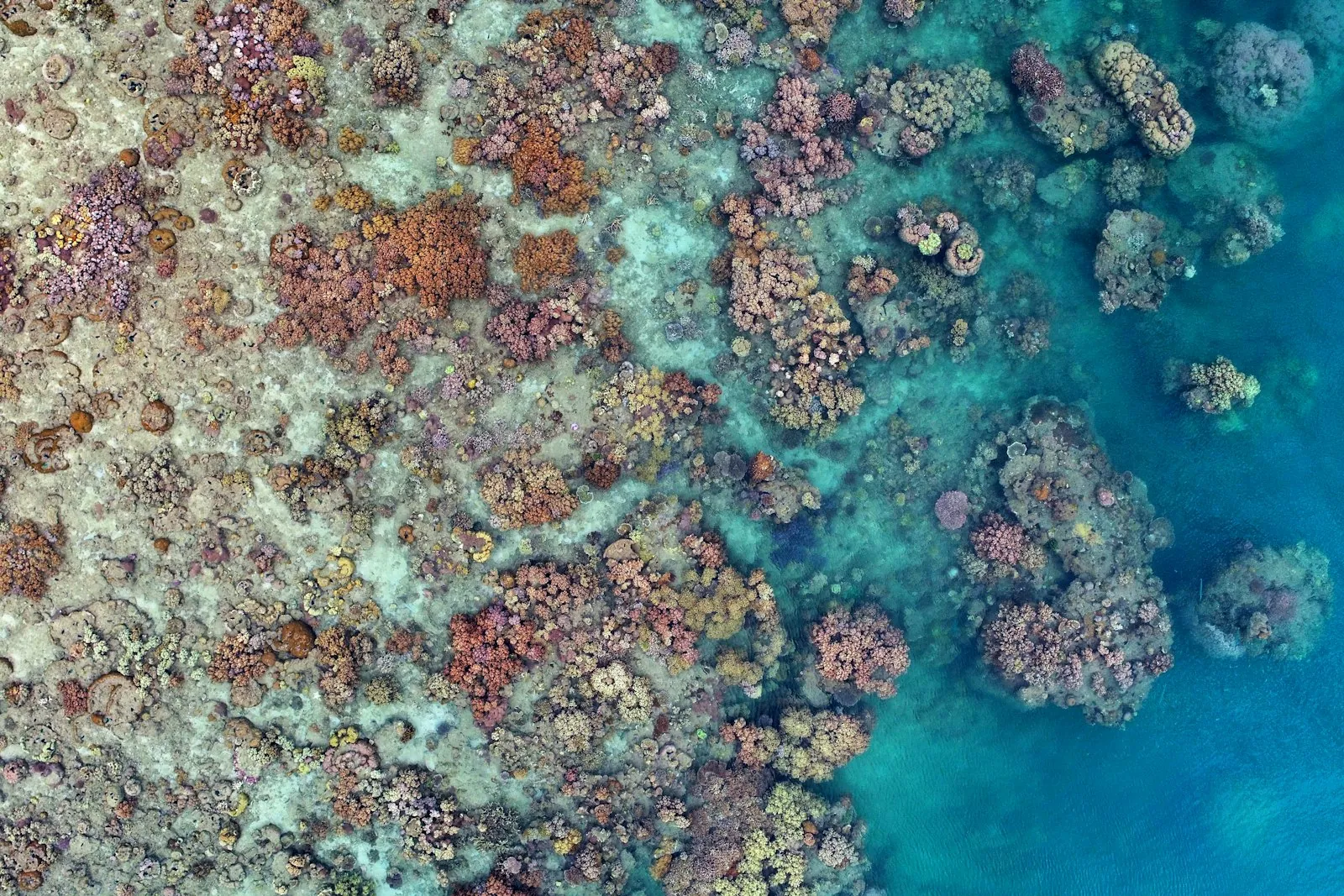
I am not a strong swimmer. I have a healthy respect for water that’s deeper than I am tall. But once your face is down and the mask seal pops and the water settles into that strange weightless quiet, the fear sort of just … stops mattering. Below me was a city. Coral the size of garden sheds, branching and brain-shaped and antlered and spiralling, in colours I had assumed were Photoshop artefacts — lemon yellow, cobalt, a particular eye-watering pink. A wrasse the size of my arm cruised past with the look of a regional manager doing his rounds.
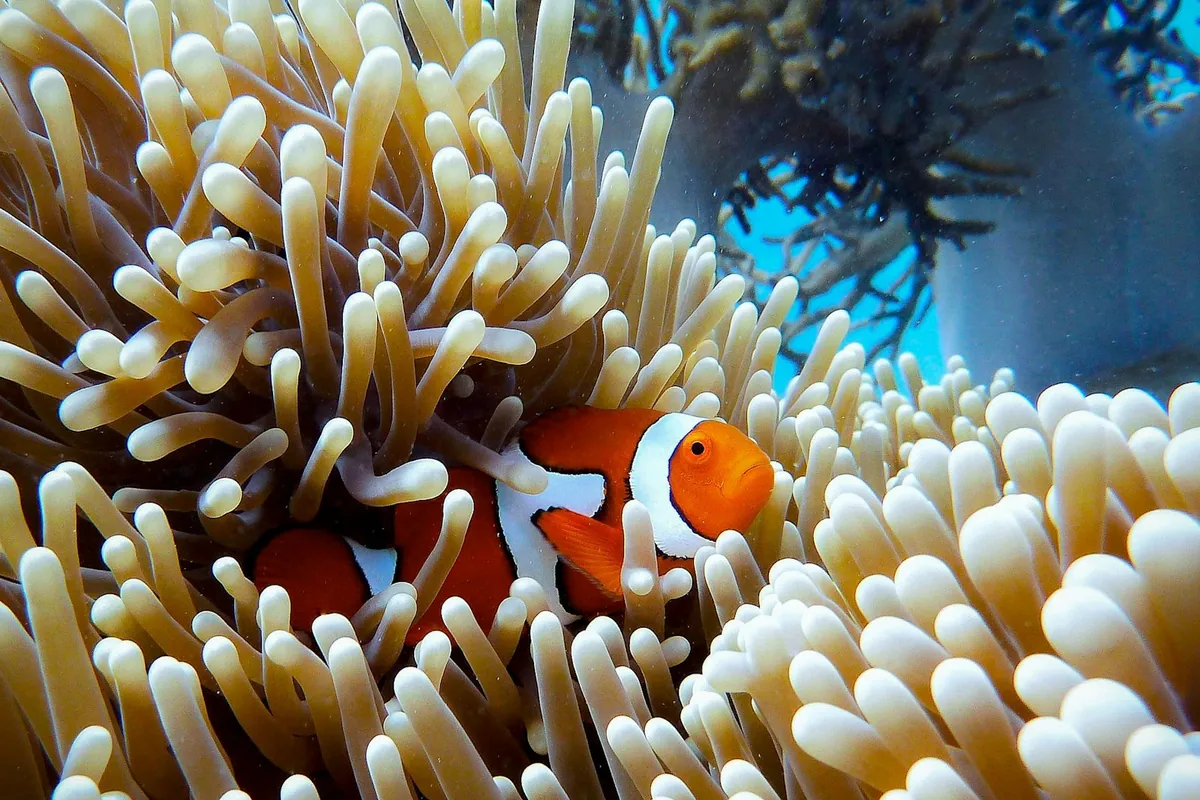
Then I found my first clownfish. I was trying to be a serious adult traveller. I made a noise into my snorkel that was halfway between a giggle and a sob. They are *small*. The internet does not prepare you for how small they are. They poke their bullet-shaped heads out of the anemone, look at you with what I swear is mild irritation, and then duck back in. They do this on repeat, because they are clearly winning a competition you don’t know you’re in.
The turtle moment
We had moved to the second reef — a place called Saxon, twenty minutes further out — and I was floating along the drop-off when I saw it. Or rather, when it saw me. A green sea turtle, maybe eighty centimetres across, gliding along the wall of coral like she had a meeting somewhere. She turned her head, saw me hanging in the water like a slightly damp pool toy, and stopped.
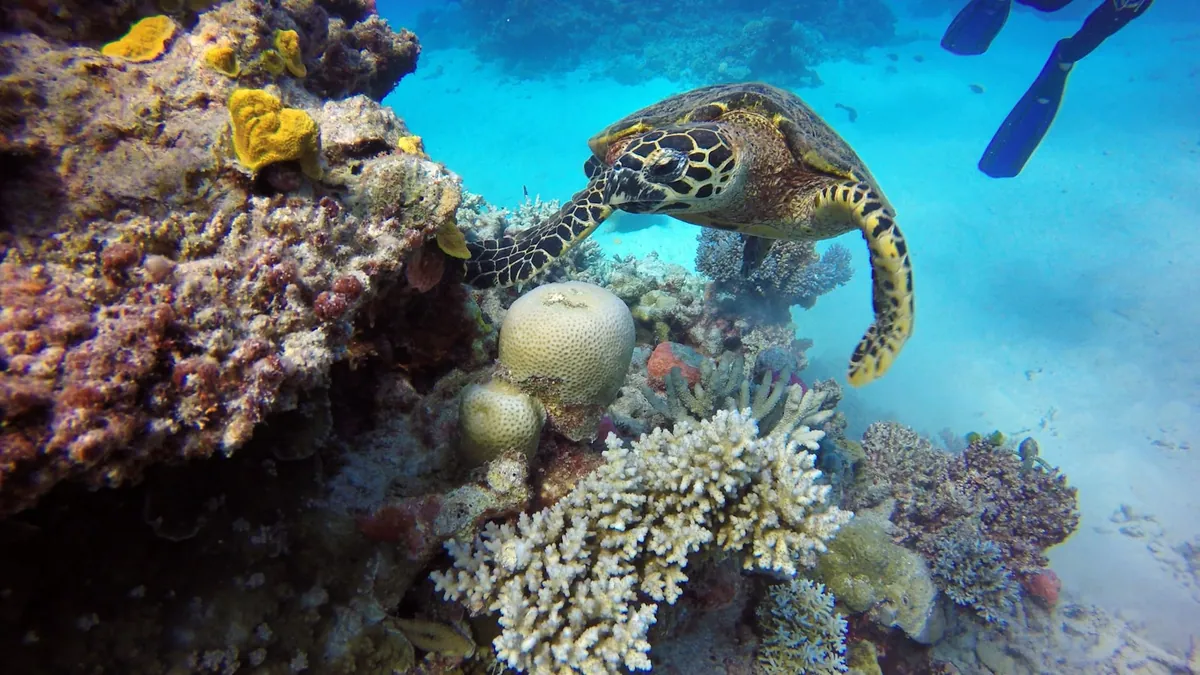
For thirty seconds, maybe a minute, we just looked at each other. She blinked. I blinked. She paddled forward, then sideways, then turned and beat her flippers in a slow figure-eight that brought her to within an arm’s length of my mask. I did not move. I did not breathe in case the bubbles bothered her. She tilted her head, registered that I was not interesting after all, and resumed her glide along the wall.
I came up shaking and discovered I had been crying inside my mask. Belle was leaning over the platform with a towel and a knowing smile. “Turtle, eh?” she said. I nodded. She handed me a chocolate biscuit. “Welcome to the club, love.”
What’s actually going on out there
I want to be careful here, because I went on a one-day trip and I am not a marine biologist. But what I saw was not a dying reef. There were patches of bleach scarring — a coral head the colour of bone next to one in full health — and our guides were honest about it. We had a marine biologist on board, a woman called Steph who had a folder of photographs of the same coral colonies taken yearly. Some had survived three bleaching events. Some had not. She was not soft-soaping it. But she also said: “the reef is huge. It’s patchy. The places we take you are some of the healthiest sites we have access to, and there’s real recovery happening here.”
That felt like the truth. The reef I swam in was alive in a way that made me embarrassed I had ever doubted it. Hundreds of fish in a single glance. Coral spawning scars healing in real time. A reef shark cruising the bottom of a bommie like a polite old gentleman. A blue starfish so vivid it looked like it had been put there by a set designer.
The crew
I have to talk about the crew, because what surprised me as much as the reef was the people working on it. Every Australian reef boat I’ve ever heard about runs on a small crew of seriously qualified, slightly sunburnt humans who treat you with this completely disarming mix of competence and warmth. Belle ran the boat like a ship’s captain. Steph the biologist taught us to identify damselfish from butterflyfish over lunch. The deckhand, Jack, knew everyone’s name by 9 a.m. and quietly checked on the two passengers who had thrown up on the way out without making them feel weird about it. When the Belgian honeymoon couple admitted they couldn’t swim, two of the crew got into the water with them and stayed there for the entire forty minutes.
That is the thing I keep coming back to about Australia. The friendliness isn’t a service-industry smile. It is a real, structural, “I will get into the cold ocean with you” kind of friendliness. It costs you nothing and it makes everything else better.
What I’d do differently
I did the day trip. It was glorious. But if I had a redo, I would do an overnight liveaboard — the boats that anchor out on the reef, dive at night, and wake you up in the morning with the sun coming through your porthole. The day-trippers leave by 3:30 p.m. and the reef belongs to the liveaboards from then on. Several people on my boat were doing that, and they wore the smug expressions of people who knew they were about to win.
I would also bring an underwater camera I knew how to use. The plastic disposable ones the boats sell will do for souvenirs but you’ll regret not having a real one when the turtle stops to look at you. Trust me.
If you go
• Cairns is the easiest base. Direct flights from most Australian capitals, plus international from Singapore and Tokyo. • Choose a smaller boat if you can stomach the price. Forty passengers is fine; the giant 100-passenger pontoons are loud. • If you don’t snorkel, the glass-bottomed boats and semi-subs the operators run are genuinely lovely and require nothing of you but to sit. • Tip your crew. They work very hard and Australia’s tipping culture is light, so a real thank-you stands out. • Book a backup day. The reef is weather-dependent and the cyclones can scrub a trip with twelve hours’ notice. Always have a buffer.
I am writing this from the bus back into Cairns. My hair is salty, my neck is sunburnt, and I have a small turtle-shaped sticker on my passport that Steph stuck there as I got off the boat. “Welcome to the club,” Belle had said. The club is real. I am in it. You should be too.