The Great Ocean Road in 48 Hours: Twelve Apostles, Koalas, and a Surf Town That Stole the Show
Two days, one rented hatchback, and a stretch of Victoria coast that earns every superlative.
📍 Great Ocean Road, Victoria, Australia
Most lists of the world’s great drives have the Great Ocean Road on them somewhere. Most of those lists are sloppy. They put it next to roads that are pretty but boring, or boring but historic, and miss what actually makes the drive worth doing. So let me try to put it plainly: the Great Ocean Road is 243 kilometres of cliff, beach, eucalypt and wallaby that you can do in two days from Melbourne with a single rented hatchback, and it will rearrange your face for the better. I have done it. My face is rearranged. Here is exactly how I would do it again.
Renting a car in Melbourne
You don’t need a 4x4. You don’t need a campervan. The road is sealed the entire way, the speed limits are sane, and a small hatchback with reasonable suspension and Bluetooth is plenty. I picked one up at the airport for about $80 a day, drove out of Tullamarine, and was on the M1 west within twenty minutes.
A note for the non-Australian: drive on the left. Roundabouts are everywhere. The locals will not honk at you for being slow, they will, in fact, often wave. Once, on a back road outside Anglesea, I pulled over to let a faster ute pass me; the driver leaned out and yelled “good on ya, mate!” at me as he flew past. I cannot stress enough how nice this place is to drive in.
Day one: Torquay to Apollo Bay
The Great Ocean Road officially starts at Torquay, an hour and a half south-west of Melbourne. Torquay is the surf-industry capital of Australia — Rip Curl and Quiksilver were both founded here, the surf museum is genuinely good, and Bells Beach (yes, the one from *Point Break*) is fifteen minutes down the road. I had a flat white and a ham-and-cheese roll at a bakery on the corner and watched a board-rack van load up with what looked like the entire Newcastle high-school surf team.
From Torquay, the drive begins to curl. You pass through Anglesea, then Aireys Inlet (with its little white lighthouse and a koala-rich back road called the Great Otway National Park signposted off to the left), and then drop down into Lorne. Lorne is a beach town that gets busy in summer but in shoulder season it’s a perfect lunch stop — a long pebble-and-sand beach, a wooden pier full of fishermen, and a cafe called The Bottle of Milk which sells, accurately, an absurdly good burger.
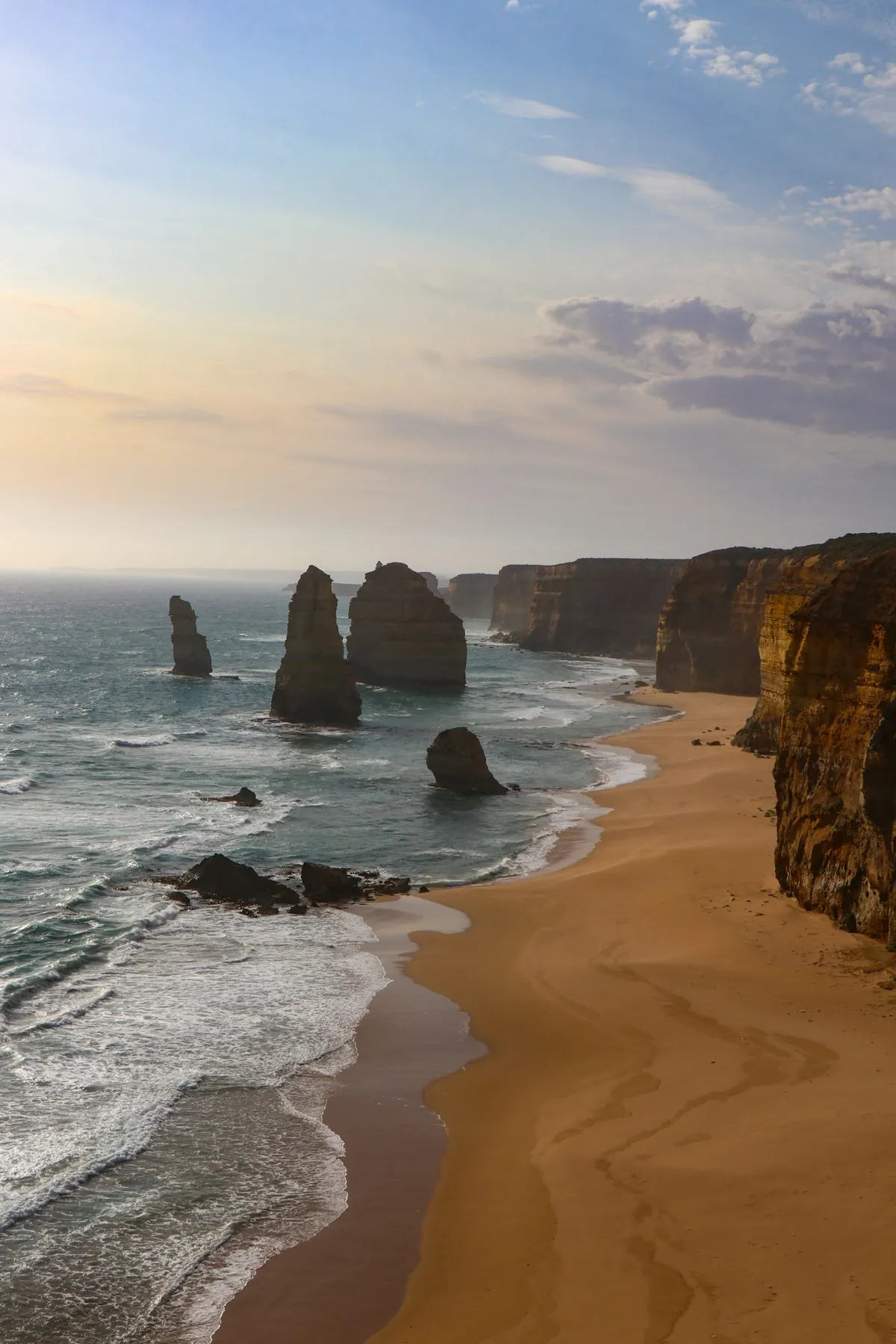
Between Lorne and Apollo Bay, the road truly leans into the cliffs. This is the bit on the postcards: tarmac hugging the Southern Ocean, golden surfboard-shaped beaches below, the Great Otway forest pressing in from the right. There are pull-offs every couple of kilometres for photos. Use them. The locals know the layout, the camper vans don’t, and stopping in a gravel pull-off is the only safe place to give in to the urge to gawp.
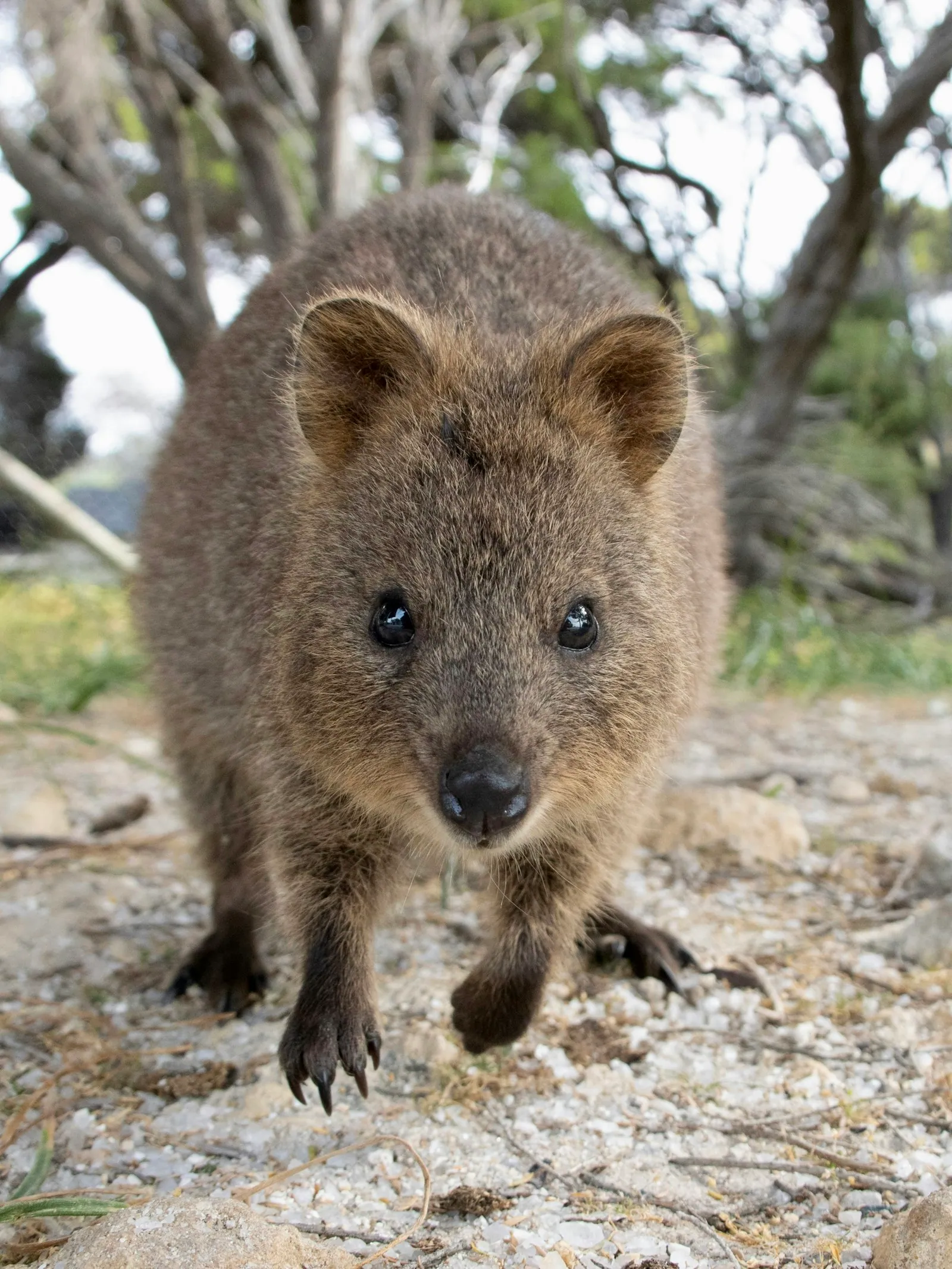
I took the slight detour up Kennett River into the Otway hinterland. There’s a very famous unsealed road there called Grey River Road which is, no exaggeration, koala central. Park anywhere along the road, get out, look up, and within ten minutes you will see a koala draped over a fork in a manna gum like a small, slightly grumpy fur cushion. There is no fee. There is no fence. They are just there. I saw five in a half-hour. A couple from Adelaide showed me a little black-and-white cockatoo (a sulphur-crested, technically yellow-and-white) called Henry that they swore they saw “every single time” they came down. Henry was indeed there. Henry was deeply uninterested.
I made Apollo Bay before sunset, checked into a small motel that smelt of clean linen and sea air, and walked into town for dinner. The fish-and-chip shop on the main street was, as advertised, packed. I sat on the foreshore eating beer-battered flake from a paper cone and watched a stingray glide along the shallows in the last light. Nine hours of driving and gawping. I slept like a fallen tree.
Day two: Apollo Bay to the Twelve Apostles
This is the day. This is the bit you came for.
I was on the road at 7:30 a.m. From Apollo Bay, the Great Ocean Road climbs inland into the Otway forest. The change is sudden and a little bit magical. The cliffs drop behind you. Suddenly you’re driving through a tunnel of giant tree ferns under sixty-metre mountain ash. There’s a stop here — the Maits Rest rainforest walk — that takes about thirty minutes and is absurdly worth it. Boardwalk through old-growth myrtle beech with leaves the size of saucers, moss everywhere, occasional lyrebirds doing their impression of every other bird in the forest plus the occasional camera shutter. Lyrebirds are a delight. Lyrebirds doing the sound of a chainsaw they once heard at a logging operation in 1987 are slightly less of one, but still a delight.
You come out of the forest at Lavers Hill and start dropping back towards the coast. By the time you hit the village of Princetown, the road has flattened. You’re on the edge of the Port Campbell National Park, which is where the Twelve Apostles live.
Pull into the visitor centre car park around 10 a.m. on a weekday and you’ll find it busy but not absurd. Take the underpass beneath the road — don’t cross at grade, drivers are looking at the view, not at you — and walk out to the boardwalks. And then you stop walking, because the view does the walking for you.
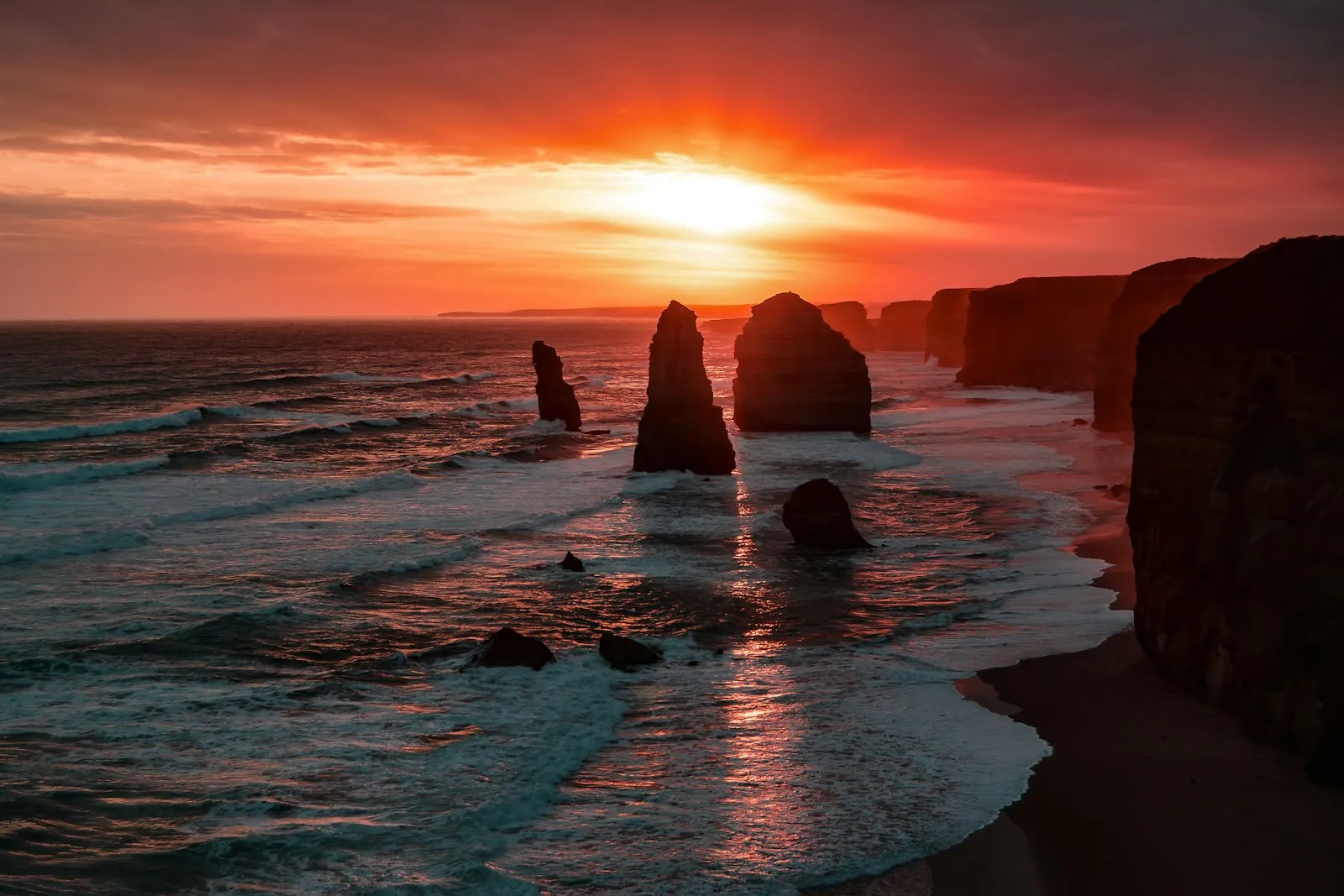
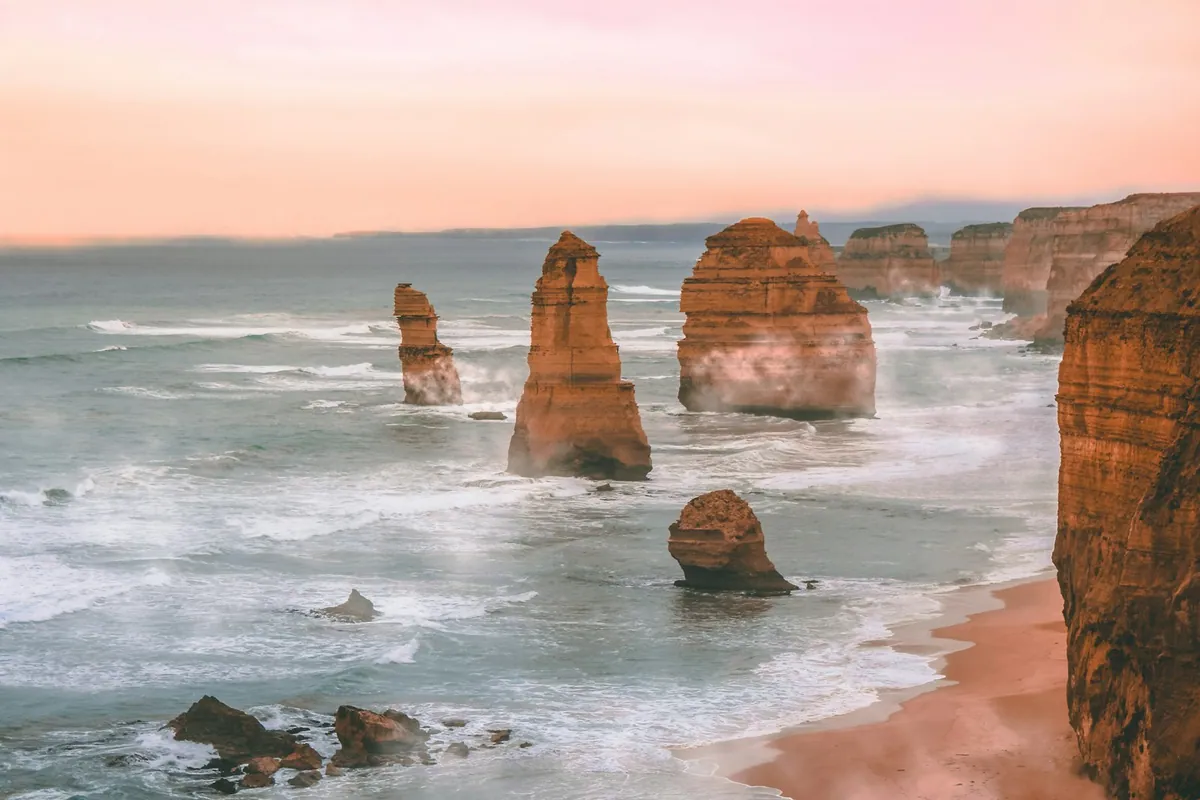
The Twelve Apostles are a series of limestone sea stacks that are not actually twelve and were never actually twelve — the original name was the Sow and Piglets, which I think is funnier and possibly more accurate — but the cliffs are sixty metres tall, the stacks rise from a churning Southern Ocean the colour of cold steel, and the whole arrangement looks like the set of a film about a planet that’s only just decided to let humans onto it. There’s a helicopter pad nearby; a fifteen-minute joy flight will set you back about $150 and is worth every cent if you’re a sucker for an aerial view.
A few kilometres further west are two stops you should not skip. Loch Ard Gorge is a small bay tucked into the cliffs that you can actually walk down into; the steps lead to a beach surrounded by sheer walls, and the story of the 1878 shipwreck for which the gorge is named is on signboards along the path. London Bridge is a sea arch that lost its land-end in 1990 (no one was hurt; two tourists who had walked out onto it before the collapse had to be helicoptered off the now-island half), and the new shape is, in my opinion, prettier than the original.
I was at the Twelve Apostles for the second time at sunset. The crowds had thinned. The light was that soft Victoria-coast gold that turns the cliffs into a painting. I sat on a bench with a coffee and a couple from Brisbane who asked me where I was staying and then immediately offered me a bed in their spare room on the way back to Melbourne. I declined politely; they pressed the offer twice; we exchanged numbers; the woman texted me a week later to ask if I’d gotten home okay. I am not, I want to stress, the kind of person who normally inspires strangers to offer up spare rooms. This is just what Australia does.
The town that stole the show
I had planned to drive straight back to Melbourne the next morning. Instead, on the recommendation of a barista at the Twelve Apostles cafe, I detoured back through Port Fairy. Port Fairy is a small fishing town a bit further west of the Apostles — it’s technically off the official Great Ocean Road — and it is the kind of place you visit by mistake and then start looking at long-term rental properties. White picket fences. A working harbour with a pub on the dock. A long beach with no one on it. A bookshop that opened at 11 a.m. and didn’t care if you stayed for two hours. I spent a single afternoon there and I am still thinking about it.
If you have a third day, end your trip in Port Fairy. If you have a week, base yourself there and day-trip everything. You will not regret it.
Lessons learned
• Drive west to east — from Warrnambool back towards Melbourne — if you want the sea on your side of the road on the cliff sections. Most people drive east-to-west, which is fine, but your passenger will see less. • Don’t do it as a one-day round trip from Melbourne. People do; people regret it. The Twelve Apostles is four hours from the city by the fast inland route. You’ll spend ten hours in the car and have ninety minutes at the rock. • The bakeries are universally excellent. Skip the franchise coffee shops. The good country bakery is a national institution and its existence is one of the great quiet pleasures of an Australian road trip. • Top up your fuel in Apollo Bay. Stations after that are sparser and pricier. • Bring layers. The coast can swing fifteen degrees in an afternoon if a sea breeze comes up.
I returned the hatchback at Tullamarine at 8:30 p.m. with sand in the door pockets and a mood I haven’t shaken since. Two days. Two hundred and forty-three kilometres. One koala called Henry. One country I can’t stop thinking about.