Kangaroo Island: Sea Lions, Wallabies and Remarkable Rocks
Three days on Australia’s third-largest island — wildlife on every beach and the strangest rocks in the country.
📍 Kangaroo Island, South Australia, Australia
Kangaroo Island sits in the Southern Ocean off the south coast of South Australia, a forty-five-minute ferry ride from a small port town called Cape Jervis, which is itself a ninety-minute drive south of Adelaide. It is the third-largest island in Australia, slightly bigger than the Greek island of Crete, and it is, by population, almost empty: forty-four hundred residents on a landmass the size of Sydney and Melbourne combined. The result is one of the highest concentrations of wildlife per square kilometre anywhere in the country, almost no traffic, and the kind of dark night sky where you can read by starlight.
I had three days. I drove around the loop, slept in two different towns, swam at one beach, did not swim at another for excellent reasons, and watched a sea lion stretch and yawn from a sand dune ten metres away from me. That last one is still the wallpaper on my phone.
Getting there
The cheapest way is the ferry from Cape Jervis to Penneshaw, $99 each way for a passenger plus car. There’s also a small Rex Airlines flight from Adelaide to Kingscote, the island’s largest town, but most travellers take the car ferry. Bring your own vehicle, ideally a small SUV — there are some unsealed roads in the western parks, and the wildlife at dusk and dawn means you want decent visibility and ground clearance.
I stayed two nights at American River, a small fishing village on a sheltered inlet roughly in the middle of the island, and one night at Vivonne Bay on the south coast. Both were excellent.
Day one: arrival, Seal Bay, and the wildlife welcome
The ferry arrives at Penneshaw mid-morning. Drive west — there is exactly one main road across the island and you can’t really get lost — and within an hour you’re at Seal Bay Conservation Park.
Seal Bay is one of the great wildlife experiences in Australia, and the “seals” are actually Australian sea lions, the third-rarest pinniped on Earth. There’s a colony of about six hundred of them living on a particular beach here, hauled out on the sand to rest between fishing trips. You can either walk the boardwalk and view the colony from above (cheap, free at the lookout, the right call if you’re a wildlife photographer), or you can pay for a guided beach walk that takes you down onto the sand within a few metres of the animals.
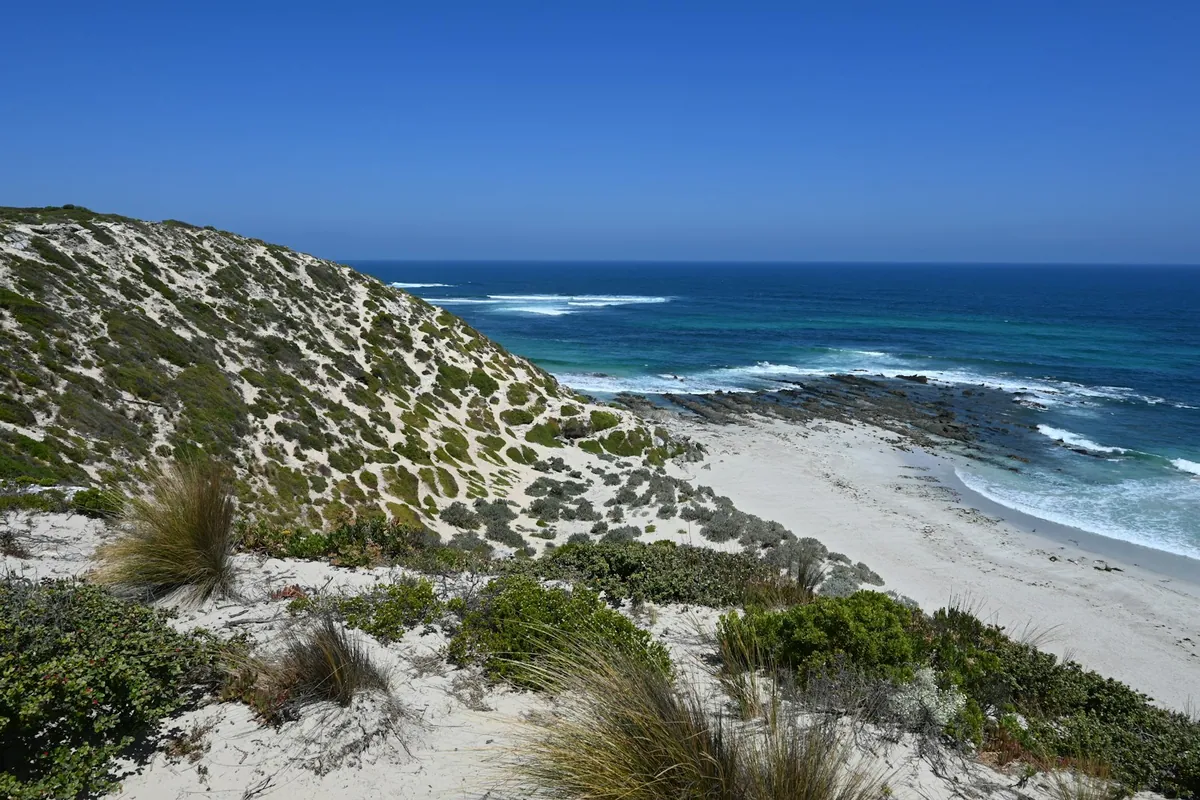
I did the guided walk. Our guide was a young biology graduate named Eli who clearly loved her job in the way only zoologists can love their job. She walked our group of eight slowly down a sandy path between dunes, talked us through the colony etiquette in a quiet voice — we keep ten metres back, we move slowly, we never get between a sea lion and the water, we whisper — and led us out onto the beach.
There were maybe twenty sea lions on the sand within sight. Bulls bigger than a Labrador. Cows with this year’s pups beside them. One adolescent male, three metres from us, woke up, stretched, yawned with a mouth full of teeth, and went back to sleep. A pup nearby tried to nurse from a mother who clearly wasn’t having it. Another pup wobbled towards us across the sand with the lurching seal-baby gait, stopped about two metres away, looked at the assembled humans, and made a small bleating noise. Eli smiled and said, very softly: “he doesn’t see many people.”
We left after thirty minutes. Nobody had spoken above a whisper. The sea lions did not appear to register that we had been there.
Day one afternoon: Vivonne Bay and the south coast
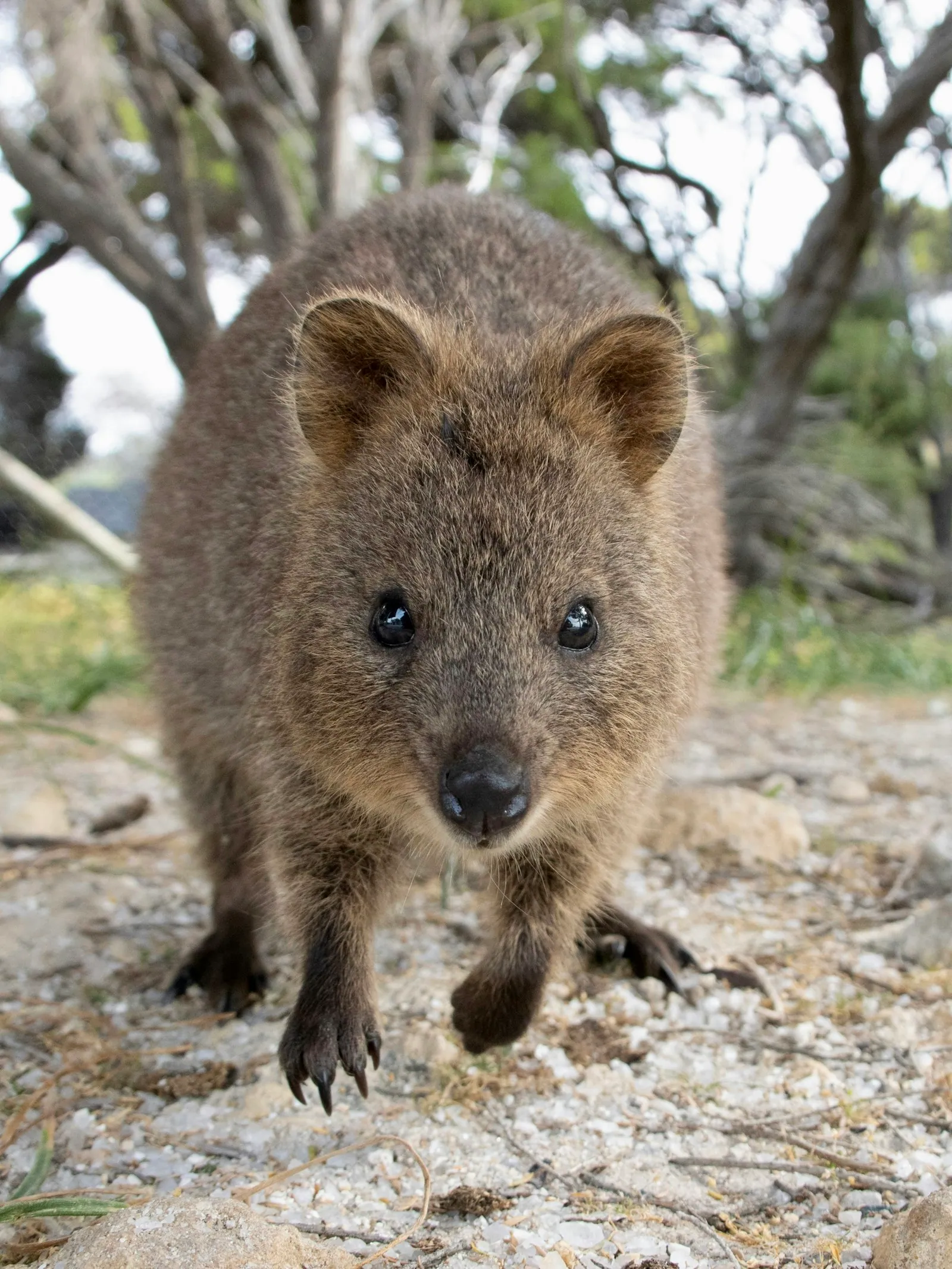
Drive to Vivonne Bay for the night. It’s a small settlement on the south coast — Italian-survey type beach, three kilometres long, white sand, surf at one end, calm water at the other. There’s a kiosk for fish and chips, a general store, and a handful of small holiday lets. I had a beer at the Vivonne Bay General Store while a pair of fairy wrens hopped around my feet looking for crumbs. The owner told me a kangaroo had been on the foreshore that morning. I didn’t see her, but I believed her completely.
Day two: Flinders Chase and the Remarkable Rocks
The next morning, drive west to Flinders Chase National Park, the headline wilderness park at the western end of the island. About 75 per cent of Flinders Chase burned in the 2019–20 bushfires; the regeneration is now well underway, and the park has reopened to visitors with new boardwalks and rebuilt visitor centres. Some sites are still closed, so check before you visit — but the two big-ticket sites, Remarkable Rocks and Admirals Arch, are open and absolutely worth the drive.
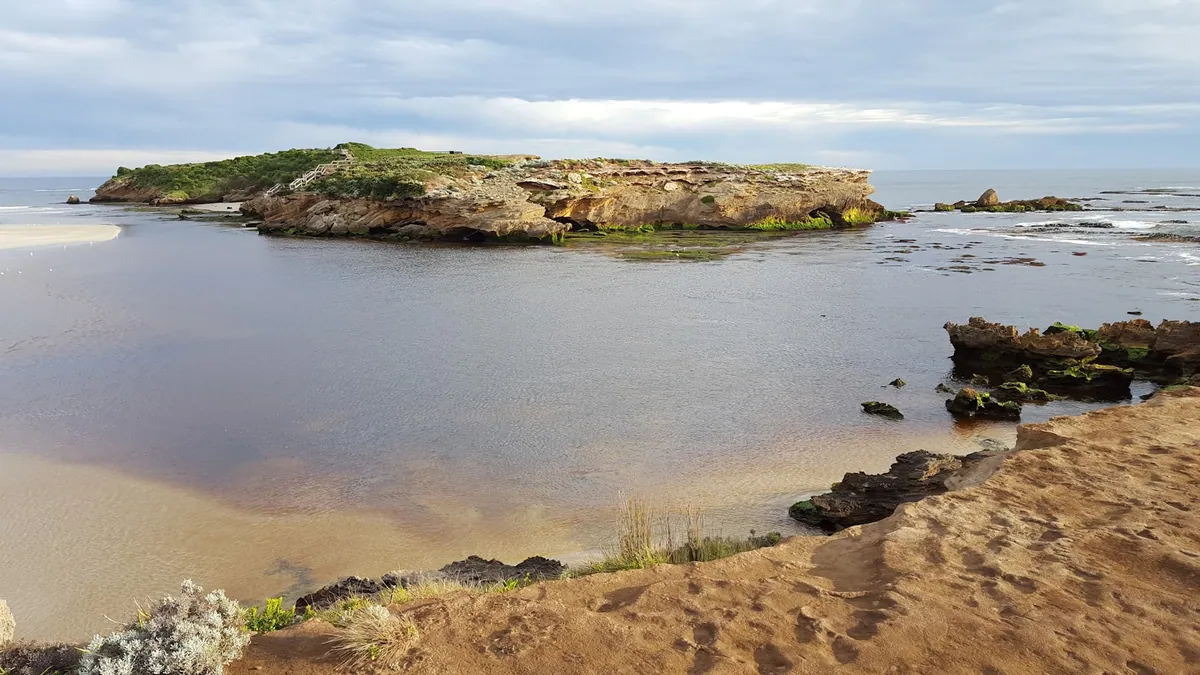
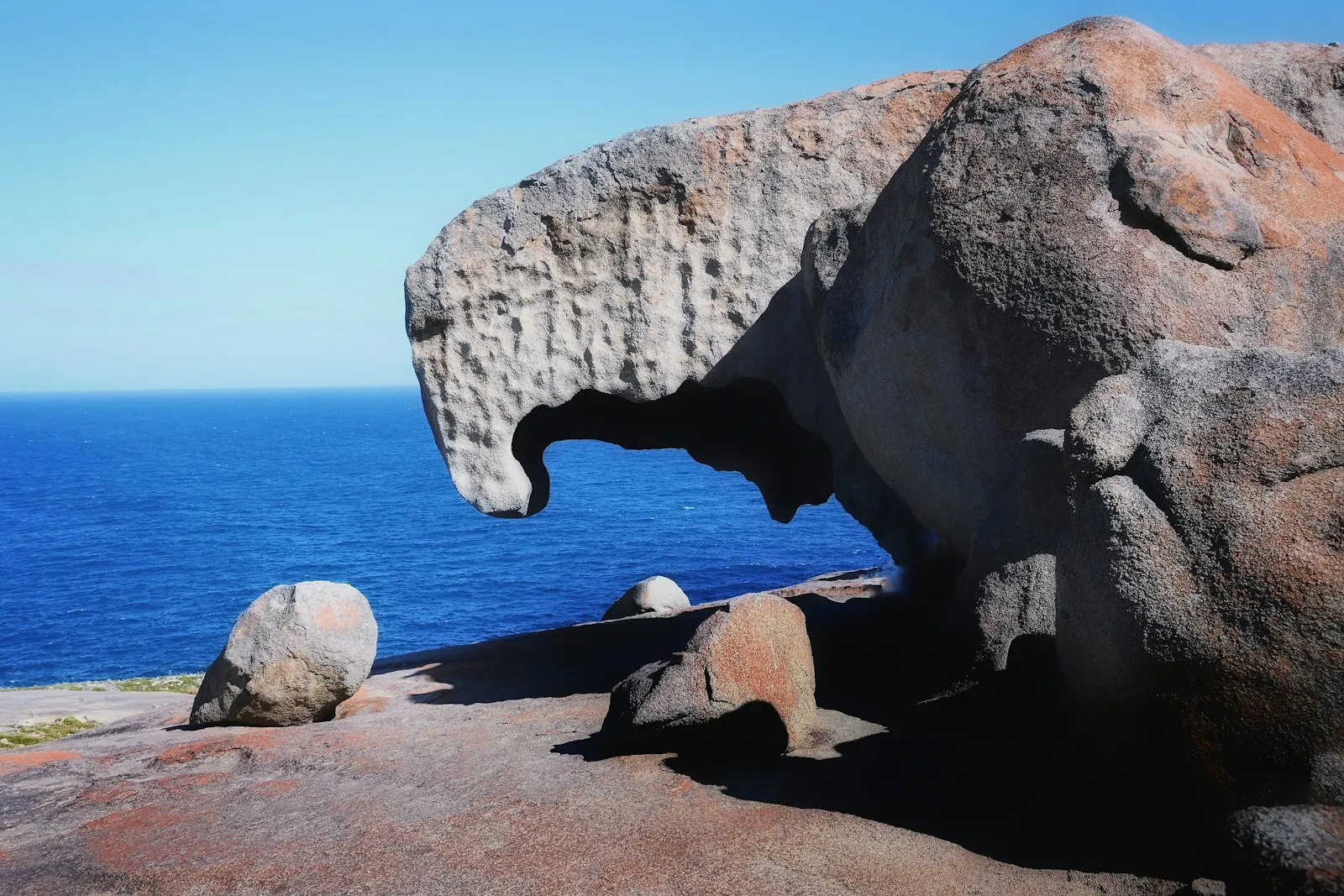
Remarkable Rocks live up to their name with a slightly aggressive directness. They’re a cluster of huge granite boulders sitting on a domed rock platform at the very edge of the cliff above the Southern Ocean, weathered by 500 million years of wind, salt, and rain into shapes that look like giant pieces of sculpture. One leans like a tilted sail. One has a hole all the way through it the shape of a teardrop. One is balanced on a fingertip-sized point. Sunset is the time — the rocks go gold, then orange, then deep red, while the sea behind them turns pewter. There is no fence around the rocks. You walk among them. People do silly poses. Don’t be silly near the seaward edges — the cliff is real, the wind is strong, and people have died here.
Admirals Arch, ten minutes drive away, is a sea arch carved into the cliff at the western tip of the park. There’s a boardwalk down to a viewing platform, and from the platform you look back at the arch — and at the colony of long-nosed fur seals living on the rocks below. Different species from the Seal Bay sea lions, smaller, more numerous, much less protected from disturbance — they’re bouncing around on the rocks, jumping into the water, sunbathing in the sun. From the boardwalk, you’re close enough to hear them barking.
Day three: the centre, the honey, and the slow drive back
On the way back east, stop at Clifford’s Honey Farm. Kangaroo Island is one of the only places in the world that still has Ligurian bees — a pure strain imported from Italy in 1881 — kept in isolation from mainland Australia’s mites and diseases. They produce a particular honey that you can taste at the farm. They also make honey ice cream. Order the ice cream.
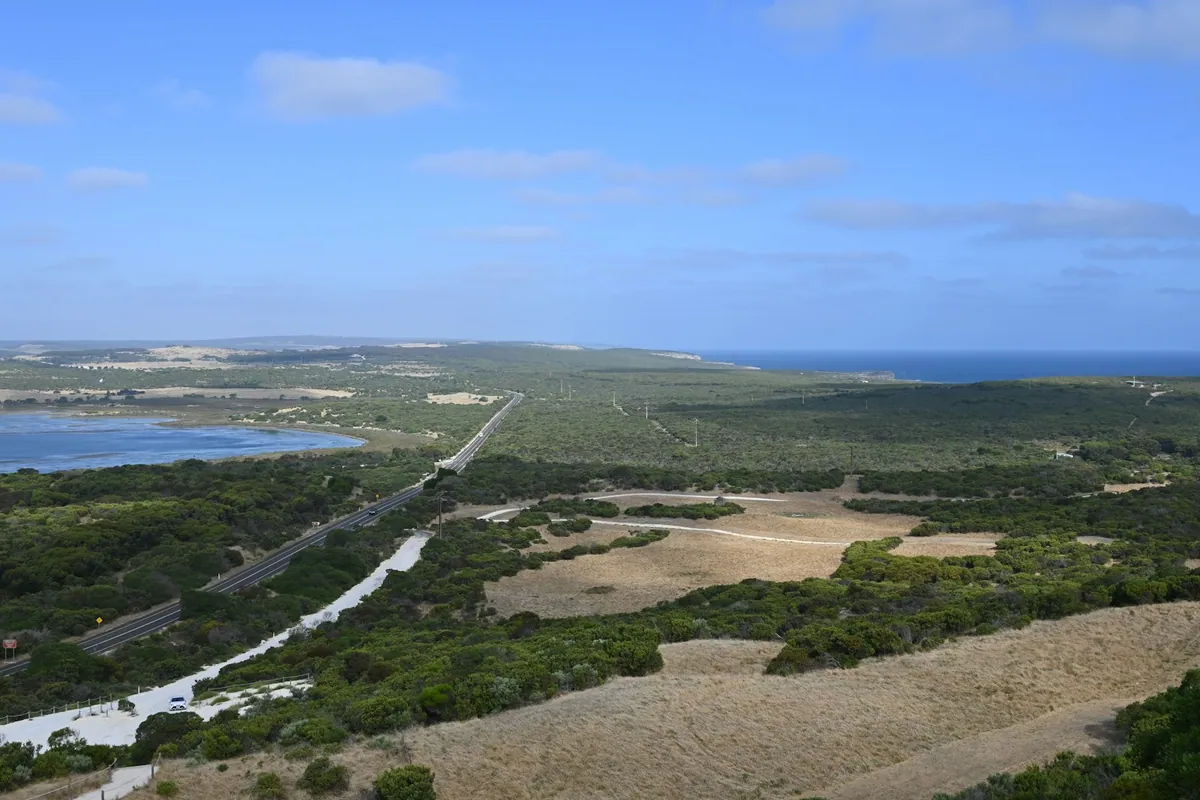
Stop at the Emu Bay Lagoon for lunch and a swim — calm, shallow, kid-friendly. Pop into Kingscote, the main town, for an afternoon coffee. Then back to Penneshaw for the evening ferry. On my last drive, between Kingscote and Penneshaw, I counted forty-three kangaroos in roadside paddocks at dusk. Forty-three. That’s not exaggeration; I wasn’t counting because I was bored, I was counting because they kept appearing.
How nice are South Australians?
Quietly nice. SA has the lowest population density of any mainland state and there’s a relaxed, slightly old-fashioned warmth to the locals on the island. My three days included: the ferry crew giving me a card for a B&B because they’d overheard I hadn’t booked a second night; the Vivonne general store owner pressing a free packet of biscuits into my hand “for the drive, love”; and Eli the sea lion biologist offering, when I told her I was nervous about the windy evening drive back, to escort me out of the park to the highway.
If you go
• Take the ferry. The car is essential for getting around the island. • Two nights minimum. Three is better. One is a tease. • Don’t drive at dusk or dawn unless you have to — that’s when the kangaroos and wallabies come out and the roads have no street lights. • Book the Seal Bay guided walk in advance. Numbers are capped to protect the colony. • Pack a fleece even in summer. The Southern Ocean wind cuts through.
You leave Kangaroo Island with the strange, quiet feeling of having visited a parallel Australia where the wildlife outnumbers the people. You will start mentally drafting your second trip on the ferry back. Mine starts in October.