Marseille in Three Days: The Vieux-Port, Notre-Dame de la Garde and the Calanques
Three days in France’s second city — the old port at sunrise, the basilica on the hill, and the limestone fjords just outside town.
📍 Marseille, France
Marseille is the oldest city in France (founded by Greek settlers around 600 BC), the country’s second-largest, and the one that French people from elsewhere are slightly nervous about. The reputation has been complicated by decades of tabloid stories about poverty and crime — some justified, some inflated — but the city itself, walked through over three days, is one of the most singular and rewarding urban places in the Mediterranean. The light is southern. The food is North African and Italian and Provençal at once. The harbour at sunrise is the photograph. The Calanques National Park, with its limestone fjords and turquoise coves, starts at the city limits and extends for 20 kilometres along the coast.
Three days will give you the soul of the place. You will leave wanting to come back for a longer stay.
The setup
Fly into Marseille-Provence (15 minutes from the centre) or take the TGV from Paris (3 hours from Gare de Lyon). Stay in or near the Vieux-Port (the old harbour, the heart of the city) or in the Panier district just behind it. Mid-range hotels run €100–200 a night. Avoid the streets immediately around Saint-Charles station after dark; central neighbourhoods are fine.
The metro and tram cover most of the central area. For the Calanques, you’ll want to either join a boat tour from the Vieux-Port, take the bus to one of the trailheads, or rent a kayak from Cassis (a small town at the eastern end of the Calanques that’s a 30-minute train from Marseille).
Day one: the Vieux-Port and the Panier
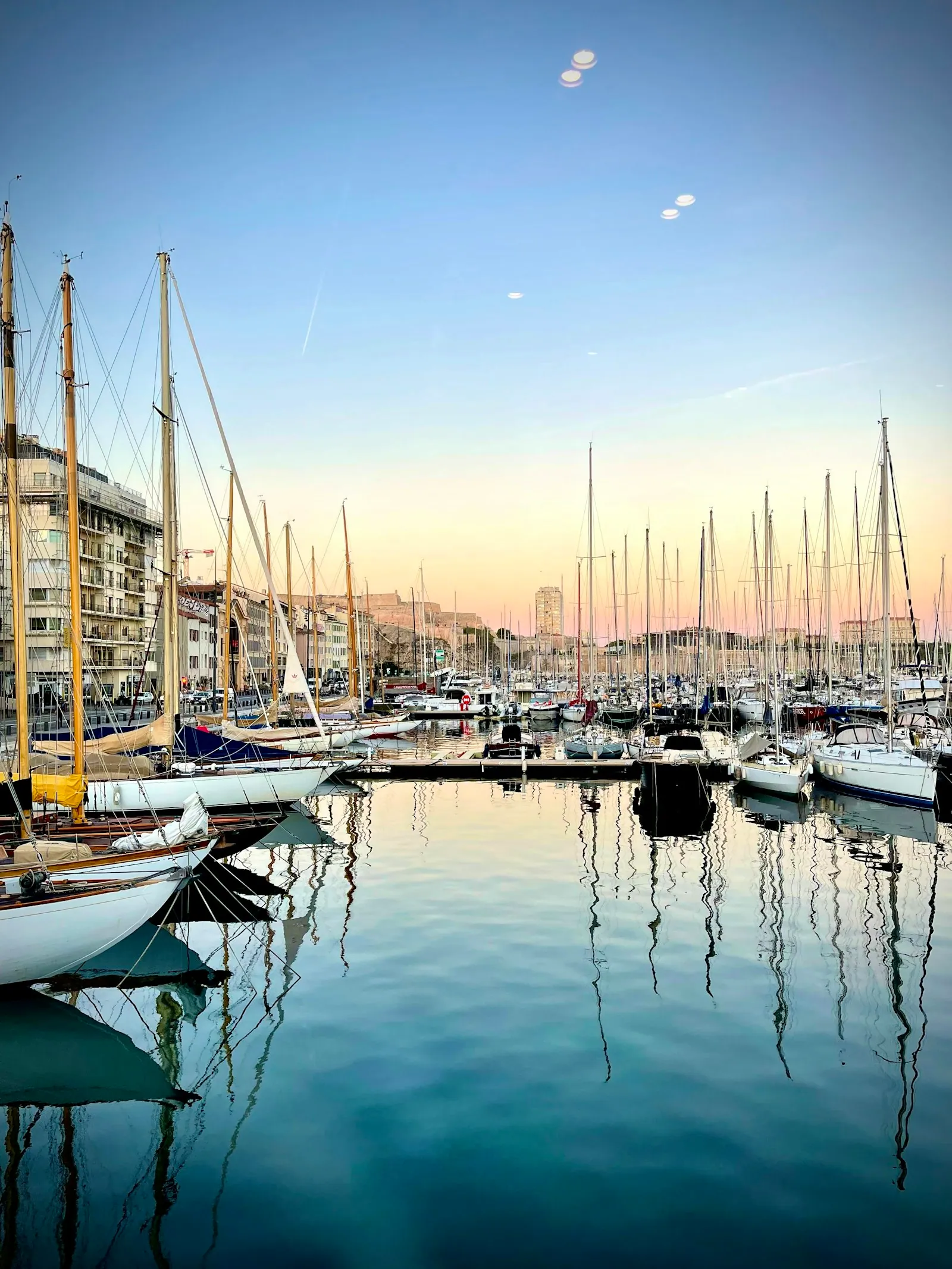
Walk to the Vieux-Port at sunrise. The old harbour is U-shaped, half a kilometre wide, lined with three- and four-storey buildings on each side, and packed with small boats and yachts moored in the calm water. At dawn the fish market sets up at the eastern end (Quai des Belges, every morning, about 8 a.m. to noon — buy your dinner at one of the stalls or just watch the auction), and the cafes around the perimeter open for breakfast.
Walk the perimeter of the harbour. On the western side, you’ll pass the Hôtel de Ville (the 17th-century city hall) and the Cathédrale Sainte-Marie-Majeure (a vast 19th-century basilica in striped Byzantine-Romanesque style). On the eastern side, the Quai du Port and the long row of cafes.
Climb up into the Panier — the oldest neighbourhood in the city, on the hill behind the northern side of the harbour. The Panier is a tight grid of narrow streets, painted shutters, small craft shops, and street art on every spare wall. It’s atmospheric, bohemian, slightly worn at the edges, and the most photographed neighbourhood in the city. The Vieille Charité — a 17th-century almshouse-turned-museum complex with a beautiful central church under a pink dome — is the architectural set piece of the quarter and worth an hour.
For lunch, eat panisse (a Marseillaise chickpea fritter) at one of the small stalls or have a proper sit-down meal at one of the bistros on Rue du Petit-Puits. In the afternoon, walk west to the MuCEM — the Museum of European and Mediterranean Civilisations, opened in 2013 in a striking lattice-walled black concrete building on the harbour mouth. The museum is excellent (free entry to the permanent collection on the first Sunday of each month); the building itself is the architectural event. From the museum’s rooftop you have a panoramic view back across the city.
For dinner, eat bouillabaisse. The Marseillais signature dish — a complex fish stew of multiple local Mediterranean fish species, served in two courses (the broth with rouille and croutons, then the fish itself), at a serious restaurant — is not cheap (around €60–90 a person) and not quick. Chez Fonfon, Le Petit Nice (3 Michelin stars), Chez Michel, and Une Table au Sud are the destination spots. Book ahead.
Day two: Notre-Dame de la Garde, then a swim
Climb up to Notre-Dame de la Garde — the 19th-century neo-Byzantine basilica that crowns the highest hill in central Marseille at 162 metres above the harbour. You can either walk up (about 30 minutes from the Vieux-Port, steep) or take the small tourist train (€8) or bus (no. 60). The basilica is topped by a 11.2-metre gilded statue of the Madonna and Child (la Bonne Mère, the Good Mother, the city’s symbol and unofficial protector), and the platform around the basilica gives you the most spectacular view of Marseille — the harbour below, the islands offshore (including the Château d’If, where Dumas’ Edmond Dantès was imprisoned in The Count of Monte Cristo), the city sprawling east, and the Calanques to the south.
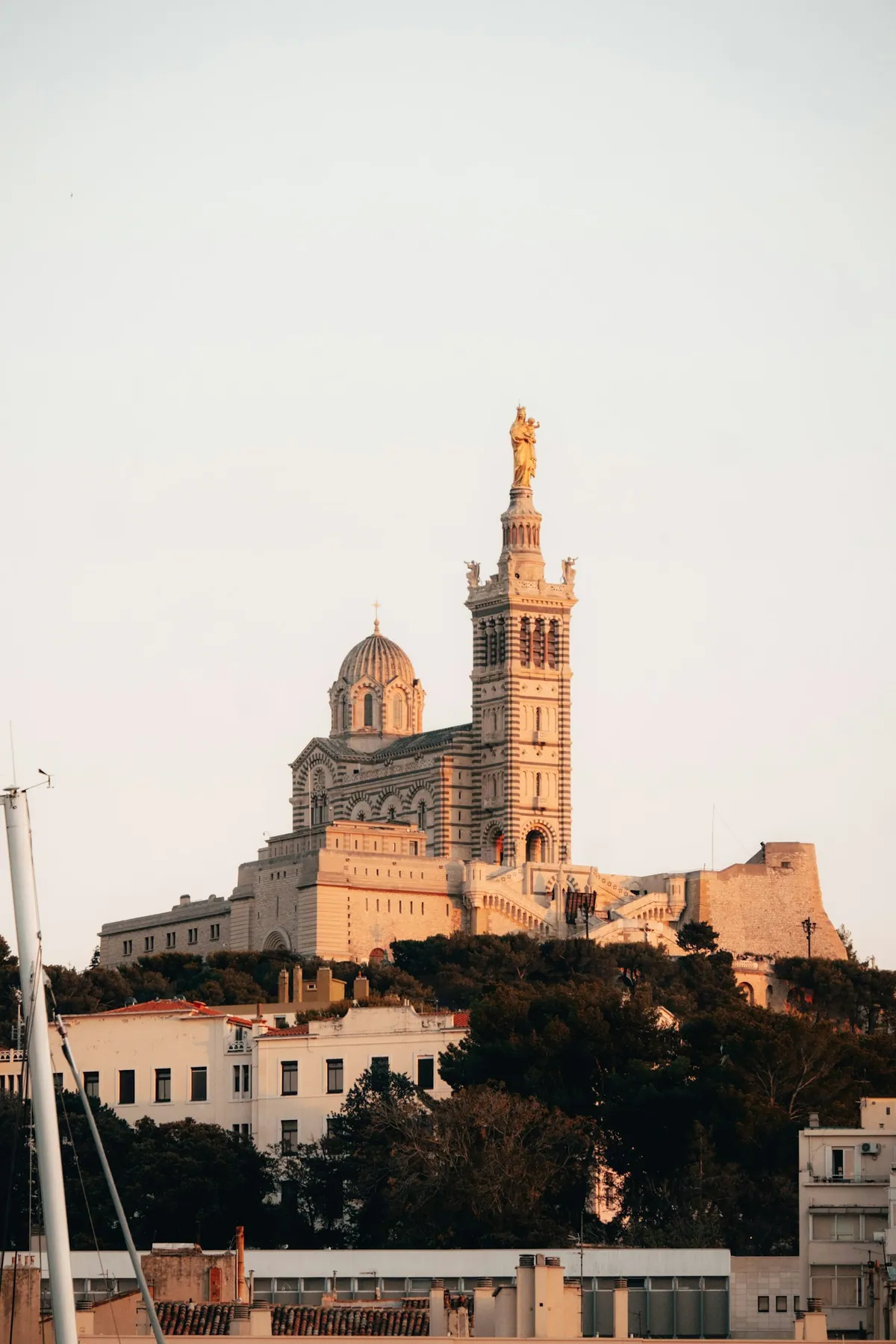
Allow 90 minutes including the climb and the views. The interior of the basilica is gold-mosaicked and atmospheric; pictures and model boats from sailors hang from the ceiling as votive offerings.
In the afternoon, take the metro to the Plage des Catalans — the closest sandy beach to central Marseille, a small but pleasant urban beach in a sheltered cove ten minutes by metro from the centre. Or push on to the Plages du Prado, the longer chain of beaches further south, accessible by bus.
For dinner, eat at one of the small Italian or North African restaurants in the Cours Julien district — a buzzy, slightly bohemian quarter inland from the harbour. Le Bouillon Marseillais and Toinou are reliable. The Marseillais also do excellent pizza (the city has a long Italian-immigrant history); Pizza Charly’s and any of the small wood-fired ovens around Cours Julien are good.
Day three: the Calanques
The Calanques National Park is the headline natural attraction of Marseille — a 20-kilometre stretch of limestone coast east of the city, sliced by deep narrow inlets (the calanques themselves) full of turquoise water, surrounded by white cliffs and Aleppo pines. The park starts at the eastern edge of the city and ends near Cassis. There are roughly a dozen named calanques, each with its own personality: Sormiou (a fishing village in a cove), Morgiou (similar), Sugiton (clear water for swimming), En-Vau (the most photographed), and Port-Pin and Port-Miou (the easternmost, accessible from Cassis).
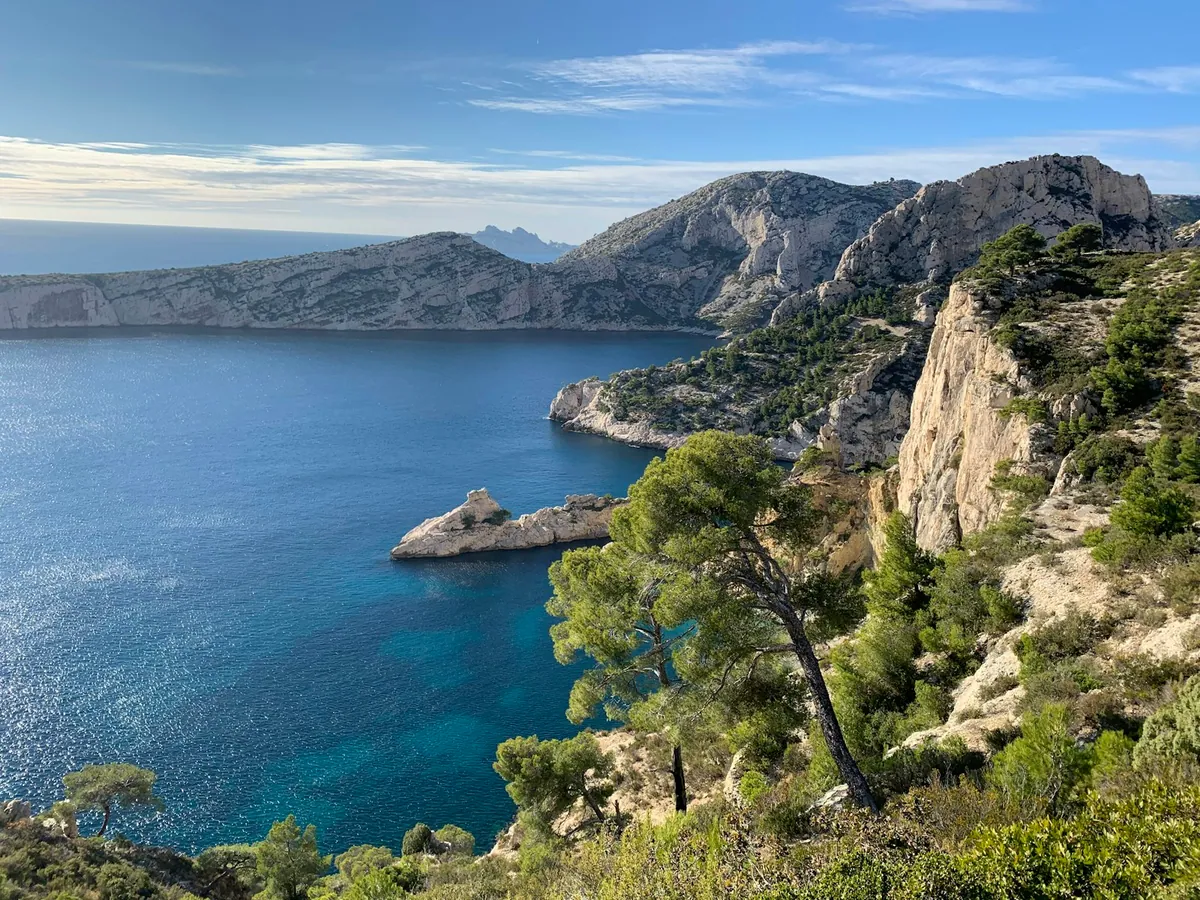
Three ways to see them:
The boat tour. Operators run half-day boats from the Vieux-Port that visit several calanques from the water. Cost: about €40 per person. Easiest option, no walking required, you don’t get to swim from the boat in the protected zones.
The hike. From Cassis, you can hike a clifftop trail east into the calanques (Port-Miou to Port-Pin to En-Vau). The walk is moderate to hard — En-Vau requires a steep scramble down to the cove — but it’s extraordinary. Allow a full day. Carry water; the calanques have no shade for stretches.
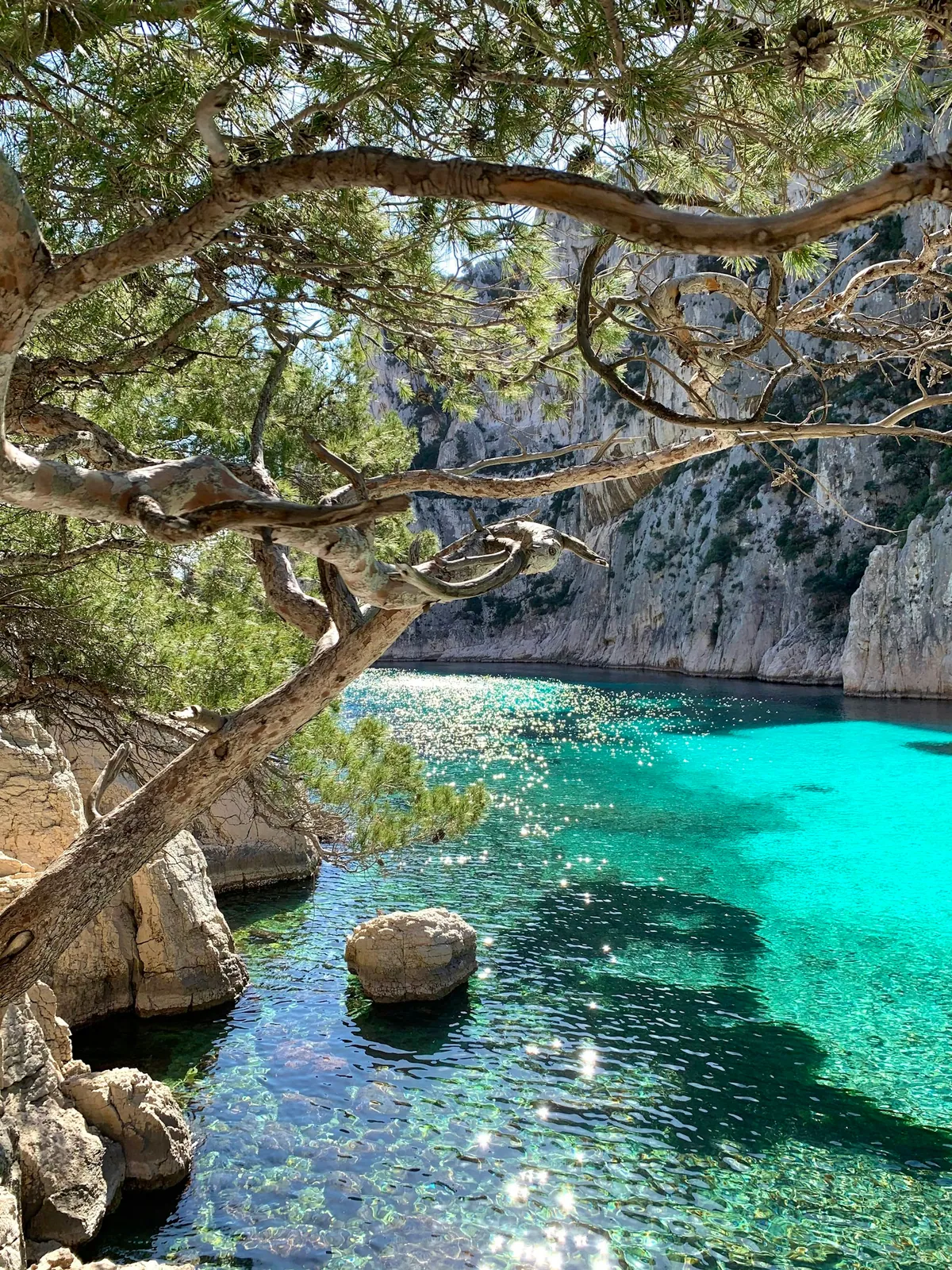
The kayak. Several kayak operators in Cassis run morning and afternoon paddling trips into the calanques. The kayaks let you reach the protected coves that the boats can’t and the hikers can’t easily access. Cost: about €40 for a half-day with a guide.
I did the hike from Cassis to En-Vau. About 4 hours round trip. The water at En-Vau is the colour you cannot photograph well — it ranges from pale aquamarine in the shallows to deep cobalt in the centre of the cove. I swam for thirty minutes and ate a sandwich on the gravel beach. There were maybe twenty other people. The pines smelled of resin. The cliffs were 80 metres high. It was, easily, the best afternoon of the trip.
How nice are Marseillais?
Loud-warm. Marseille is one of the most diverse cities in France — long-standing Italian, Armenian, North African, sub-Saharan African, and Asian communities all rub along in a way that gives the city a lively, slightly chaotic, very generous public culture. My three days included: a fish market vendor at the Quai des Belges throw in three extra small fish for free because she wanted to “help me get the bouillabaisse right at home”; a bus driver wait at the Calanques trailhead while I sprinted back from the gas station for water; and a Cours Julien bistro owner refuse the wine charge on my dinner because “you ate everything, that is the best compliment, the wine is on me.” Marseille is the city in France where strangers will most often start conversations with you. Embrace it.
If you go
• Stay in or near the Vieux-Port. Walking distance to the heart of the city. • Take the metro and bus. The center is walkable, the suburbs and beaches are not. • Visit the Calanques. The single non-negotiable thing you must do. • Eat bouillabaisse once. At a serious place. It is an event. • Don’t be put off by the reputation. Marseille’s reputation is older than its reality.
Marseille is the bit of France that is most itself — Mediterranean, multicultural, slightly worn at the edges, generous in spirit, and surrounded by some of the most beautiful coastline in Europe. Three days here will give you the harbour, the basilica, and the calanques. You leave with a small affection for a city that does not try to be anything other than what it is.