Melbourne in Four Days: Laneways, Trams, Coffee and a Footy Match
A long weekend in the most Australian city that thinks it isn’t Australian at all.
📍 Melbourne, Victoria, Australia
Melbourne is the Australian city that most Australians won’t admit they love more than the one they live in. Sydney people will die on the harbour hill for their town; Brisbane people will swear the beaches make the heat worth it; Perth people are on a completely separate continent as far as they’re concerned. But everyone — quietly, over a second flat white in a laneway cafe at 10 a.m. on a Tuesday — will tell you Melbourne is “actually pretty good, mate.” That is the strongest language in the Australian vernacular for anything that isn’t a beach you grew up on.
I had four days. I came in open-minded, a little jet-lagged, and a bit suspicious that a city famous for coffee and cloudy weather couldn’t really live up to the hype. Reader: it does. Melbourne is where Australia parks its best restaurants, its best street art, its best coffee, and — on any given autumn afternoon — 95,000 people in matching scarves trying to scream their team to a win at the MCG. Here’s how to do a long weekend right.
Day one: the laneways and the coffee
Everything you’ve heard about Melbourne coffee is true and slightly undersold. The baristas here take their craft the way a Kyoto sushi chef takes his: seriously, quietly, and slightly impatient with anyone who orders an oat-milk mocha with four sugars. Walk into any specialty cafe in the CBD, order a flat white, pay about $5, and stand there quietly while the person at the machine — who has almost certainly done a stint in Naples, trained in Portland, and now pulls shots in a converted shipping container behind a library — produces something that recalibrates your tastebuds for every coffee you drink afterwards.
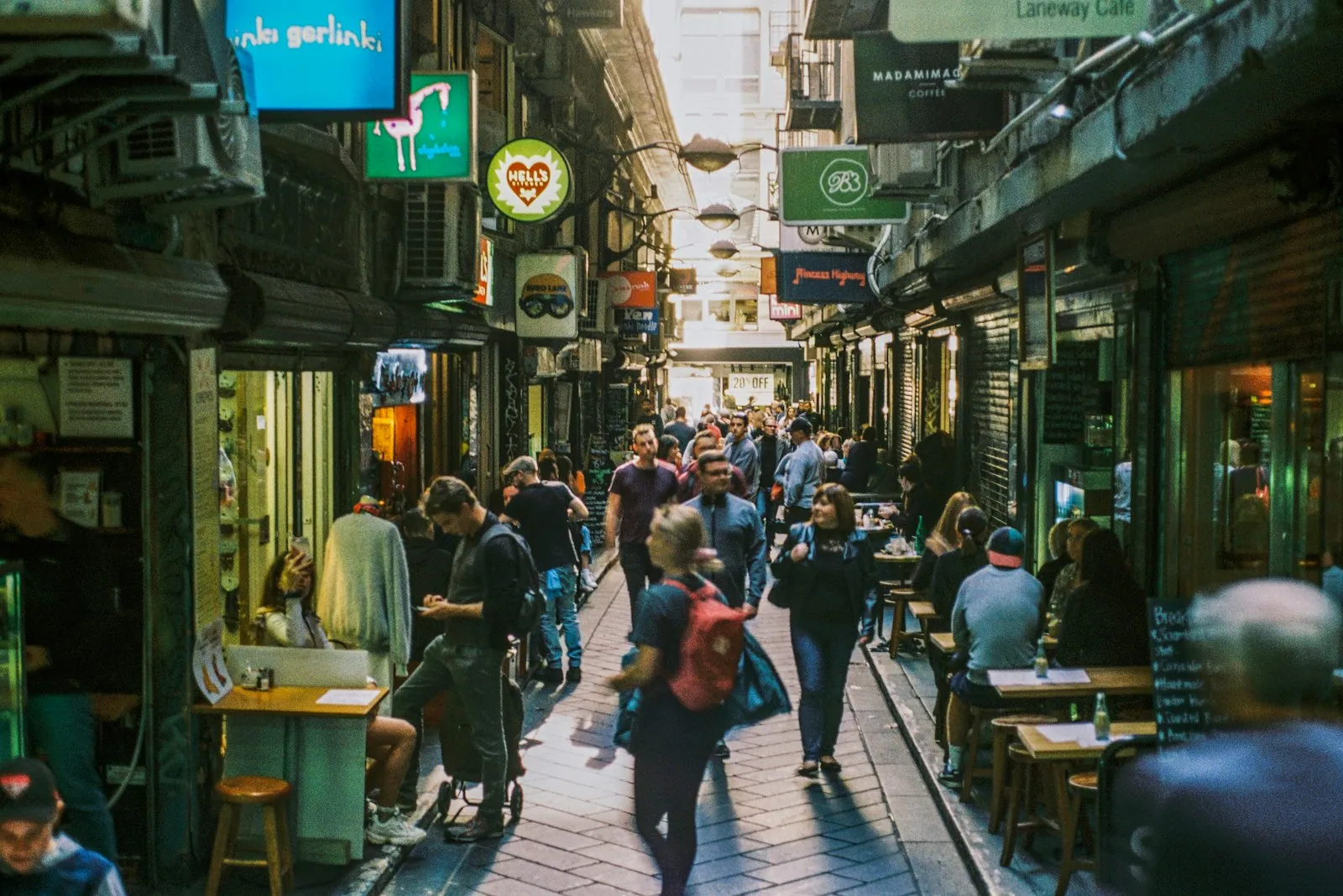
Start on Degraves Street, which is the laneway you’ve seen in a hundred Melbourne photos. It’s a skinny pedestrian alley between Flinders Lane and Flinders Street Station, lined with tiny cafes with bistro tables out front. Order at Dukes, or Brother Baba Budan a block over, or Market Lane inside the Queen Victoria Market. Sit. Drink. Don’t rush. A man in a suit will pass you with a croissant. A girl on a skateboard will wave at someone across the lane. Pigeons will pretend to ignore your muffin. This is the city.
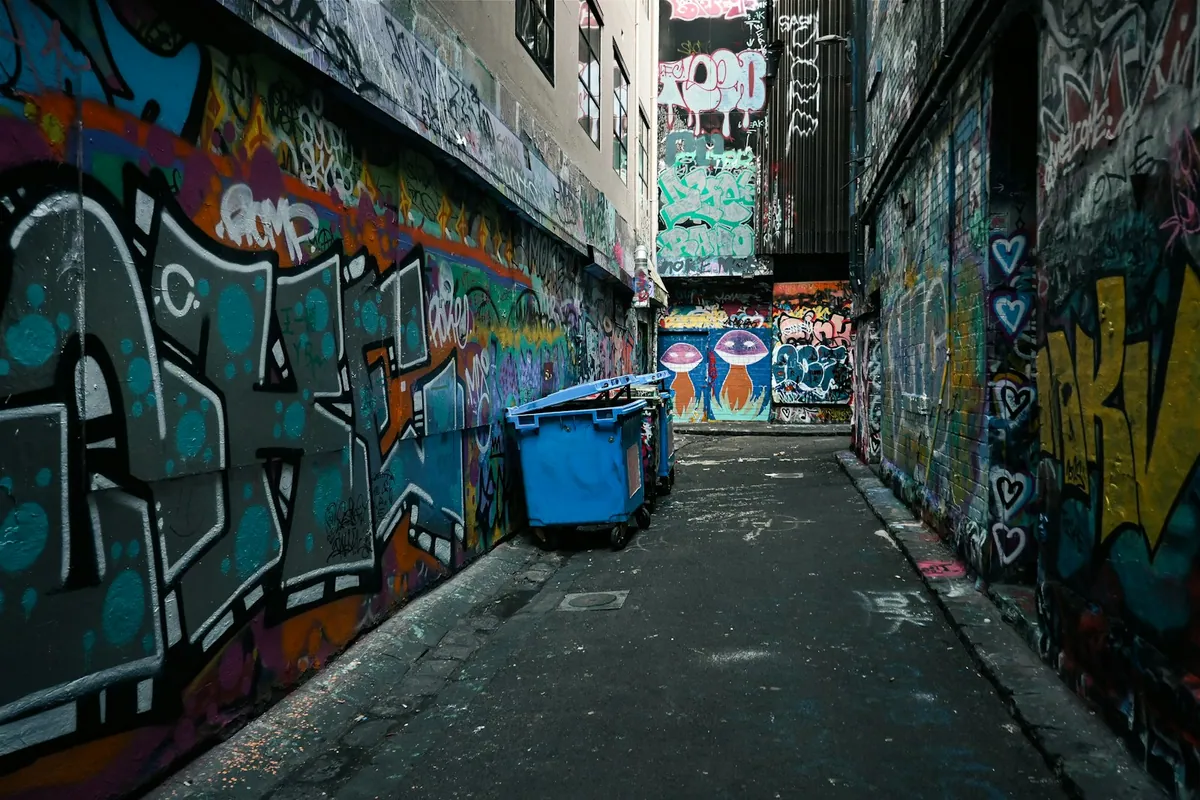
When you’ve finished, walk two blocks north-east to Hosier Lane. Hosier is the most famous graffiti alley in the country — cobblestoned, sixty metres long, every vertical surface covered in a rolling, ever-changing wall of art. Stencils, murals, tags, paste-ups, political posters, declarations of love, declarations of war against last year’s declarations of love. Stuff gets painted over every week. Come back in a month and half of it will be different. There is a quiet, unwritten rule that tourists can photograph freely, but ask before you photograph anyone actively painting. Everyone obeys this. It works.
Spend the rest of the afternoon wandering. Melbourne’s CBD is a grid of big, orderly streets (Collins, Bourke, Lonsdale, La Trobe, going east–west) laid out in 1837, and a web of small, disorderly laneways in between. Rotate between the grid and the lanes. Every other alley you turn into has a restaurant, a rooftop bar, a book shop, an independent perfumery, a dumpling counter that’s had a queue outside it for forty years. You cannot plan this. You have to just walk.
Day two: trams and the river
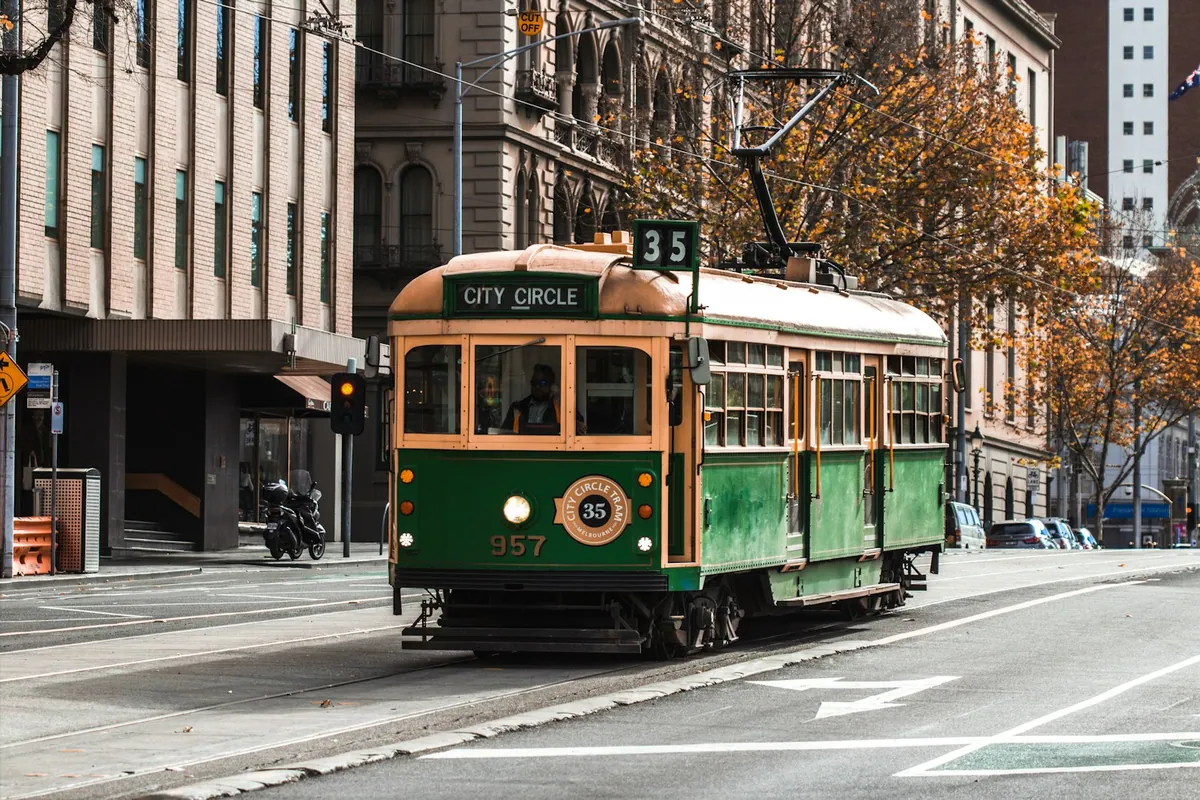
The Melbourne tram network is the biggest in the world and the CBD has a free tram zone — you don’t tap on, you don’t tap off, you just step on. Use it. Specifically, use route 96 if you want a straight shot from the beach at St Kilda to the North Melbourne markets, or route 35 — the City Circle — which is a heritage tram that loops the CBD for free, doing gentle laps with a recorded voice telling you about the buildings as you pass. This is, by a distance, the best sightseeing tour in the country that costs you nothing.
Jump off near Southbank and walk along the Yarra River. This is not a dramatic river. The Yarra is brown in the way old tea is brown. But the walk along it, through Federation Square and past the Arts Centre and up towards Crown, is gentle and long and full of small, good things: the National Gallery of Victoria (free entry to the permanent collection), the row of rowing clubs, the temporary art installations that pop up in summer, the bridges you can walk under for the best graffiti you didn’t know about.
I walked out towards Richmond in the late afternoon and ate at one of the Vietnamese restaurants on Victoria Street. Victoria Street, for the uninitiated, is a 1.5-kilometre stretch of pho, banh mi, bun bo hue and three-dollar iced Vietnamese coffees, and it is the single best value meal district in any Australian capital. I had a bowl of pho so good I nearly applauded. The woman who took my order asked where I was staying and then wrote, in Vietnamese and English, the name of a different restaurant I should go to next time. She pressed the note into my hand. I keep it in my wallet.
Day three: the footy
You cannot visit Melbourne without going to a footy match. Australian Rules football, or AFL, is the unofficial religion of this state. Ten of the eighteen teams are based in or around Melbourne. Tickets are cheap (under $30 for general admission), the stadium is one of the great sports cathedrals of the world, and the rules don’t matter — nobody’s going to explain them to you properly until the second quarter anyway.
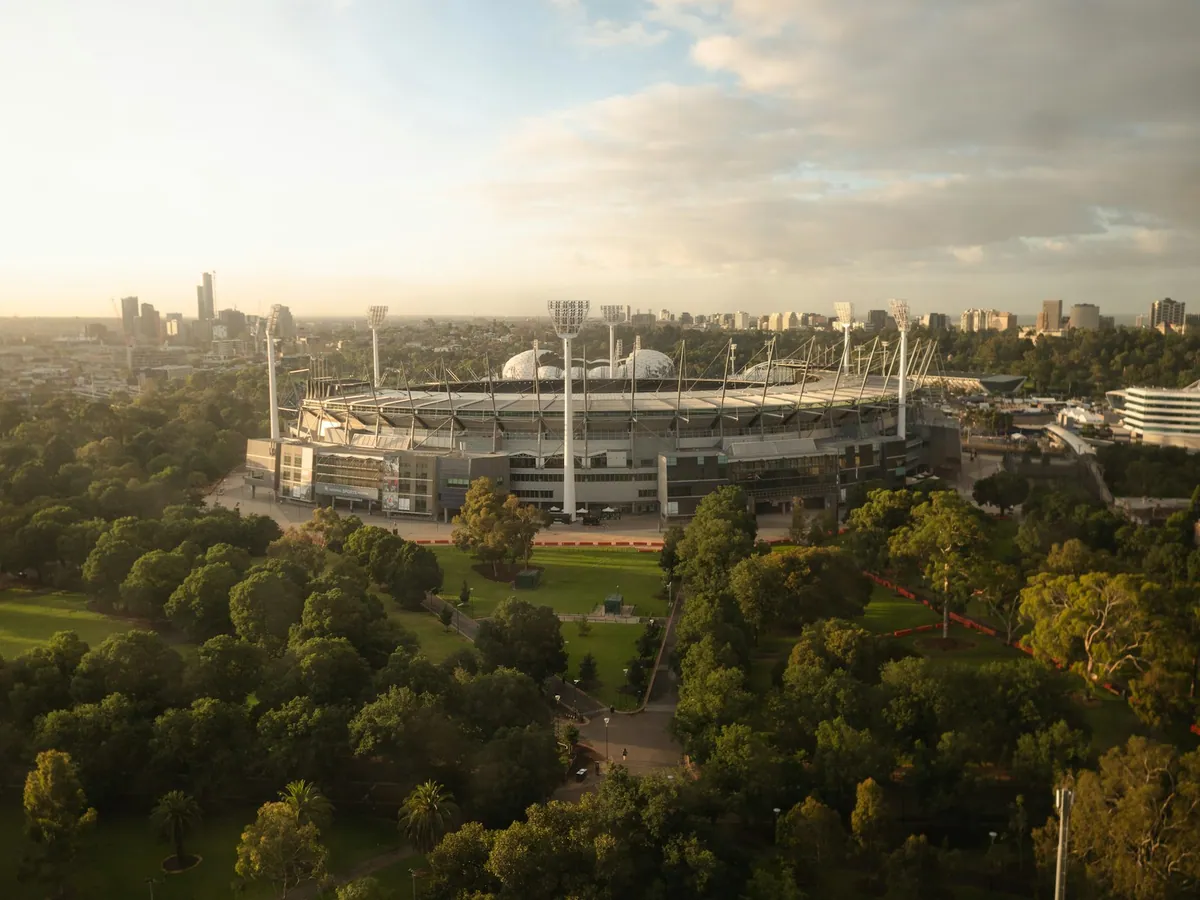
The Melbourne Cricket Ground — the MCG, “the G,” capacity one hundred thousand and change — is a few minutes’ walk from the CBD through Yarra Park. On match days, the walk is a slow river of scarves. Richmond yellow and black, Collingwood black and white, Carlton dark blue, Essendon red and black. People are festive. People are a bit drunk. People will explain their team’s injury list to you without being asked. I went to a Richmond game on a Saturday afternoon and was adopted, within ten minutes of taking my seat, by a family of four who’d held those same seats for thirty years. The grandfather made me eat a meat pie and explained the free-kick rules twice. The little boy drew me a Richmond tiger on the back of his programme. Richmond lost by six points. The grandfather told me he was glad I’d come anyway.
That night I had ramen in Chinatown, a glass of shiraz in a rooftop bar on Little Bourke, and walked home past the Chinese arches in a drizzle that Melbourne does better than any other Australian city. The drizzle suits it. The drizzle is basically the city’s mood.
Day four: St Kilda, Brunswick, and the markets
St Kilda is the beach suburb thirty minutes south-west by tram — Palais Theatre, Acland Street cake shops, the pier with little penguins at sunset, and a foreshore full of people roller-skating like it’s still 1987. Do the beachfront walk. Get a cake at Monarch on Acland Street. At dusk, stand at the end of the St Kilda pier and wait. Little (fairy) penguins — the smallest penguins in the world — come back from their day at sea around sunset, and they waddle along the rocks at the base of the pier. Volunteers sit nearby with soft red-filtered torches and will quietly point the penguins out to you. It is free. It is absurd. It is one of the great sights of the country.
In the morning, go north to the Queen Victoria Market — 150 years old, the size of several blocks, the right place for everything from a handmade cannoli to a wheel of King Island cheese to a four-dollar bunch of kale. The dagwood-dog stand and the American Doughnut Van have both been there for half a century and both have queues. Join the queues. Ignore the man behind you who complains about the queues. He’s been coming here every Saturday since 1983.
End the trip in Brunswick, up Sydney Road, where the city starts getting older and slightly weirder. Middle Eastern bakeries, Sicilian pasticcerias, Indian sari shops, record stores, dumpling houses. Get a coffee at Padre Coffee or Wide Open Road. Eat a pide from A1 Bakery. Thank the baker, who will tell you in Arabic-inflected Australian English that you should come back soon and bring your mum.
How nice are Melburnians?
Ruthlessly, quietly, consistently. My four-day list of human kindnesses includes: the barista who remade my flat white because I said it tasted “a bit too much like coffee” (I was being polite; he knew; he fixed it); the stranger who gave me her umbrella outside Flinders Street Station and wouldn’t accept it back; the ticket inspector on the tram who, upon discovering my Myki card had expired, tapped his own card for me and waved me past; and the Richmond grandfather at the footy, who texted me three weeks later from a number I hadn’t saved to say his grandson had framed the tiger drawing and asked if I’d got home okay.
If you go
• Get a Myki card at the airport. You’ll use it on trams, trains and buses, and you ride free in the CBD tram zone anyway. • Book an AFL match online if it’s the season (March to September). The MCG and Marvel Stadium are both a short walk from Flinders Street Station. • Eat breakfast in the laneways. Eat lunch at the Queen Vic. Eat dinner on Lygon Street, Victoria Street, or Smith Street, depending on what you want. • Pack a light waterproof jacket. Melbourne famously does four seasons in one day. • Skip the harbour cruise equivalents — Melbourne doesn’t really have a harbour. Take trams instead. That’s the ride.
Melbourne is a slow-release city. You walk around it for a day and think it’s nice. You walk around it for four and you start checking rental listings. I am not saying I checked rental listings. I am saying I understand the people who do.