Sicily in Five Days: Taormina, Palermo and the Valley of the Temples
Five days on Italy’s great Mediterranean island — Greek temples, Norman cathedrals, Mt Etna, and the food culture of the south.
📍 Sicily, Italy
Sicily is the great Mediterranean island that hangs off the toe of Italy, the largest island in the Mediterranean (25,711 square kilometres), and the most culturally layered place in southern Europe. Greeks colonised it in the 8th century BC and built temples here that survive in better condition than anything in Greece itself. The Romans took it over and used it as their breadbasket. The Arabs ruled it for 200 years from the 9th century AD and turned Palermo into one of the great cities of the medieval Mediterranean. The Normans took it in 1072 and built extraordinary cathedrals that fuse Norman, Arab, and Byzantine elements into a unique architectural language. The Spanish ran it for 500 years. The result is an island that is simultaneously Italy and not-Italy — the Italian language has Arab loanwords, the architecture mixes Greek temples with Baroque palazzos, the food is more North African than mainland Italian, and the Sicilians themselves identify as Sicilian first and Italian a distant second.
Five days lets you do the headline trio: Taormina on the east coast, Palermo on the west, and the Valley of the Temples in the south. You will need at least ten days to do the island properly.
The setup
Fly into Catania on the east coast (closer to Taormina) or Palermo on the west. Hire a car at the airport — Sicily is dispersed and the public transport is patchy. The drive across the island from Catania to Palermo is about 3 hours; allow time for breaks.
Stay two nights near Taormina, two nights in Palermo, and one night near Agrigento.
Day one and two: Taormina and Mt Etna
Drive (or transfer) to Taormina from Catania airport — about 50 minutes. Taormina is the small clifftop town on the east coast, perched 200 metres above the Ionian Sea, with the snow-capped Mt Etna (3,400 metres, the highest active volcano in Europe) rising directly inland. The setting is the most theatrical in the Mediterranean.
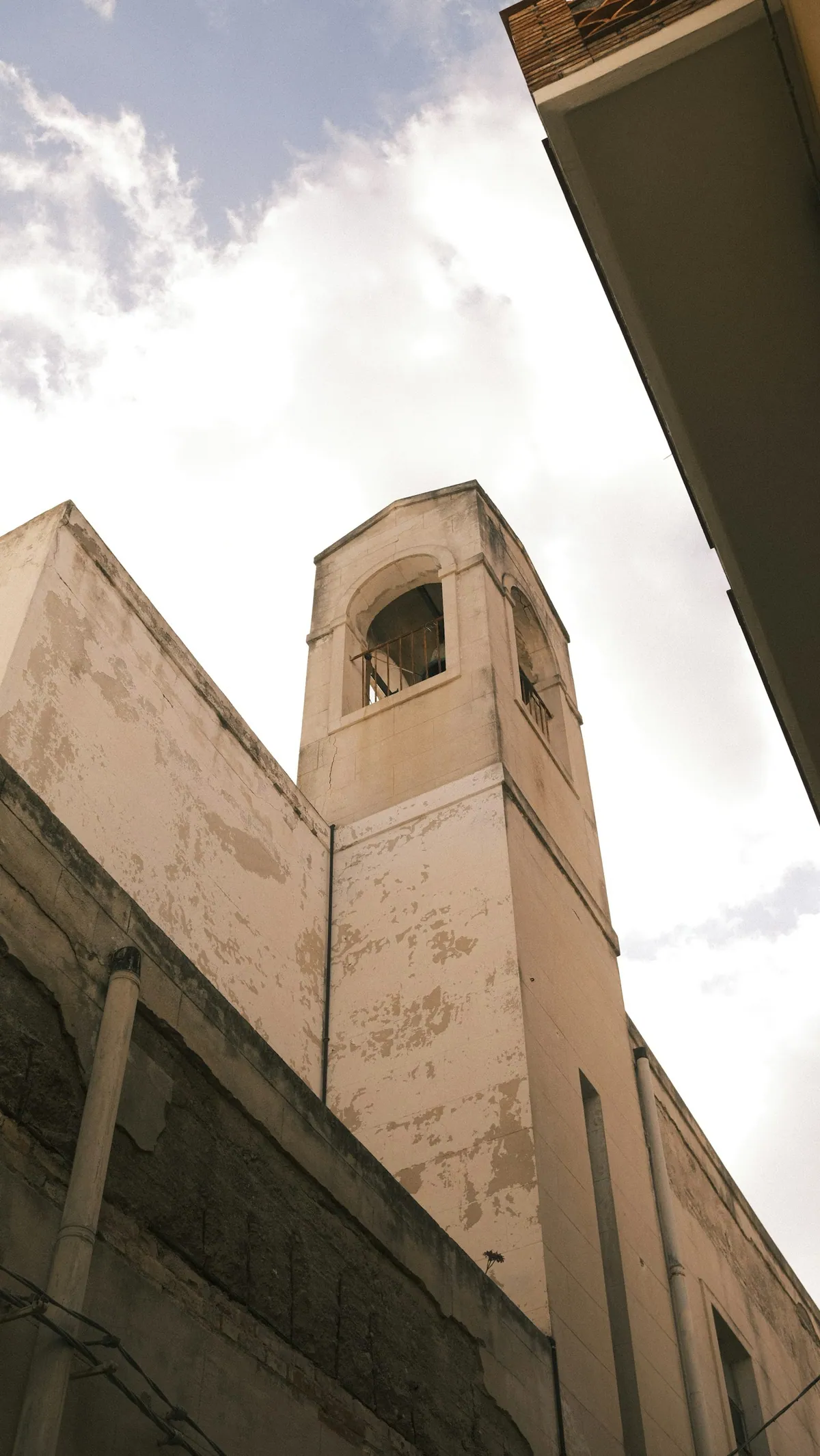
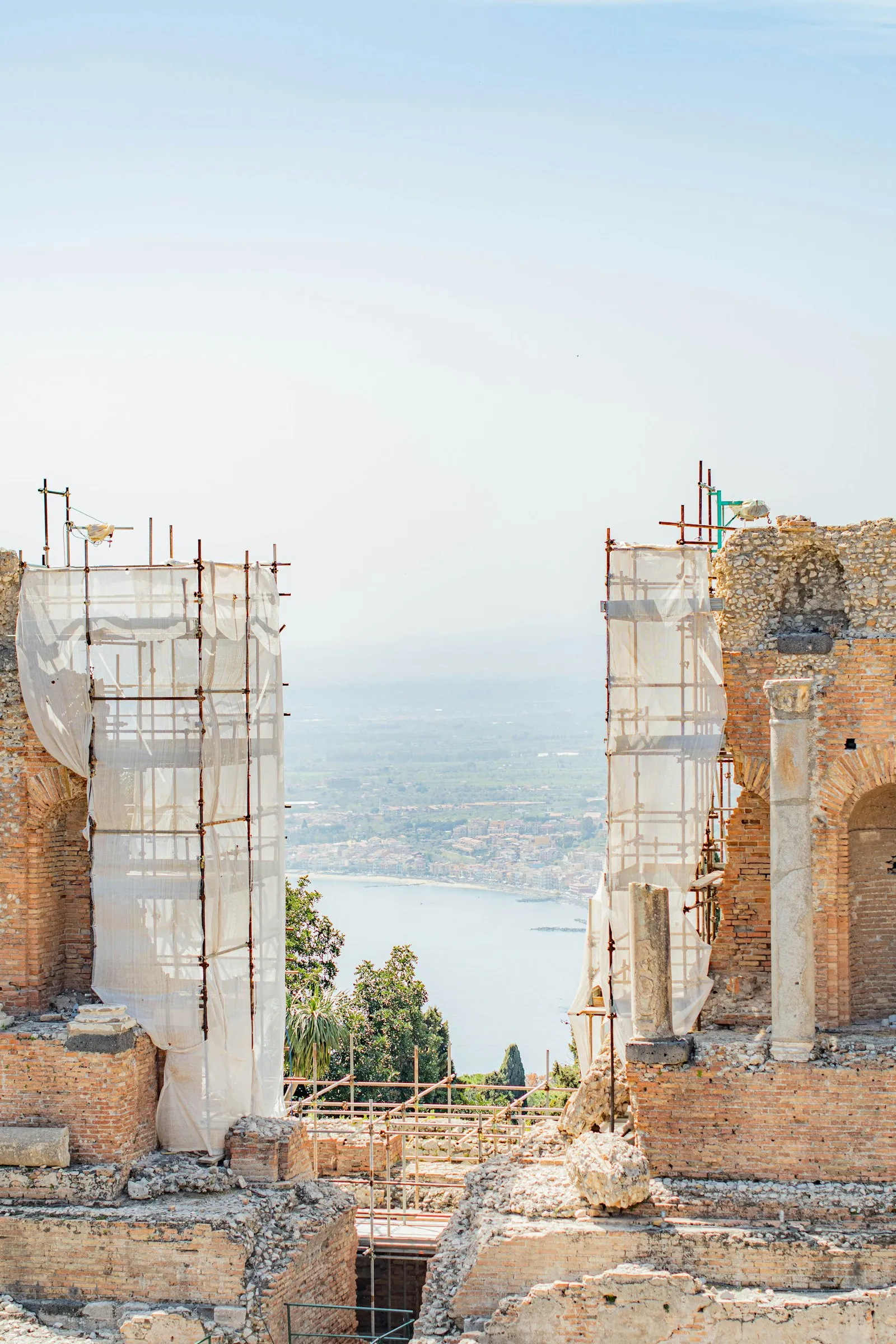
Walk the Corso Umberto — the long pedestrianised main street that runs through the centre of the town between the two main gates. The street is small, beautifully preserved, and lined with boutiques, bars, and cafes. The famous Greek Theatre (Teatro Antico di Taormina) at the eastern end is a 3rd-century BC Greek theatre rebuilt by the Romans, with a stage opening that frames Mt Etna in the background — possibly the most theatrical natural backdrop of any ancient theatre in the world. Visit at sunset for the gold light on the volcano. About €12 entry.
For lunch, eat at one of the small bistros on the small streets behind Corso Umberto. Reliable: Tischi Toschi, Osteria Nero d’Avola, La Capinera (one Michelin star, with a cliff-edge terrace, in Mazzarò just below the town).
In the afternoon, take the cable car (Funivia di Taormina) down to Mazzarò — the small beach town directly below the cliff, with two beaches and the famous Isola Bella (a tiny rocky islet connected to the mainland by a thin sandy spit, with a small nature reserve). Swim. Sunbathe. Take the cable car back up.
Day two, the volcano. Mt Etna is one of the great geological experiences in Europe. The standard visit takes you to the Rifugio Sapienza at 1,900 metres on the southern flank by car (or organised tour from Taormina), then a cable car (Funivia dell’Etna) up to 2,500 metres, then a 4WD bus or guided walk to 2,900 metres at the summit craters area. The whole thing takes a half-day; book through one of the Taormina-based tour operators or arrange your own car. Bring proper walking shoes and warm layers — the summit is 15 to 20 degrees colder than sea level.
If you don’t want the summit experience, the smaller Crateri Silvestri at 1,900 metres are accessible from the Rifugio Sapienza by a 30-minute walk and give you a good sense of the volcanic landscape.
Day three: drive west to Palermo
Long driving day. About 3 hours across the island. Stop at Cefalù on the way — a small beautifully preserved fishing village on the north coast, with a striking Norman cathedral (with extraordinary 12th-century gold mosaics inside), a perfect curving sand beach, and a small old town that climbs up the hill from the harbour. Have lunch on the beach. Continue to Palermo.
Palermo is the great chaotic capital of Sicily — population about 670,000, the largest city on the island, with a 2,700-year urban history that includes Phoenician, Greek, Roman, Arab, Norman, German, Spanish, Austrian, French, and Italian rulers in succession. The city is loud, beautiful, slightly run-down in places, beautifully restored in others, and full of some of the most extraordinary architecture in southern Europe.
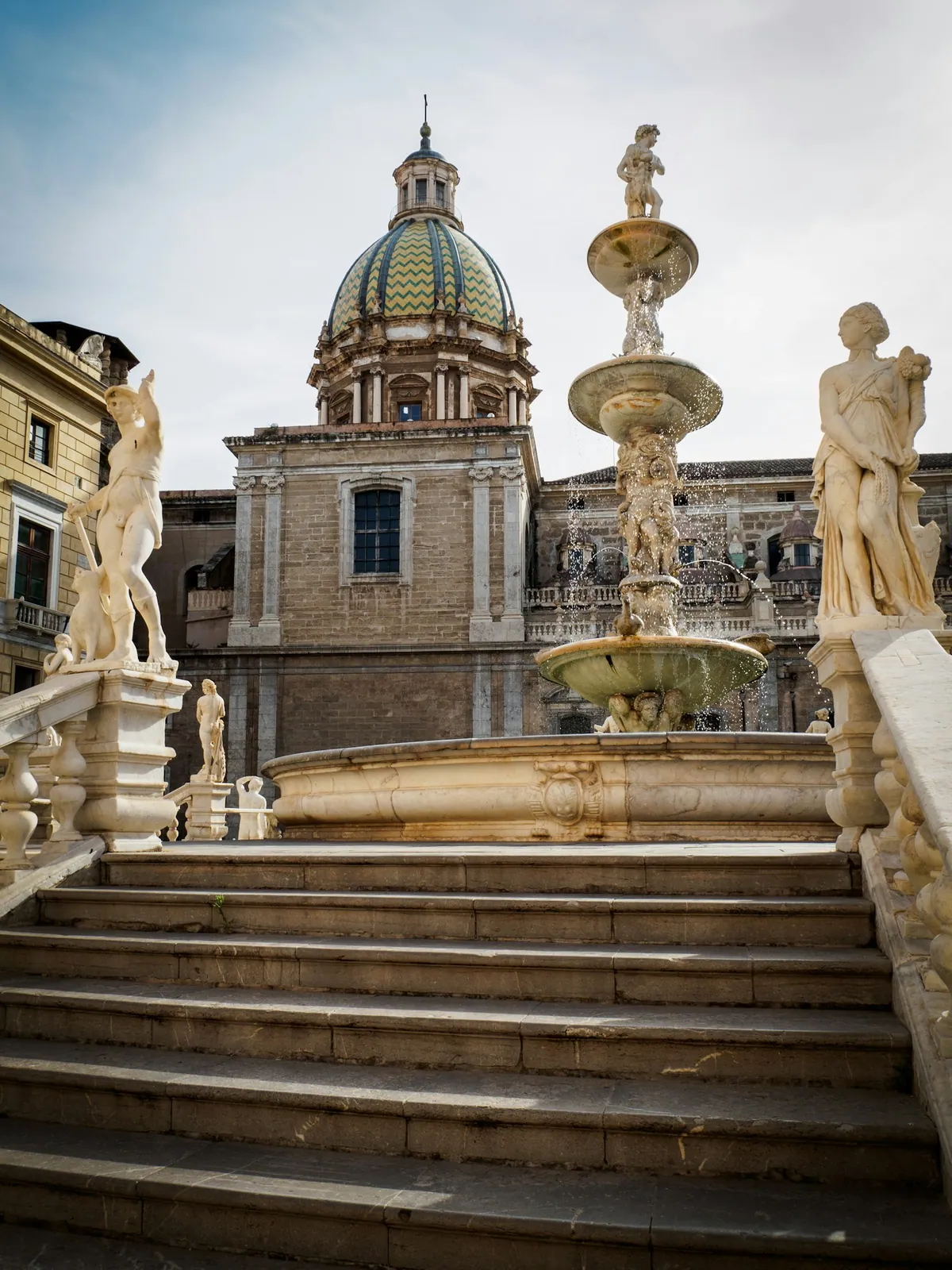
Stay in or near the historic centre — the area between the Quattro Canti and the cathedral. Walk in the early evening. The Piazza Pretoria with its famous “Fountain of Shame” (a 16th-century fountain ringed with 48 white marble nude figures, originally bought for a Tuscan villa, installed here in 1574 and quickly nicknamed for its scandal); the Quattro Canti (the famous central crossroads with four matching Baroque corners); the small streets of the Vucciria and Capo markets — all are atmospheric.
For dinner, eat in one of the historic centre trattorias. Reliable: Bisso Bistrot (the famous old-school spot at the Quattro Canti); Trattoria Ai Cascinari; Osteria dei Vespri.
Day four: Palermo proper
Day four, walk the city. The Cathedral of Palermo (Cattedrale di Palermo) is the great Norman cathedral of the city — built in 1185 on the site of an earlier mosque (which was itself on an even earlier Christian basilica), the building is one of the most striking architectural mixes in Italy: Norman base, Spanish-Gothic east end, Catalan-Gothic doorway, neoclassical dome, with bilingual Latin-Arabic inscriptions visible on some of the original Norman columns reused from the mosque. Inside is the tomb of Frederick II (the great medieval Holy Roman Emperor) and the small treasury with the crown of Constance of Aragon.
The Palatine Chapel (Cappella Palatina) inside the Norman Palace, a few minutes’ walk away, is the architectural masterpiece of Sicily. Built between 1132 and 1140 for King Roger II, the chapel is small (about 30 metres long), but the interior is covered in floor-to-ceiling Byzantine gold mosaics in the upper parts, with an Arabic muqarnas (honeycomb) wooden ceiling above, and Cosmati floor mosaics underfoot. The combination of Norman architecture, Byzantine Greek mosaics, and Arabic ceilings in one small room is unique in the Mediterranean. Allow ninety minutes for the cathedral and the chapel.
Have lunch at the Mercato di Capo or Mercato di Vucciria — Palermo’s great street markets, where the food culture is most visible. Eat the Sicilian street food: arancini (deep-fried rice balls), pane con la milza (spleen sandwich, a Palermitan classic), panelle (chickpea fritters), sfincione (Sicilian pizza). Cheap, delicious, and the proper Palermo lunch.
In the afternoon, visit the small Norman cathedral at Monreale on the hill above Palermo — a 25-minute drive. Monreale Cathedral has 6,500 square metres of Byzantine gold mosaics covering the entire interior, the largest single mosaic cycle in Italy. It is, alongside the Palatine Chapel, one of the great Norman-Byzantine architectural achievements.
Day five: the Valley of the Temples at Agrigento
Drive south to Agrigento — about 2 hours. Agrigento itself is a small modern town, but on the ridge below it lies one of the most extraordinary archaeological sites in the Mediterranean: the Valle dei Templi (Valley of the Temples), a UNESCO World Heritage site with eight 5th-century BC Greek Doric temples standing in remarkable condition along a long ridge above the southern coast.
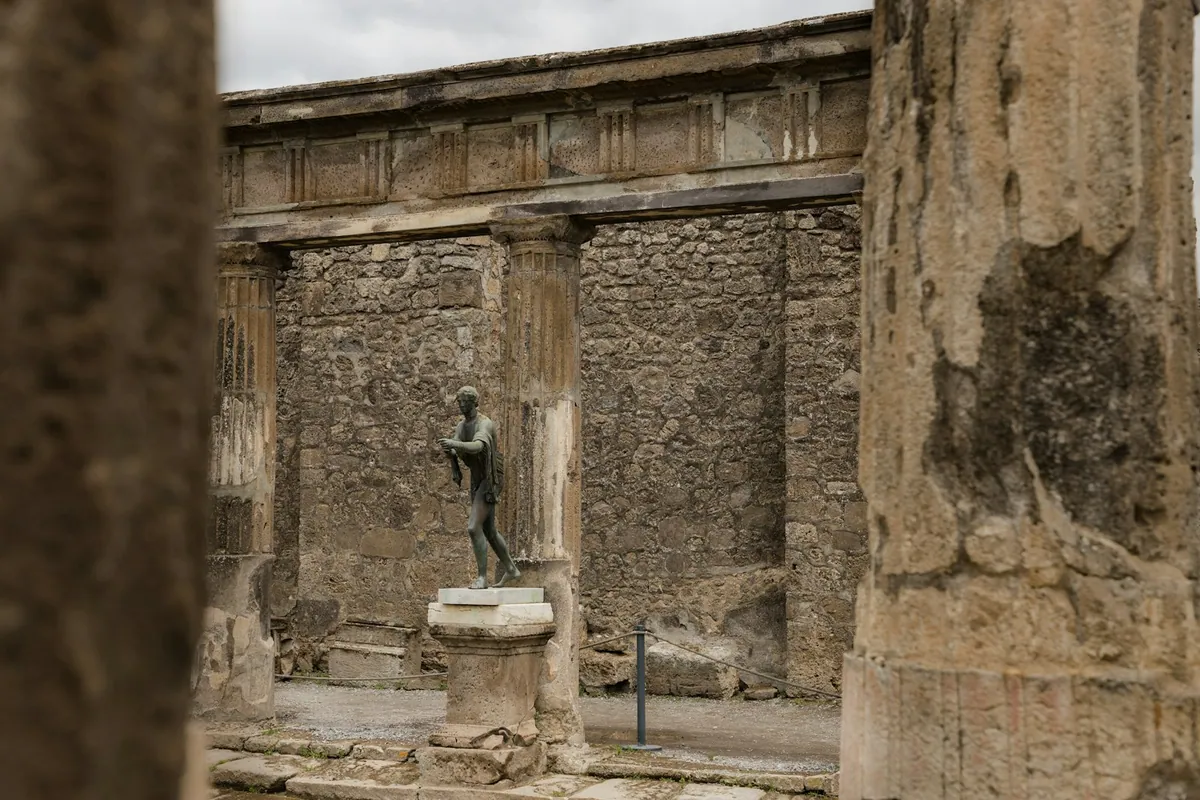
The headline temples: the Temple of Concordia (one of the best-preserved Greek Doric temples in the world, almost intact, transformed into a Christian basilica in the 6th century which is why it survived so well); the Temple of Hera (still standing, with a beautiful row of columns at the eastern end of the ridge); the Temple of Heracles (older, partially restored). The site is large — allow at least three hours, with a good audio guide. The light is best in the early morning or at sunset; midday is hot and the marble glare is real.
Have a long lunch at one of the bistros in Agrigento or back at one of the small coastal restaurants near the temples. Drive back to Palermo or to the airport in the late afternoon.
How nice are Sicilians?
Loud-warm and slightly chaotic. Sicilians are famously generous — the family-and-food culture of the south of Italy is at its most concentrated here — and the welcome to outsiders is direct and unforced. Within five days I had: a Palermo trattoria owner sit at our table for fifteen minutes telling us about the history of the dish we’d just eaten; a Cefalù beach kiosk owner give me an extra free coffee “because you came back, that means you liked the first one”; and a Mt Etna jeep guide pull off the route for ten minutes to show me a hidden cooled lava tube “because you’re interested, this isn’t on the map.” The Sicilian welcome is real and one of the best things about the island.
If you go
• Five days minimum. Ten is much better. • Hire a car. Public transport is patchy. • Visit between April and June, or September to October. July and August are very hot. • Eat the Sicilian food. Arancini, pasta alla Norma, caponata, pasta con le sarde, granita and brioche for breakfast, cannoli, cassata. • Drink the local wines. Etna Rosso (from the volcano), Nero d’Avola (the workhorse Sicilian red), Marsala (the fortified white).
Sicily is the most layered place in southern Europe. Five days here will give you the headlines — Taormina, Palermo, Agrigento — and a sense of the rhythm. You leave with the firm intention to come back for two weeks and see Syracuse, Noto, the Aeolian Islands, and the rest.