Venice in Three Days: The Grand Canal, St Mark’s and a Quiet Cannaregio Morning
Three days in the city that floats — the Basilica, the gondolas, and the morning vaporetto rides before the day-trippers arrive.
📍 Venice, Italy
Venice is, depending on how you arrive, either the strangest or the most theatrical city in the world. There are no cars. There are essentially no roads. The “streets” are 177 canals threaded through 118 small islands in a saltwater lagoon, connected by 391 bridges, and the only way to move anything heavier than a suitcase is by boat. The buildings — many of them 500 to 1,000 years old, built on top of millions of wooden piles driven into the lagoon mud — are slowly subsiding, slowly being repaired, and somehow still here. The day-tripper crowds in season are real and intense. The escape — and it’s available within a 10-minute walk of any major sight — is the network of small back streets in neighbourhoods like Cannaregio, Castello, and Dorsoduro, where almost no day-tripper goes and where the actual Venetian life still operates.
Three days in Venice will give you the headlines and a chance to escape the crowds. Stay overnight; do not day-trip.
The setup
Fly into Venice Marco Polo (40 minutes by Alilaguna boat to the centre) or take the Frecciarossa from Rome (3 hours 45 minutes) or Florence (2 hours). Stay anywhere on the main island of Venice — even the most “touristy” neighbourhood (San Marco) is small and walkable. Mid-range hotels run €150–300 a night; smaller B&Bs and apartment rentals can be cheaper.
You will get lost. Embrace it. Google Maps barely works in Venice (the GPS struggles with the dense narrow streets). The official street signs and yellow “Per Rialto / Per San Marco” direction signs are a better guide.
Day one: St Mark’s, the Doge’s Palace, and a vaporetto
Walk to Piazza San Marco — the only piazza in Venice (everywhere else is called a campo). The square is dominated on the eastern side by the Basilica of San Marco — an extraordinary 11th-century Byzantine-Italian basilica, with five gold-mosaic-covered domes, a horse-and-rider quadriga on the upper facade (originally looted from the Hippodrome of Constantinople in the Fourth Crusade, with copies on the facade and the originals indoors), and an interior of nearly 8,000 square metres of gold-ground mosaics that flood the church with reflected light when the sun comes through the windows.
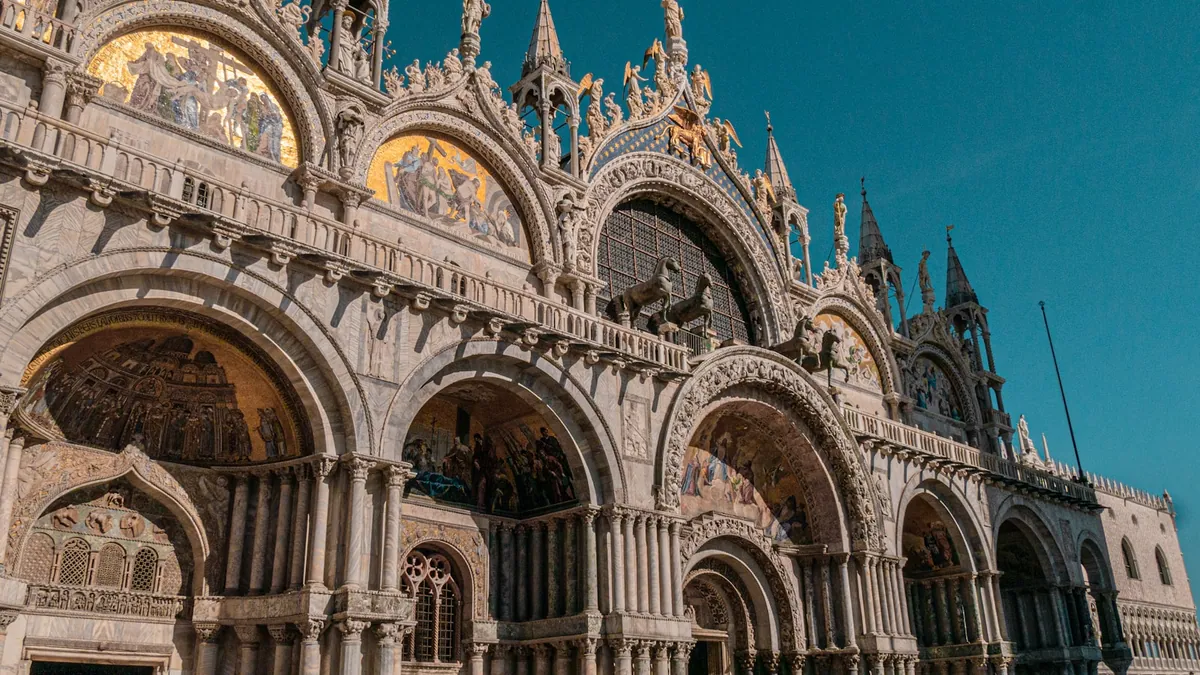
Buy a ticket online for the morning slot (about €15 with the museum and treasury). Allow 90 minutes. The Pala d’Oro — the great gold-and-enamel altarpiece behind the high altar, with 250 enamel panels and 1,300 pearls — is the small extra-fee visit at the back, and it is genuinely extraordinary.
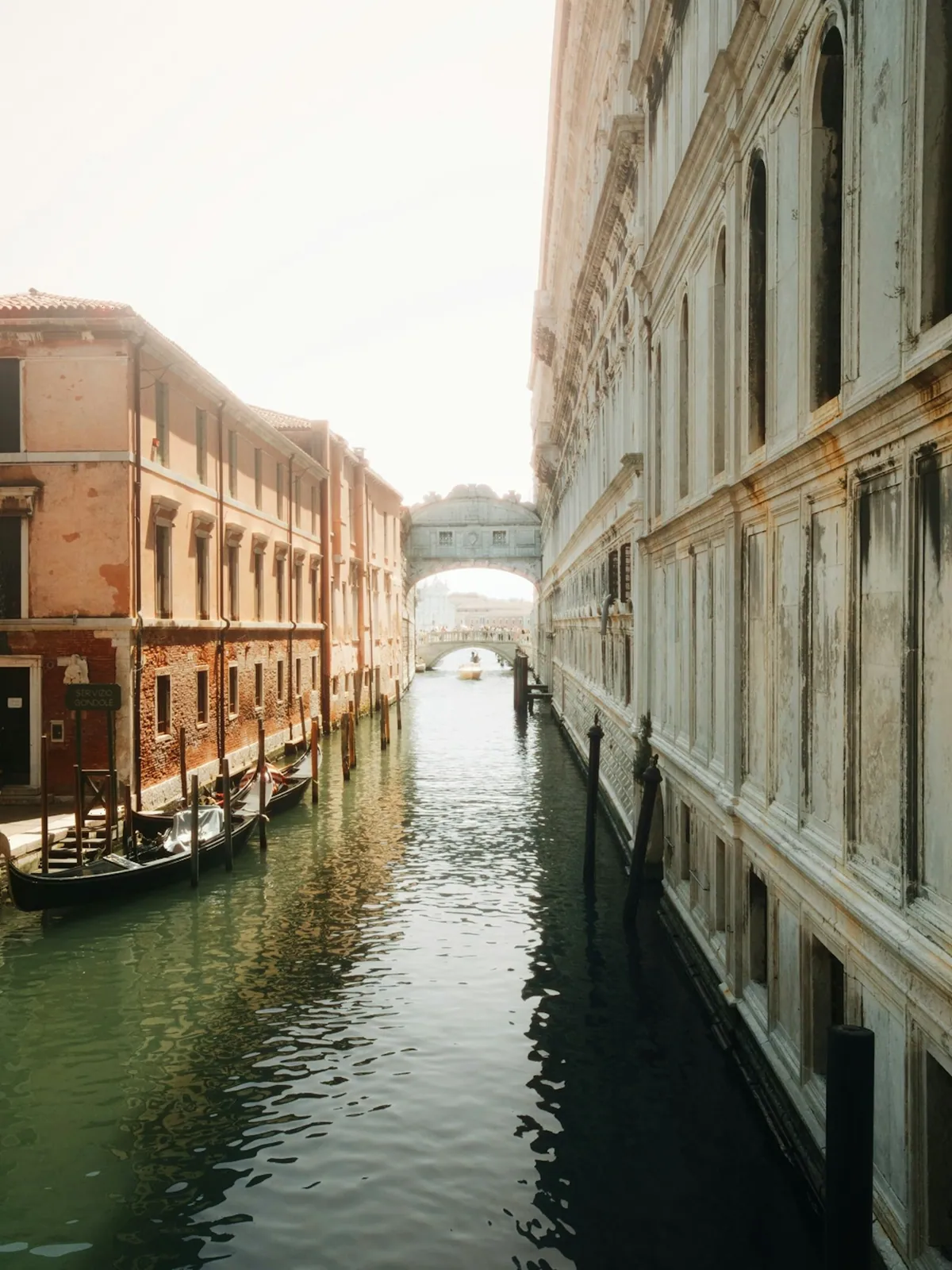
Next door, the Palazzo Ducale (Doge’s Palace) was the seat of the Republic of Venice for over 1,000 years. The interior — a sequence of vast Renaissance state rooms with Tintoretto and Veronese paintings on the ceilings, the Sala del Maggior Consiglio with the largest oil painting in the world (Tintoretto’s Paradise), the Bridge of Sighs leading to the prison cells — is one of the great civic visits in Europe. Buy the Secret Itineraries tour if you can (extra fee, smaller groups, takes you into the original wooden offices and the prisons that the standard tour doesn’t cover). Allow three hours.
For lunch, escape Piazza San Marco. Walk into the small streets just north of the square (the Calle delle Acque area) for one of the small bacari — the Venetian wine bars that serve cicchetti (small open-faced snacks of bread and various toppings: salt cod, anchovies, salami, cheese, marinated octopus). Reliable: Cantinone già Schiavi, Al Mercà (a tiny standing bar in the Rialto market area), or any of the smaller bacari in the Castello quarter.
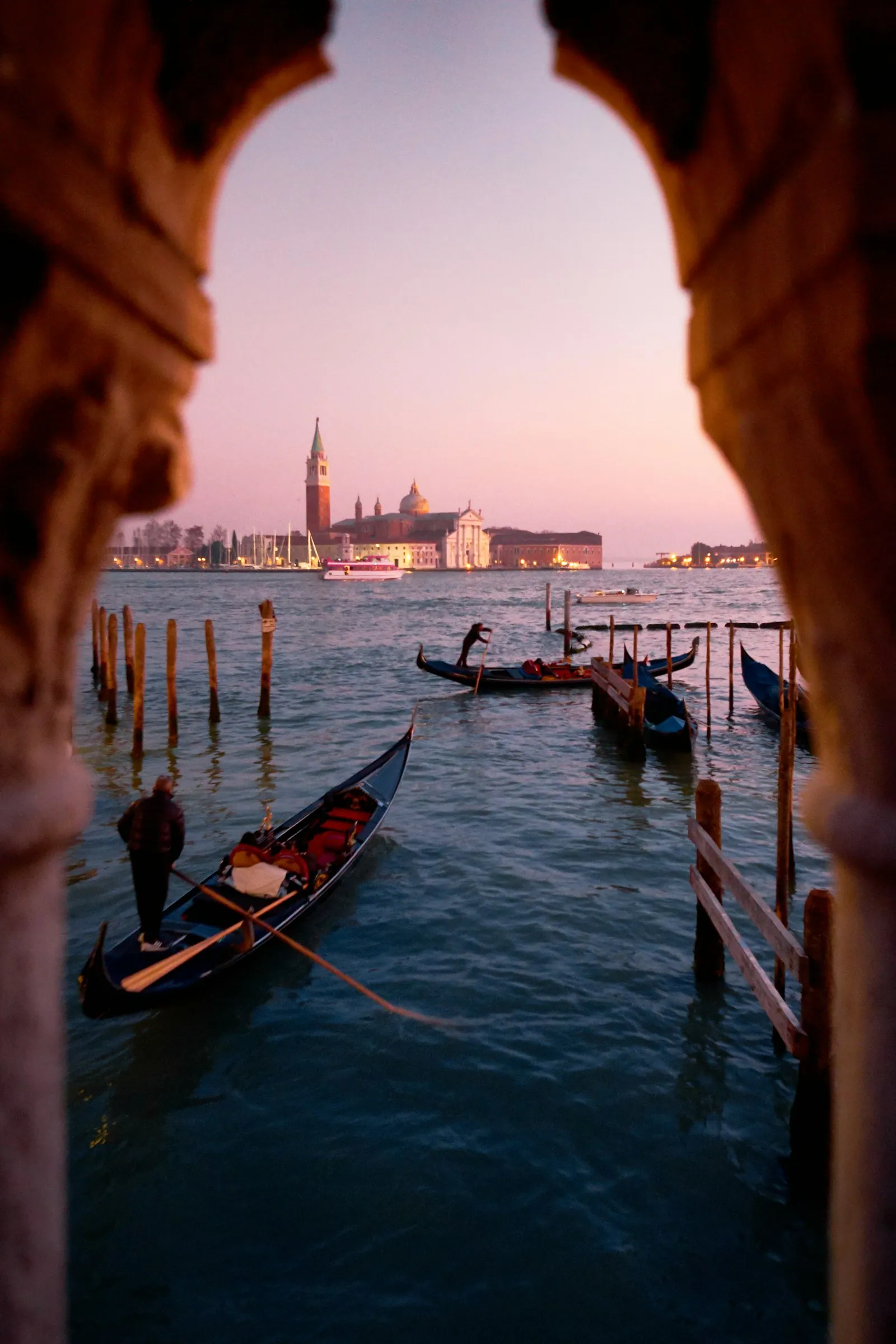
In the afternoon, take a vaporetto down the Grand Canal. Vaporetto line 1 is the slow “local bus” that stops at every major palazzo and bridge on the way from Piazzale Roma down to San Marco — it takes about 50 minutes end to end and is one of the most beautiful boat rides anywhere. Get a window seat on the open back deck. Watch the palaces slide past.
Day one evening: a quiet sunset
For sunset, walk to the Punta della Dogana — the small triangular point at the mouth of the Grand Canal where it meets the Giudecca Canal — for the panoramic view back at San Marco, the Basilica, and the Doge’s Palace, all silhouetted against the sky. Or take the vaporetto across to San Giorgio Maggiore (the small island in front of San Marco with Andrea Palladio’s 16th-century church) and climb the bell tower for the iconic view back across to Piazza San Marco. The latter is, by a distance, the better photograph.
For dinner, eat at one of the trattorias in Castello or Cannaregio. Avoid the immediate San Marco area (touristy, expensive, often mediocre). Reliable: Vini da Gigio (Cannaregio, classic Venetian), CoVino (Castello, modern), Antiche Carampane (San Polo, traditional Venetian seafood).
Day two: the Rialto Market, Cannaregio, and the artisans
Day two starts at the Rialto Market. The Erberia (fruit and vegetable market) and the Pescheria (the fish market under the Gothic loggia next door) have been on this site since the 14th century, and the Rialto fish market is still where Venetian chefs buy their fish at dawn. Get there by 7:30 a.m. for the working-market experience; by 11 a.m. it’s mostly cleared.
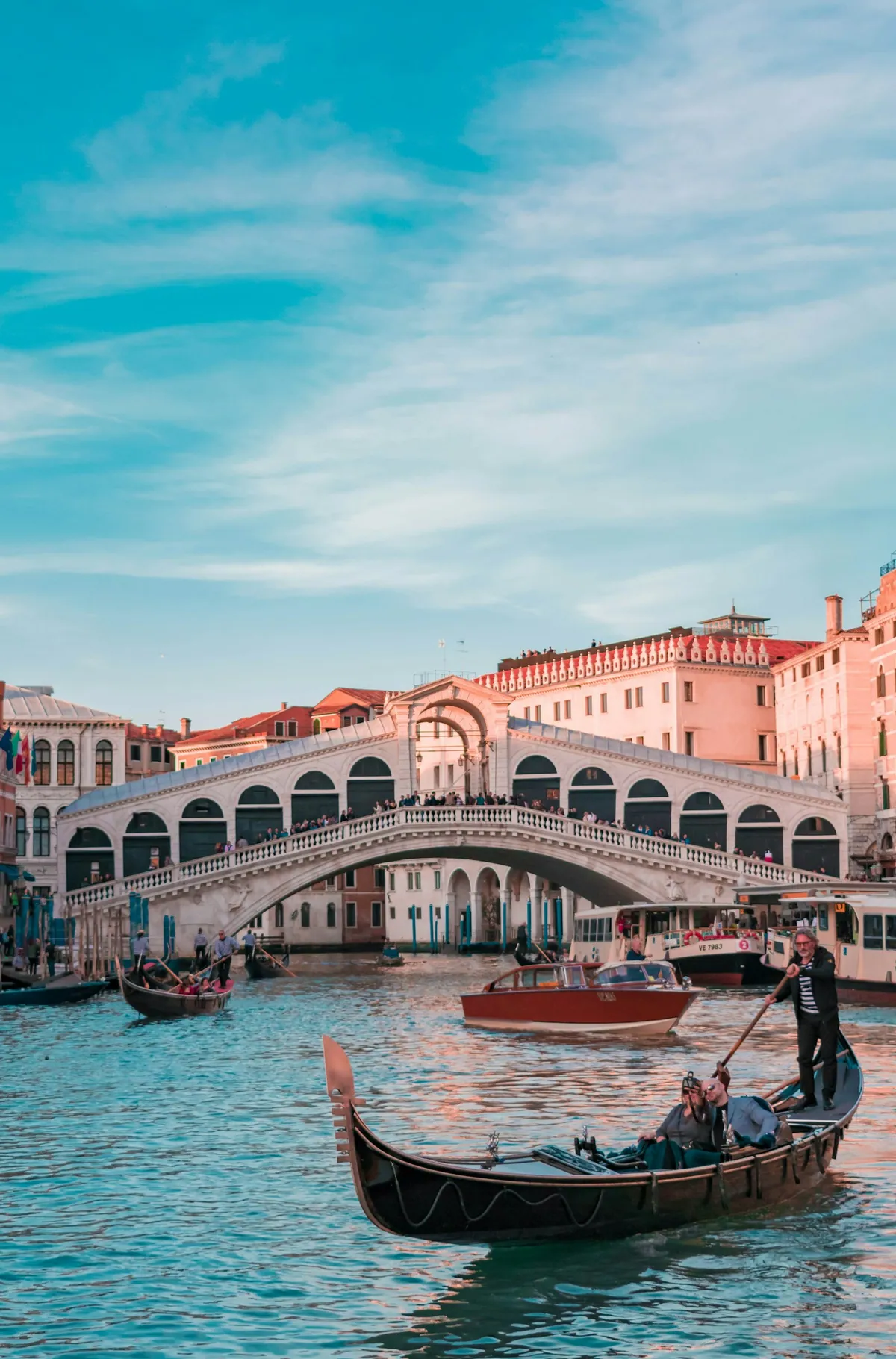
Cross the Rialto Bridge — the famous high-arched stone bridge that has been the main bridge over the Grand Canal since 1591. Walk into Cannaregio, the long narrow neighbourhood north of the Grand Canal that was historically the working-class side of the city and is now the most lived-in, least touristy area of central Venice. The Strada Nuova (the main shopping street) is busy, but the parallel Fondamenta della Misericordia (along a quiet canal) is one of the prettiest streets in the city — and lined with excellent small bacari.
Visit the Jewish Ghetto — the oldest ghetto in the world (the word ghetto comes from the Venetian gheto, meaning iron foundry, the area where Venice forced its Jewish population to live from 1516 onwards). The square (Campo di Ghetto Nuovo) has the small Jewish Museum and several still-active synagogues. A quiet, thoughtful 90-minute visit.
Eat lunch at a Cannaregio bacaro. Bacareto Da Lele (a tiny standing bar near the train station, famous for its cheap wine and porchetta sandwiches) is a Venetian institution.
In the afternoon, visit one or two of the small specialist museums. The Scuola Grande di San Rocco (Tintoretto’s greatest single body of work, 60 paintings he made for the building over 23 years, in their original locations) is one of the most extraordinary single-artist museums in Europe. The Peggy Guggenheim Collection (the small modern art museum on the Grand Canal, in the former home of the American heiress) is excellent for a contemporary contrast.
Day three: Murano, Burano, and the lagoon
Take the vaporetto out into the lagoon for day three. Murano (15 minutes from Venice on lines 4.1 or 4.2) is the small island where Venice has made its glass since 1291 — the glass furnaces were moved to the island to reduce fire risk in the wooden city of Venice. The historic glassworks are still operating; you can watch glassblowing demonstrations at several factories (mostly free, with the strong implication that you’ll buy something afterwards) and visit the Glass Museum (the Murano museum, with extraordinary historical pieces). Two hours on Murano.
Continue to Burano (a further 30 minutes by vaporetto from Murano) — the smaller fishing island famous for its painted houses (every house in different bright colours, traditionally so that fishermen could identify their own houses through the lagoon fog) and its lacework. Walk the small streets, take the photographs, eat lunch at one of the small trattorias on the harbour (Trattoria al Gatto Nero is the famous one; book ahead). Burano is one of the most photographed villages in Italy and it absolutely deserves its reputation.
In the late afternoon, vaporetto back to Venice. End the trip with one final cicchetti crawl in the Rialto area, and a final sunset on a quiet side canal somewhere.
How nice are Venetians?
Quietly nice — the Venetians have, for hundreds of years, lived alongside an enormous tourist economy and they have developed a slightly weary but deeply patient hospitality with strangers. My three days included: a vaporetto operator wait for me at a stop while I sprinted back from a side street; a small bacaro owner in Cannaregio refuse to charge me for my third glass of prosecco because “you ate three plates of cicchetti, that is enough”; and an old man on a quiet Castello calle stop me to ask, in halting English, if I needed directions because I “looked lost” (I was). The Venetian friendliness is real and slightly hidden under the tourism.
If you go
• Stay overnight on the main island. The day-trippers leave by 7 p.m. and the city after dark is one of the most magical places on Earth. • Avoid Piazza San Marco between 11 a.m. and 4 p.m. — that’s the day-tripper window. Visit at 8 a.m. or 7 p.m. • Take vaporetto line 1 down the Grand Canal at least once. Sunset is the best time. • Eat cicchetti and drink small glasses of wine at bacari, like the Venetians do, instead of full sit-down dinners every night. • Walk the small back streets of Cannaregio and Castello. The escape from the crowds is a walk away.
Venice is the city that you have to visit slowly. Three days here will give you the headlines and a feel for the rhythm. You leave with a small but persistent ache to come back in low season, when the crowds are gone and the city belongs to itself again.